


Fresh Frozen Cadaver
Anatomy Course
Reduce the risk of complications in injectable aesthetics.
- Clinical Immersion1 day of outpatient practice
- Course Load60 Hours
- Teaching formatBlended in-person
- CertificationUniversity Extension Course
Gain extra confidence when injecting
With this course you can:
- Explore anatomical structures
- Handle facial anatomy in natura
- Prevent complications
- Simulate advanced techniques
- Practice reversing complications
- Gain extra confidence
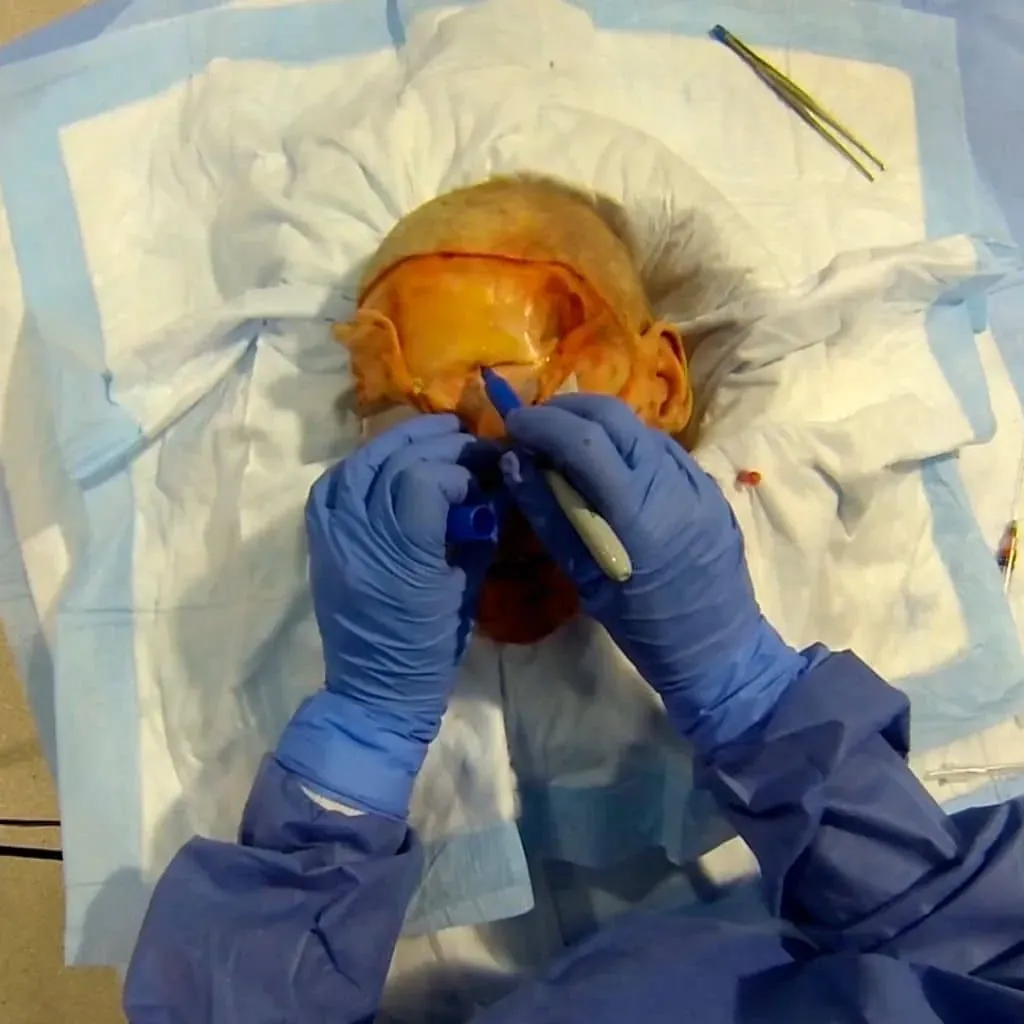
Who this experience is for
Since most of our students already perform injectable aesthetic procedures directly on real model patients (in vivo), the fresh frozen specimen experience is offered by Nepuga/FAPUGA as an extra course, exclusively for active postgraduate students and alumni who are still curious or wary about working with certain anatomical structures prone to complications and who are seeking additional certification.
Aesthetics postgraduate students
For those who want to become specialists while gaining extra confidence and certification to perform more complex injectable procedures, avoiding unnecessary risk of complications for patients and for their careers in the making.
Nepuga/FAPUGA alumni specialists
For Nepuga/FAPUGA alumni specialists seeking additional certification who are increasingly focusing on injectable procedures that require work on anatomical structures at higher risk of complications.
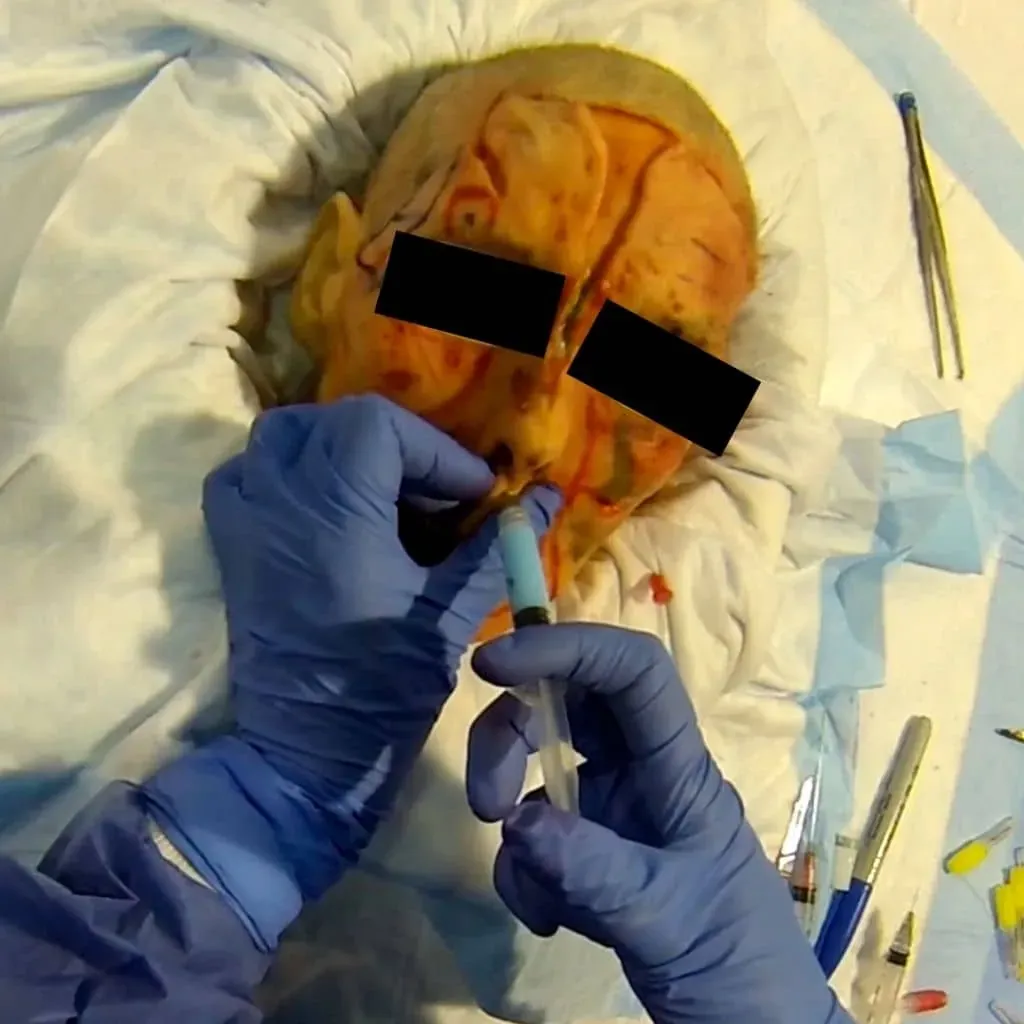
Information about the Fresh Frozen Cadaver Anatomy Course
- Clinical Immersion — 1 day of outpatient practice
- Teaching format — Blended in-person
- Fresh Frozen Cadaver — 3 to 4 students per anatomical specimen
- Materials used — Materials included in the extra module
- Target audience — Active students and alumni of the institution
- Course Load — 60 Hours
- Certification — University Extension Course
Explore facial anatomy in natura
Practicing on a fresh frozen cadaver is a necessity for anyone who wants to train and consolidate knowledge of anatomy and neuroanatomy. Nepuga/FAPUGA postgraduate students and graduates are even better prepared to identify the anatomy of the facial muscles, with a deeper knowledge of the layers and structures of facial tissues, and to recognize the appropriate anatomical planes for injecting substances with extra confidence, identifying danger zones and thus avoiding complications in their treatments.
Extra confidence when injecting
In this regard, Brazilian legislation is more favorable than American law, allowing us health professionals to practice on model patients. However, practice on cadaveric specimens aims to provide additional anatomy training to colleagues in the health field who still have some doubts and insecurities about injectable procedures in facial harmonization. In this extra course, our students see in practice how to avoid danger zones during injections and have the opportunity to practice maneuvers to reverse complications.
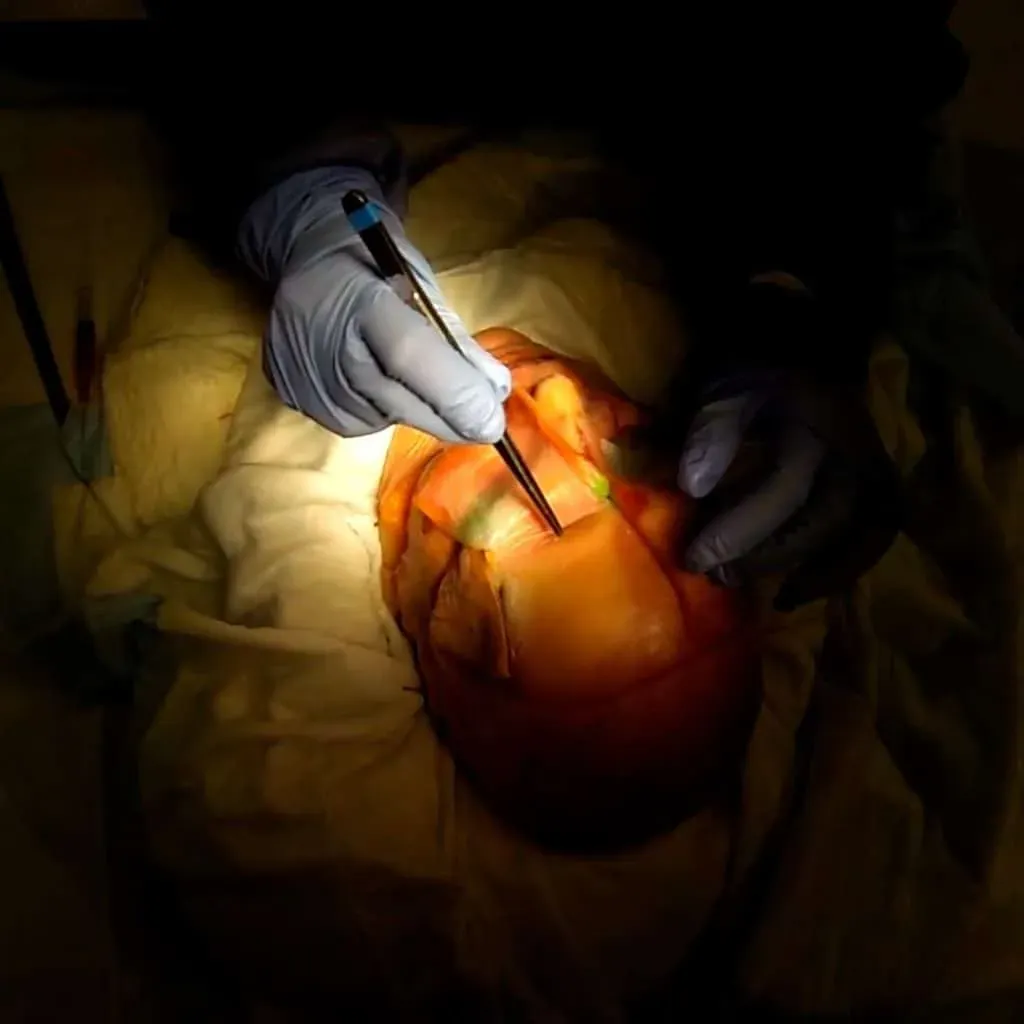
What you learn
Theoretical content
- Current concepts of facial beauty;
- Anatomical changes in facial aging;
- Skin aging;
- Skin phototypes;
- Muscular, bone, and vascular anatomy of the face;
- Important anatomical considerations in minimally invasive procedures;
- Danger zones;
- Botulinum toxin;
- Hyaluronic acid fillers;
- PDO threads;
- Pugacode methodology with the WV CODE® technique in facial harmonization;
- Complications in minimally invasive techniques: management and how to avoid them;
- Combining other injectable techniques to optimize results;
- Dissection techniques and instruments.
Practical content
- Facial planning;
- Integumentary, muscular, and bone anatomy on the dissected cadaver;
- Demonstration of danger zones;
- Intensive training on fresh cadavers;
- Application techniques for all methods studied: botulinum toxin, fillers, and threads.
- Hyaluronidase technique for removing hyaluronic acid.
Course format
- Recorded theory video classes;
- E-book to complement your study;
- 1 live class on the Zoom platform;
- 1 day of lab practice at the São Paulo-SP unit.
Secure your spot in the next class
An extra course exclusively for those seeking additional certification. Classes have 20 students, with very limited spots so that the Fresh Frozen Cadaver clinical immersion can be fully taken advantage of in a single day of practice at the São Paulo-SP unit, by prior appointment.