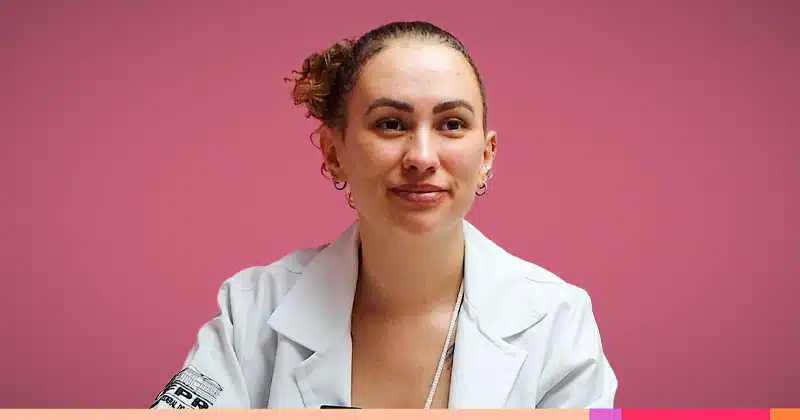
Pharmacology in dentistry is a very important discipline for dentists because they can prescribe medications to their patients in a variety of situations. Knowing what happens to drugs in the body and what effects to expect is essential to give these professionals confidence during procedures.
Thais Carmo is a pharmacology professor in Nepuga’s HOF course (Orofacial and Surgical Harmonization). She says postgraduate students are interested in the subject because they learn fundamental concepts for their day-to-day work. “With pharmacology, they are able to think through an appropriate and effective treatment for the patient”.
In the next sections, you will get answers to several questions about what pharmacology is and why it matters for dentists. Read on.
What Is Pharmacology in Dentistry
Pharmacology in dentistry relates to the scientific aspects of how medications can be used in dental treatments. These drugs act on several systems of the body.
Today, science considers two aspects of a drug: pharmacokinetics and pharmacodynamics.
Pharmacokinetics – After a patient takes a medication, it can be converted into several metabolites. The original drug and these metabolites can be active or inactive, as well as toxic or non-toxic, depending on their physicochemical properties.
Pharmacodynamics – Drugs have actions that depend on receptors, triggering the cellular response opposite to the one generated by a natural agonist. That is why doses can be administered as sprays, rinses, ointments, tablets and other forms.
In short, pharmacodynamics focuses on the action of drugs in general and pharmacokinetics evaluates the effects of the body on those drugs.
Can Dentists Prescribe Medications?
Yes, they are authorized to prescribe any medication that is part of dentistry, including controlled substances. They can also administer emergency medications when necessary.
For those who want to learn more about this, note that the authorization is in Article 6 of Law 5,081 of 1966.
It states that this professional may “prescribe and administer pharmaceutical specialties for internal and external use indicated in Dentistry” and “prescribe and administer emergency medication in the case of serious accidents that compromise the patient’s health.”
To explain this in a more didactic way, Thais Carmo says: “ Pharmacology is an important discipline for any prescriber. And the dentist is a prescriber who prescribes both in the general practice of daily work and in facial harmonization”.
Which Medications Can a Dentist Prescribe
Nowadays, several classes of medications can be used in dentistry, and the conditions depend on the need.
One of the best known are local anesthetics, general anesthetics or nitrous oxide, which reduce the perception of pain, as in a tooth extraction. Dentists can also prescribe local anesthetic ointments for home use and for application before meals.
Another class is anti-inflammatories, analgesics and corticosteroids, all used for pain relief. Although less common, dentists can also prescribe medications such as antibiotics, antiseptics and antifungals to treat gums and tooth roots.
Controlled Medications
With regard to controlled medications, under Ordinance SVS/MS 344 of 1998, dentists may prescribe them as long as they are for dental use and contain substances from lists C1, C5, A1, A2 and B1 of the Technical Regulation.
Examples include: opioid analgesics, benzodiazepines, antidepressants, anticonvulsants and coxib anti-inflammatories.
As you can see, there are several types of medications a dentist can recommend to patients. However, for this to happen safely, the professional needs to know about them, which explains the importance of the pharmacology class for dentists.
The Types of Prescriptions Dentists Can Use
There are two types of prescriptions that dentists can use to prescribe a medication: the regular prescription and the special-control prescription.
The first option is used for drugs or substances to be compounded at a pharmacy. The other is used to prescribe special-control medications.
In both cases, the prescription must state the drug according to the dental treatment. The prescription should be easy for patients to understand, with details that help them take the correct dose and amounts.
The prescriber must also state the route of administration, the interval between doses and the duration of treatment. Finally, the contact channels for questions when problems related to the use of the medications occur.
A curious fact that few professionals know is that the dentist must state on the prescription if they do not allow the use of generic or similar medications, as established in Law 9,787 of 1999.
The Pharmacology Class in the HOF Course
Letícia Ranghiere says she was impressed by the pharmacology class she had during her postgraduate program in aesthetics.
“The class went beyond what I expected because I didn’t know some compounds that help in treatments to improve the skin, complementing the final result of harmonization treatments”. Watch an excerpt of her testimony about the profession:
Gabriel Monte is one of the students in Nepuga’s HOF course and recently had a Zoom class on pharmacology in dentistry with professor Thais Carmo. He says he chose the course because it was more complete.
“A big differentiator is that you earn the specialist title, in addition to having more confidence in dealing with complications, which is something that worries many professionals who feel unable to act in those situations”.
Monte said he had already seen the subject of pharmacology before, back in dental school. However, without depth.
“In the HOF class, we saw the medications applied to orofacial harmonization. Choosing the best medication to perform that procedure. And much more. So it was a totally on-point class so that we can make the ideal recommendation for the patient”.
Pharmacology as Aesthetic Treatment
Letícia Ranghiere is a dentist who works at an aesthetics franchise and sees private intraoral patients at her own office. She says she started the HOF course because she likes the subject and wants to improve people’s self-esteem.
The health professional had a pharmacology class just a few days ago. She says it was interesting because this will be a different way of meeting her patients’ requests.
“Some patients look for skin improvement in a less invasive way or using a smaller amount of injectable products. So it will add value because I’ll be able to recommend some cosmetics with specific compounds that I learned in the pharmacology class”.
Blog|NewsIrving Malaguti
NEPUGA content team — Núcleo de Especializações Ana Carolina Puga.