


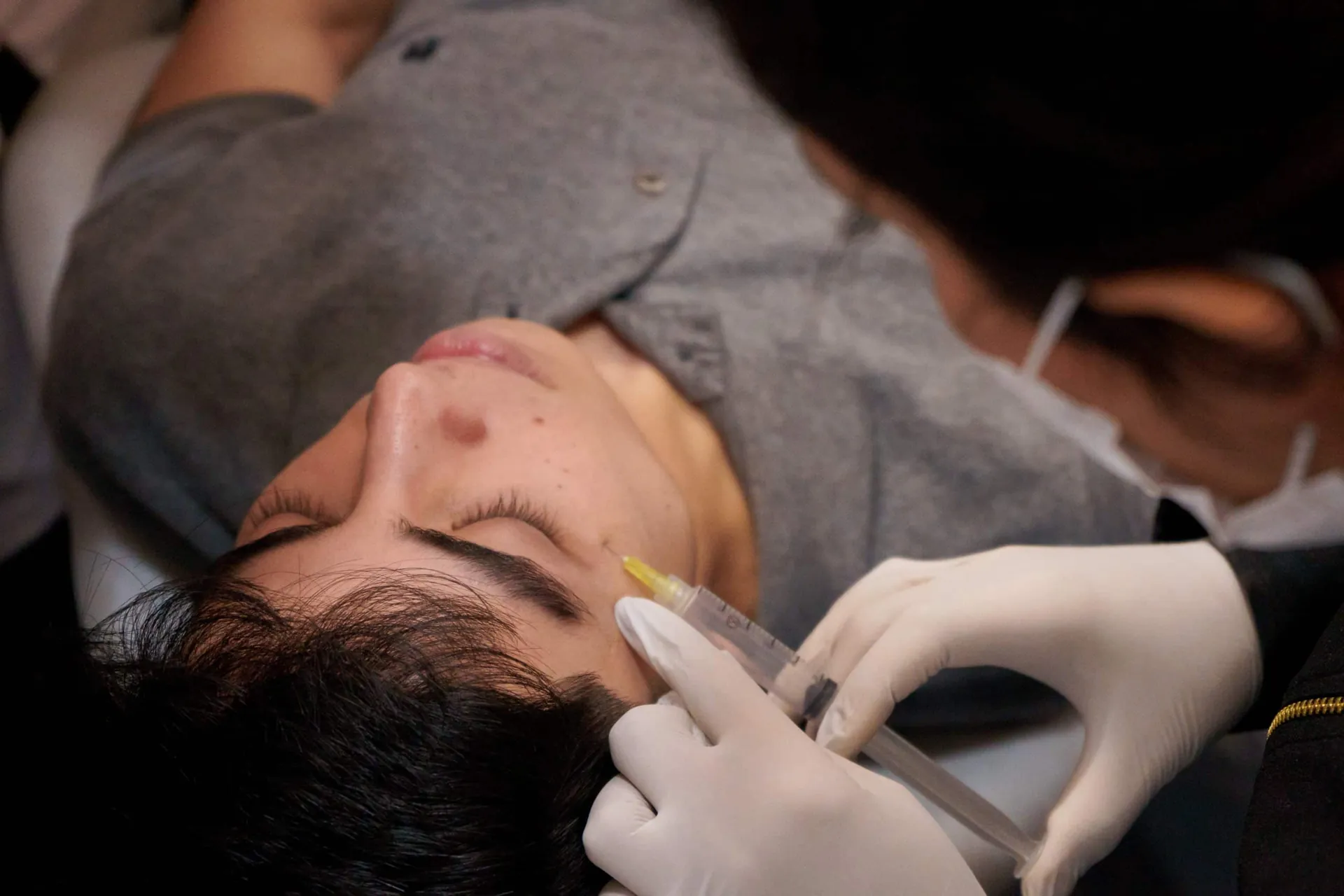
Recently, singer Naldo Benny shared on his Instagram profile that he is starting treatment for a complication that occurred due to a blood vessel obstruction after a nose reshaping procedure (rhinomodeling). The early stages of necrosis appeared and are being properly treated.
Fortunately, in this case the recovery treatment is going well. The singer reports on his social media improvements and reduced pain.
Rhinomodeling is an aesthetic procedure performed to change the appearance of the nose through the application of injectable substances, generally using hyaluronic acid.
It is a minimally invasive procedure compared to surgical procedures and, like any injectable procedure, has temporary results, but satisfactory ones for the patient.
Hyaluronic acid is a biocompatible and safe substance for the procedure, but it requires proper qualification of the professional performing it, so that circulation at the application site is not obstructed and, if that does happen, the professional knows how to treat it effectively.
Options for Handling Complications Like This One
The aesthetic dentist who treated the singer for the complication, Dr. Cindy Alves commented: “This is a complication that can happen to any professional and we are here to add to the conversation, to exchange experiences, to help think about the patient.”
A situation like this can be treated in different ways, such as applying hyaluronidase, an enzyme that helps dissolve the hyaluronic acid applied at the site. Grafts or flaps may also be performed to promote reconstruction of the area in more serious cases, along with prescribing antibiotics or anti-inflammatories to help reverse the infection.
The Use of Ozone Therapy
Ozone therapy is another option for handling complications like this one. Dr. Cinthya Heckert Brito explains a bit about the role of ozone treatment: “It serves to clean the vessels and reduce the patient’s inflammation, and that brings greater comfort after the procedure, a sense of safety for both the patient and the professional doing the work.”
Dr. Cinthya is an aesthetic dentist and a faculty member for the modules in Ozone Therapy and Neural Therapy in the specialization in Orofacial and Surgical Harmonization. She also comments on the importance of deepening knowledge of complication management:
“Our first concern is the patient, it is managing complications, prevention, so that then we can teach the techniques properly.” And she adds: “so that the post-procedure period is more controlled, in terms of inflammation, edema, and bruising.”
Certification That Brings Safety
For a professional to be properly qualified to perform aesthetic procedures and manage possible complications, it is necessary to go deeper into the specifics of the practice. A specialization in aesthetics brings, beyond the credibility of a certification, the full confidence the professional needs to practice.
For dentists, for example, the Federal Council of Dentistry sets the following criteria for the full training of a qualified and authorized HOF professional: a minimum of 500 hours in an Orofacial Harmonization course, at an institution accredited by the CFO or duly recognized by Brazil’s MEC (Ministry of Education).
In training, hands-on practice is also essential. It is during the practical sessions in the clinical immersions that postgraduate students have contact with patients and with the particulars of each case, which makes all the difference in the professional’s confidence to perform procedures in the best possible way, passing that confidence on to the patient as well.
NewsLaís Bianquini
NEPUGA content team — Núcleo de Especializações Ana Carolina Puga.


