Last Friday (21), the postgraduate students in Orofacial and Surgical Harmonization had the chance to get a close look at the institution's facilities at the unit in the Tatuapé neighborhood in São Paulo (SP).
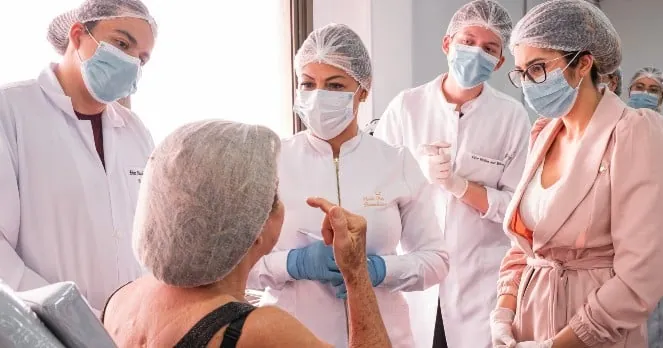
Specialists in training and faculty members who had not yet met in person were also able to exchange experiences and get to know each other better on this occasion. In an initial chat, they told a little about their own stories and experiences in the profession.
This mutual learning among professionals is one of the standout moments of the in-person classes in the HOF Postgraduate Program.
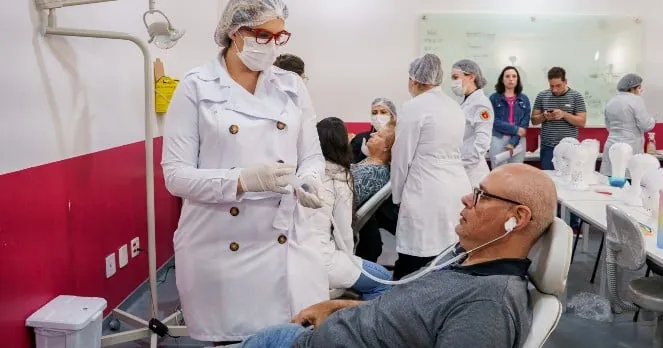
After this first moment, still on Friday, the HOF dentists followed explanations and demonstrations of the use of equipment for Ozone Therapy with faculty member Dr. Cynthia Heckert Brito.
Ozone therapy applied to HOF
Most of the postgraduate students report that before entering the HOF specialization they did not know about the use of ozone in dentistry. They were delighted with the certification, and competence in Ozone Therapy offers more biosafety when performing other procedures, in addition to helping treat pain, inflammatory processes and other complaints.
Dr. Cynthia Heckert Brito explains the importance of this course within the Postgraduate Program in Orofacial and Surgical Harmonization:
“I thought it was fantastic that we started the HOF specialization immersion with ozone therapy, because this course allows us to have good control of the patient before and after surgery. It serves to clean the pathways and reduce the patient's inflammation, and this creates greater comfort after surgery, safety for both the patient and the professional who is working“.
Dr. Cynthia was in the first Advanced Fillers and Toxin class at Nepuga, taught at the time by Dr. Ana Carolina Puga. She highlights that from that experience, in which she had more frequent practice through clinical immersion within the specialization, she gained more confidence to work with orofacial harmonization.
Today, Dr. Cynthia teaches the modules on Ozone Therapy and Neural Therapy in the HOF postgraduate program.
The importance of Clinical Immersion
The postgraduate students also stressed how important clinical immersion in the Orofacial and Surgical Harmonization course is to give confidence to professionals who are getting certified to offer orofacial harmonization procedures.
“I wanted to do [the specialization] because many professionals who graduated here now work with great confidence. I want to be one of those professionals,” said Dr. Jamile Branco, a dentist from Jundiaí (SP).
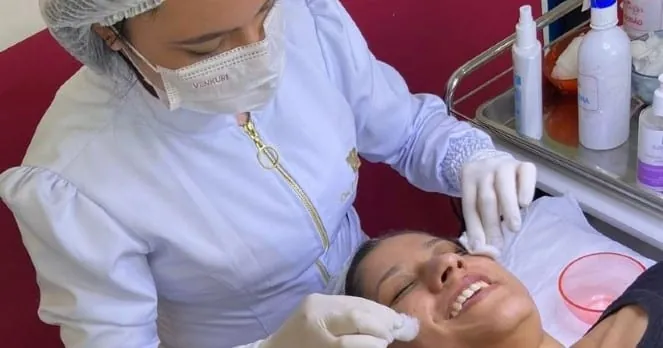
In the afternoon, the aesthetic professionals in training got hands-on. Some volunteered to receive ozone application in areas where they felt discomfort, whether for aesthetic reasons or pain. But everyone had the chance to experience the proper “extraction” of ozone and to follow applications on colleagues and on model patients.
Performing applications on the postgraduate students themselves during clinical immersion can be a very important experience so that they can fully convey to their patients the feelings of someone undergoing the procedure, although this is not a mandatory practice.
More clinical immersion
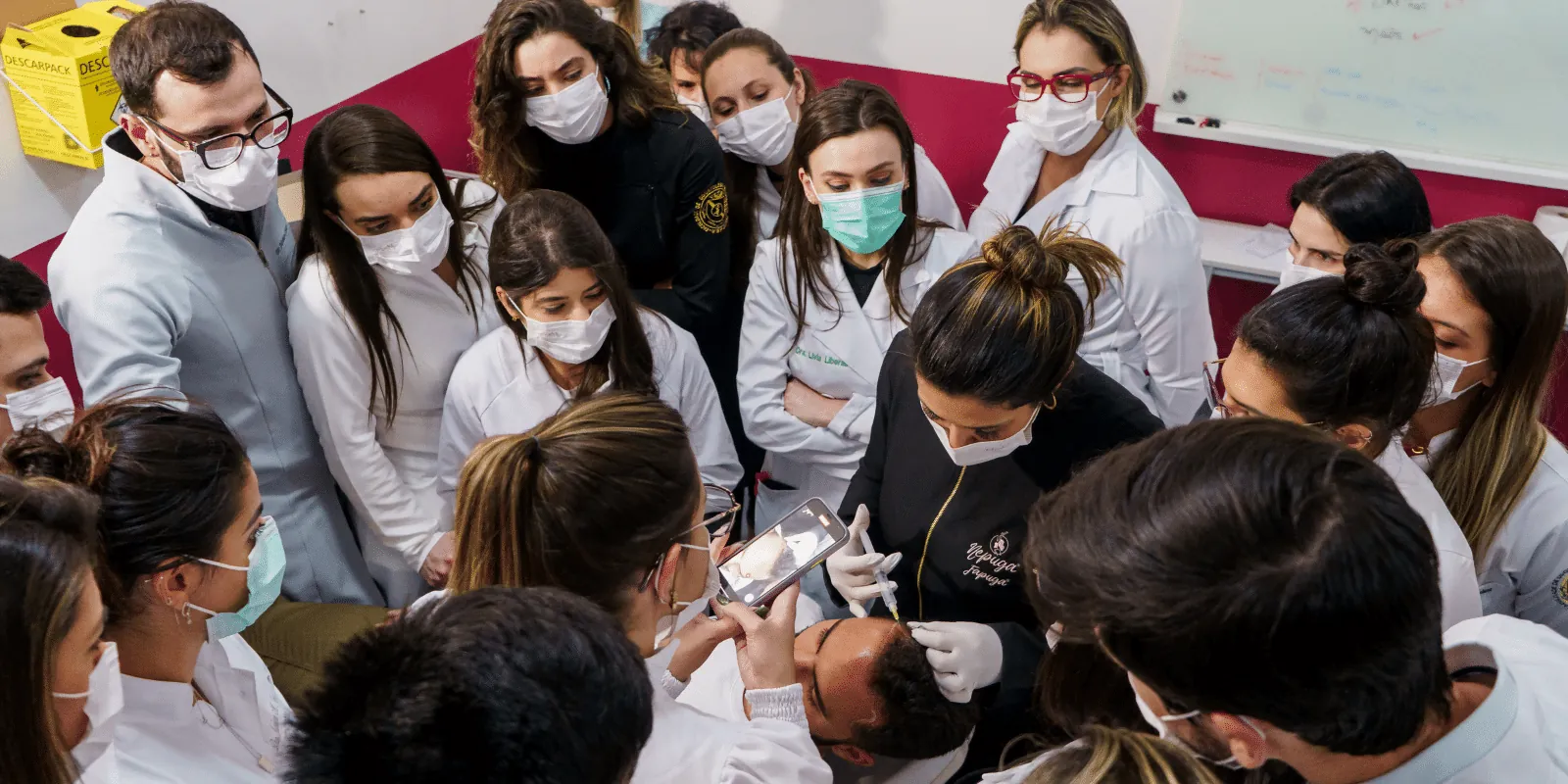
Saturday (22) began with marking application points using Nepuguetty®, which enables more complete learning of fundamentals that will be practiced on patients. Later, the in-person class was entirely devoted to applying ozone on model patients and on postgraduate students who again volunteered.
On Sunday (23), the clinical immersion was devoted to botulinum toxin and to learning important points on the face for its application in harmonization procedures, and how certain points and muscles influence application results.
Still on the subject of hands-on procedures, Dr. Diogo Branco, coordinator of the Postgraduate Program in Orofacial and Surgical Harmonization at Nepuga, points out that the course can pay for itself during the program, since the dentist gains certification to perform procedures as they complete the clinical immersions within the college.
Orofacial and surgical harmonization in dentistry
Dentists are among the health professionals who stand out most today for performing injectable procedures in the facial region, since they are trained to work both in the oral cavity and in caring for people's appearance through their teeth and smile.
HOF postgraduate student Dr. Fernanda Reis commented on how dentists are recognized for their competence to work in orofacial harmonization: “my clinical patients ask me about facial harmonization. I find it very interesting because today the patient sees us, knows that we can do it, that we are capable of doing it, and feels confident having it done by a dentist.”
The Specialization in Orofacial and Surgical Harmonization gives dentists deeper knowledge of managing injectables and other procedures on the face, providing much more confidence to dentists, who can offer their patients more complete, higher-quality treatment.
Blog|Institutional|NewsLaís Bianquini
NEPUGA content team — Núcleo de Especializações Ana Carolina Puga.