The Postgraduate Program in Aesthetic Nursing is the lato sensu specialization that qualifies nurses to legally perform aesthetic procedures in Brazil. To register the specialty, the course must be recognized by Brazil's MEC (Ministry of Education) and include at least 100 hours of supervised practice, in accordance with COFEN Resolution No. 715/2023 (COFEN: Federal Nursing Council, a Brazilian professional council).
The field has become one of the most sought-after by nurses who want to expand their practice options, gain professional autonomy and work with minimally invasive procedures. But there are still many questions about training, COFEN requirements, pay, practical hours and career.
In this guide, we gather answers to the main questions — based on the official resolutions of COFEN — to help you decide with confidence.
And if you already want to explore a complete program in the field, check out the Nepuga Postgraduate Program in Aesthetic Nursing.
What is the Postgraduate Program in Aesthetic Nursing?
The Postgraduate Program in Aesthetic Nursing is the specialization for nurses who want to legally work in aesthetics, developing clinical, technical and scientific skills focused on facial and body aesthetic procedures.
In addition to deepening knowledge of anatomy, pharmacology, biosafety and clinical assessment, the specialization prepares professionals to perform procedures within the rules of the Nursing Councils, and develops skills in career management, entrepreneurship and patient relationships.
I'm a nurse, can I take a Postgraduate Program in Aesthetics?
Yes. Nurses who graduated from MEC-recognized institutions and hold an active COREN registration (Regional Nursing Council, a Brazilian professional council) can enroll in a Postgraduate Program in Aesthetic Nursing to work in the field in a regulated way. The specialization is exclusive to professionals who have already graduated in Nursing — nursing technicians and assistants cannot register this specialty.
After completing the course and meeting the requirements of the COFEN/COREN system, the nurse can apply to register the specialty.
Ready to take the next step? Explore the Nepuga Postgraduate Program in Aesthetic Nursing and see how the program works.
How to become an aesthetic nurse?
To become an aesthetic nurse in Brazil, the path has 5 steps:
- Complete your Nursing degree at an MEC-recognized institution;
- Keep your professional registration active with your state's COREN;
- Take an MEC-recognized Postgraduate Program in Aesthetic Nursing (lato sensu) with at least 100 hours of supervised practice;
- Apply to register your specialist title with the COREN;
- Work in clinics, offices, aesthetic centers or start your own business, respecting current regulations.
What are COFEN's rules for Aesthetic Nursing?
Nurses' work in aesthetics is regulated by COFEN Resolution No. 529/2016, amended by Resolutions No. 626/2020 and No. 715/2023, and overseen by the Regional Nursing Councils (CORENs). The main requirements are:
- A lato sensu postgraduate program in aesthetics recognized by the MEC;
- A minimum of 100 hours of supervised hands-on classes in the course;
- Registration of the specialist title with the COREN;
- Procedures of greater technical complexity are exclusive to nurses specialized in Aesthetics;
- Technical responsibility, patient safety and proper clinical documentation.
See the official text: COFEN Resolution No. 715/2023 and
COFEN Resolution No. 529/2016 (consolidated).
Therefore, when choosing a postgraduate program, check that the institution meets the current requirements of the regulatory bodies.
How many practice hours are required in the Postgraduate Program in Aesthetic Nursing?
A minimum of 100 hours of supervised practice is required. The requirement is in COFEN Resolution No. 715/2023 and applies to lato sensu specialization courses recognized by the MEC. Without this documented practical load, the COREN does not register the specialty.
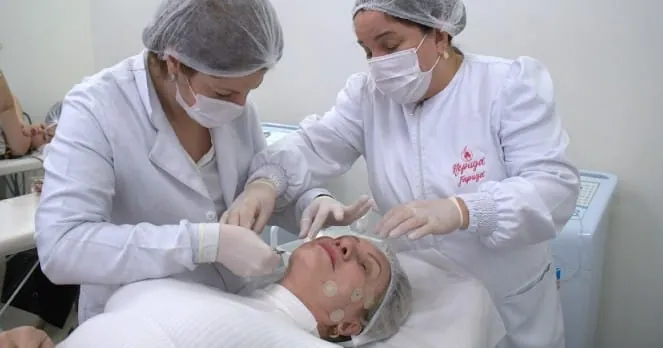
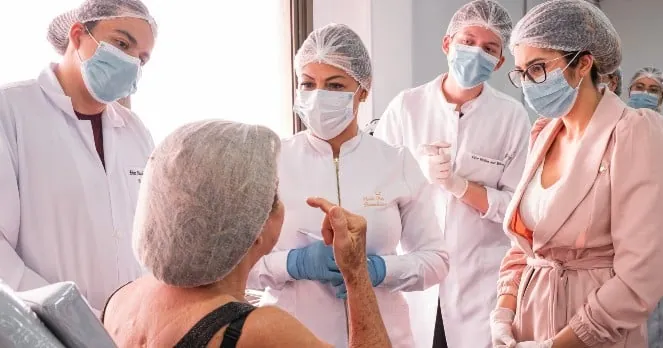
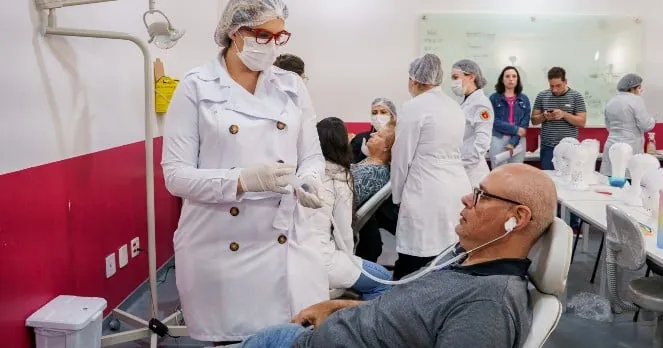
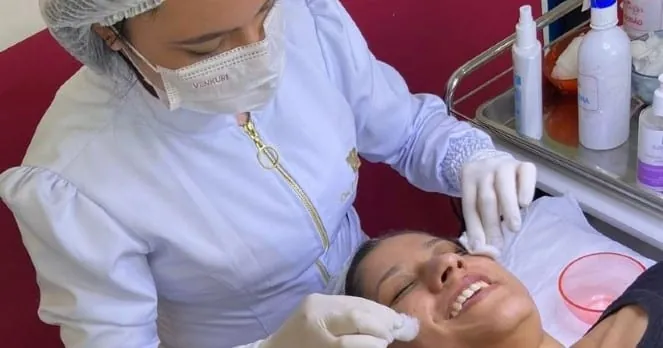
More than meeting a regulatory requirement, supervised practice lets you experience real situations from professional routine, sharpen clinical reasoning and gain confidence in performing procedures.
When choosing the course, check not only the total course load but the number of practice hours, the quality of the clinical immersions and the supervision during patient care.
Want to explore a program that combines theory, supervised practice and guidance from specialist professors? Explore the Nepuga Postgraduate Program in Aesthetic Nursing.
How to register the Aesthetic Nursing specialty with the COREN?
After completing the postgraduate program, the specialist title is registered with your state's COREN. In general, the process requires:
- Certificate of completion of the MEC-recognized lato sensu postgraduate program;
- Proof of the 100 hours of supervised practice as an integral part of the course (transcript or statement from the institution);
- Active, up-to-date professional registration;
- Title registration request to the COREN, with payment of the corresponding fee.
Documents and deadlines may vary among CORENs — check your state council's website before filing.
What can nurses do in aesthetics?
Nurses specialized in aesthetics can perform a variety of facial and body procedures permitted by professional regulations, as long as they have proper training. Among the most sought-after areas are:
- Facial harmonization;
- Botulinum toxin application;
- Fillers;
- Collagen biostimulators;
- Intradermotherapy;
- Carboxytherapy;
- Chemical peels;
- Procedures with aesthetic technologies.
Practice must always respect the limits set by the Professional Councils.
What can nurses NOT do in aesthetics?
Nurses cannot perform procedures exclusive to medicine, such as plastic surgery and acts exclusive to other health professions. They also cannot perform the more complex aesthetic procedures without having the specialization registered with the COREN, nor practice without proof of training in the specific technique.
Practicing outside these limits constitutes an ethical violation and can lead to proceedings before the council. That is why proper training is not just an advantage — it is a legal requirement.
What does a nurse who works in aesthetics do?
The aesthetic nurse performs clinical assessment, treatment planning, execution of aesthetic procedures and follow-up on patients' progress.
Her work goes beyond applying techniques: the initial consultation, individualized analysis, clinical documentation and post-procedure follow-up are part of the routine. This approach contributes to safer, more personalized results.
Want to start this journey? See all the details of the Nepuga Postgraduate Program in Aesthetic Nursing.
How much does an aesthetic nurse earn?
An aesthetic nurse in Brazil earns, on average, about R$4,000 per month (Jooble, June 2026). Professionals hired by clinics usually earn between R$3,000 and R$6,000 per month at the start of their careers. Specialists working independently, with an established client schedule, can bill between R$8,000 and R$15,000 per month — or more, depending on volume and type of procedure.
Pay varies according to experience, location, work model (CLT, formal employment, or independent), professional positioning and patient base. The potential for financial growth — especially when combined with entrepreneurship — is one of the factors that most attracts nurses to the field.
Reference figures collected from job platforms and may vary by region and market conditions.
How long does the Postgraduate Program in Aesthetic Nursing last?
On average, the Postgraduate Program in Aesthetic Nursing lasts 11 to 18 months, with a total course load between 360 and 480 hours — including the 100 minimum hours of supervised practice required by COFEN. The duration varies by institution, format and the number of practical immersions offered.
What is the best Postgraduate Program in Aesthetic Nursing?
The best Postgraduate Program in Aesthetic Nursing is the one that combines MEC recognition, at least 100 hours of supervised practice, a qualified faculty and alignment with the requirements of the Professional Councils. Before choosing, consider:
- MEC recognition;
- The institution's experience in the field;
- Number of hands-on classes and immersions with real patients;
- Teaching clinic facilities;
- Faculty;
- Teaching methodology;
- Track record of graduates.
These factors directly affect the quality of the training — and the approval of your specialty registration with the COREN.
In-person, hybrid or online postgraduate program: which to choose?
Hybrid courses, with online theory and in-person practice, are usually the best choice, because they offer flexibility without giving up the 100 in-person practice hours required to register the specialty. Compare the formats:
| Format | How it works | Point to watch |
| In-person | 100% in-person theory and practice, with frequent meetings. | Less flexibility for those who work shifts. |
| Hybrid (blended) | Online theory + supervised in-person hands-on classes at a teaching clinic. | The most sought-after model: flexibility without giving up the required 100 practice hours. |
| Online (100% distance learning) | All content at a distance, with no in-person meetings. | Does not meet the 100-hour supervised practice requirement of COFEN Resolution 715/2023. |
Important: a 100% online postgraduate program cannot fulfill COFEN's supervised practice requirement. Be wary of fully online courses that promise to qualify you for aesthetic procedures.
Is it worth investing in a Postgraduate Program in Aesthetic Nursing?
Yes, for nurses who want to expand their practice options, gain autonomy and enter a growing market, the specialization represents a strategic career investment.
Beyond technical knowledge, the training gives access to new areas of practice and a higher pay ceiling than traditional hospital nursing. The market is looking for qualified professionals, prepared to deliver safety, excellence and results to patients.
How does the Postgraduate Program in Aesthetic Nursing work at Nepuga?
Nepuga's Postgraduate Program in Aesthetic Nursing combines hybrid theoretical training, supervised practice with real patients and clinical development geared to the reality of the Aesthetic Health market.
The course is offered in two tracks: Essential (360 hours), with an emphasis on facial harmonization and injectables and 11 clinical immersions; and Premium (480 hours), with an emphasis on facial harmonization, body harmonization and injectables and 15 clinical immersions. Both last an average of 11 months, with pre-scheduled in-person meetings on weekends.
Among the differentiators are the PUGACODE® Method, a specialized faculty, our own teaching clinics and the national presence of Nepuga, a reference in Aesthetic Health training for more than two decades.
Frequently asked questions about the Postgraduate Program in Aesthetic Nursing
Can nurses administer Botox?
Yes. Nurses specialized in Aesthetics, with a title registered with the COREN, can administer botulinum toxin, as long as they prove training for the procedure, in accordance with COFEN resolutions.
Do I need a postgraduate program to work in aesthetics?
Yes. To perform the more complex aesthetic procedures, COFEN requires a lato sensu postgraduate program recognized by the MEC and registration of the specialty with the COREN.
How many practice hours must the program have?
At least 100 hours of supervised practice, in accordance with COFEN Resolution No. 715/2023.
Can the Aesthetic Nursing postgraduate program be 100% online?
No. The theory can be online, but the 100 hours of supervised practice must be in person for the COREN to register the specialty.
How long does the specialization last?
On average, 11 to 18 months, with a course load between 360 and 480 hours, depending on the institution and format.
Can a nursing technician take a postgraduate program in aesthetics?
No. The Postgraduate Program in Aesthetic Nursing is exclusive to nurses with a completed degree and an active COREN registration.
Take the next step in your career
The Postgraduate Program in Aesthetic Nursing is the gateway for nurses who want to broaden their professional horizons, develop new skills and work in a field that continues to grow in Brazil.
If you want to work in aesthetics with training aligned with the demands of the market and the Professional Councils, explore the Nepuga Postgraduate Program in Aesthetic Nursing and discover how to build technical confidence, clinical reasoning and hands-on experience for your journey.
👉 Explore the Nepuga Postgraduate Program in Aesthetic Nursing
References
Laís Bianquini
NEPUGA content team — Núcleo de Especializações Ana Carolina Puga.