Anatomy and physiology in clinical decision-making represent the scientific foundation that supports safe, predictable, and responsible choices in aesthetic and clinical practice. Understanding how anatomical structures and physiological processes behave in the body is what separates conscious technical decisions from conduct based only on repeating techniques.
In Aesthetic Dentistry, technique without an anatomical foundation does not sustain results, let alone safety. Before any procedure, there is a non-negotiable step: deeply understanding the human body, its limits, its structures, and its responses. It is this understanding that strengthens anatomy and physiology in clinical decision-making and turns technical execution into responsible professional practice.
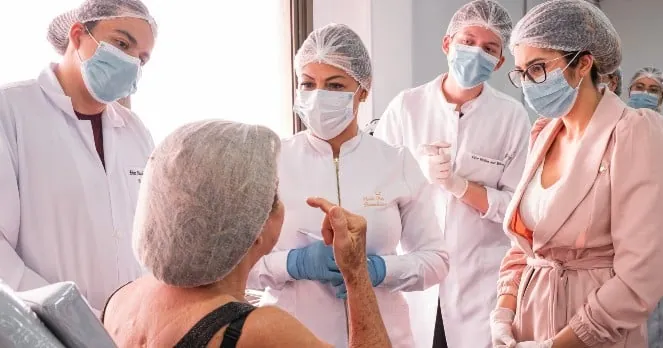
For Dr. Dyllima Lopes, a dentist and student in the Orofacial Harmonization specialization, the Facial, Head, and Neck Anatomy and Physiology course represents exactly that foundation.
“One of the subjects I enjoyed the most and found most important was head and neck anatomy. It was already a subject I loved in college, and going deeper into it in the specialization was super important because it gave me much more confidence when treating patients.”
Confidence that comes from knowledge is not a subjective perception; it is the direct result of anatomy and physiology in clinical decision-making applied consistently.
How anatomy and physiology in clinical decision-making reduce risks and increase predictability
Anatomy and physiology in clinical decision-making act as a central pillar for reducing risks and increasing the predictability of results in aesthetic and clinical practice. When professionals deeply understand the anatomical organization and the physiological processes involved in each intervention, their choices stop being empirical and become grounded in clear, measurable technical criteria.
A large share of clinical errors is associated with a lack of anatomical knowledge or a superficial interpretation of the body's physiological responses. The absence of anatomy and physiology in clinical decision-making compromises professional safety, raises the chance of complications, and weakens decision-making in situations that demand precision. On the other hand, the correct application of anatomy and physiology in clinical decision-making makes it possible to anticipate tissue behavior, assess intervention limits, and select the most suitable techniques for each case.
This direct link between science and decision-making strengthens the professional's clinical authority, who comes to work with more confidence, coherence, and technical backing. Predictable results do not come from mechanical repetition of techniques, but from a conscious reading of the human body guided by anatomy and physiology in clinical decision-making. Thus, mastering applied anatomy and physiology consolidates practices that are safer, more responsible, and aligned with the principles of clinical excellence.
Understand before you execute: the reasoning that supports practice
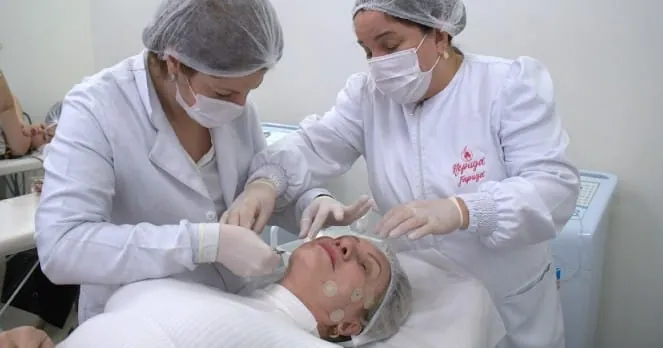
In the course, the doctors revisit and deepen essential structures of the face, head, and neck, with a direct focus on clinical application and on anatomy and physiology in clinical decision-making. It is not just about memorizing names or anatomical pathways, but about understanding how each structure relates to aesthetic practice and influences professional decisions.
This mastery directly affects clinical practice, from planning to the safe management of complications, reinforcing the importance of anatomy and physiology in clinical decision-making at every level of care.
“It gave me much more confidence, both when performing the procedure and in my command of any complication that might happen.”
When professionals understand what lies beneath the skin, every decision stops being reactive and becomes strategic, guided by anatomy and physiology.
Anatomy is not a detail. It is the foundation.
Dr. Dyllima's words sum up the central principle of responsible clinical preparation and of anatomy and physiology in clinical decision-making:
“There's no point in using the best product or knowing the perfect technique if we don't know the anatomy, where the vessels are, where the nerves are, where we are injecting that product,” says Dr. Dyllima.
In Orofacial Harmonization, this knowledge is not supplementary. It is essential to:
-
Reduce risks
-
Increase the predictability of results
-
Carry out procedures with anatomical awareness
-
Uphold anatomy and physiology in clinical decision-making with ethics and responsibility
The course reinforces that aesthetic excellence begins long before the application.
Depth that builds real confidence
By revisiting anatomy and physiology with a clinical eye applied to Orofacial Harmonization, the doctors broaden their ability to analyze, plan, and make decisions. The content is presented in an integrated way with practice, connecting theory, clinical cases, and real care scenarios, always anchored in anatomy and physiology in clinical decision-making.
This depth turns fear into clarity and doubt into technical mastery.
“For me, that's fundamental. And I found this subject here in the postgraduate module incredible.”
When knowledge supports professional leadership
The Facial, Head, and Neck Anatomy and Physiology course does not prepare you only to perform procedures, but to think like a specialized professional, anticipate risks, and act safely in any clinical context.
Each course is built to prepare doctors who are aware of the impact of their own decisions, with a solid foundation, a critical eye, and a responsible stance toward the patient.
Because, in Aesthetic Dentistry, the result begins with anatomy. And safety begins with knowledge.
Success Is In Your Hands.
Laís Bianquini
NEPUGA content team — Núcleo de Especializações Ana Carolina Puga.