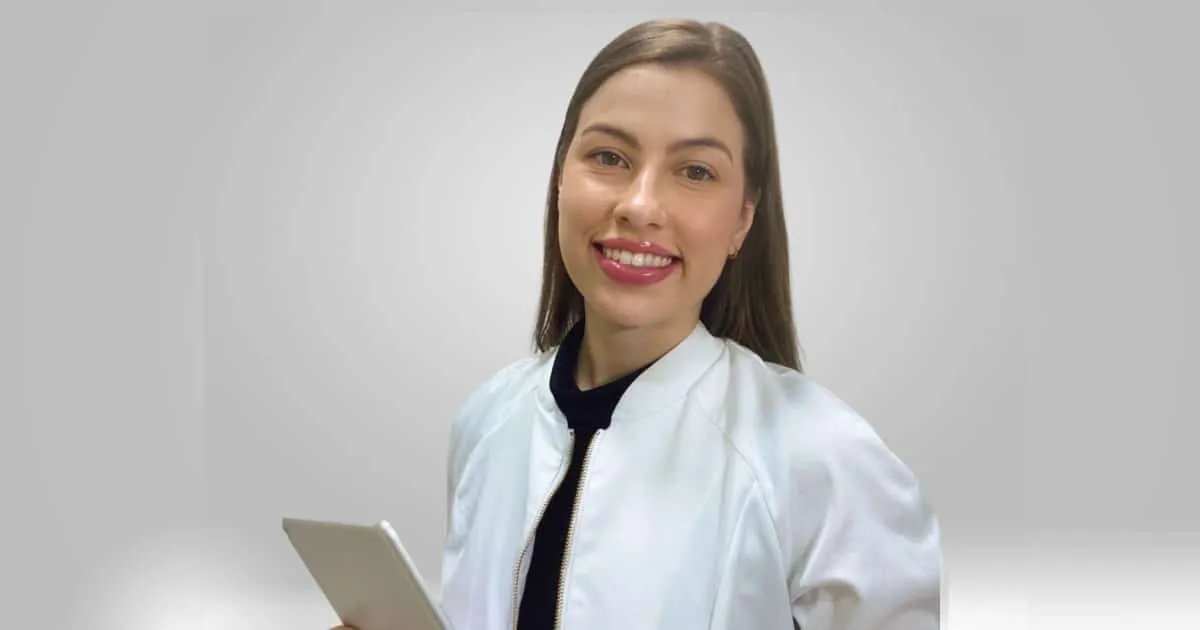
Dr. Amaralina Bermudes de Oliveira holds a degree in Nursing from Universidade Veiga de Almeida – UVA, has a specialization in oncology, and recently became a graduate of the Postgraduate Program in Aesthetic Nursing at Nepuga/FAPUGA, at the Rio de Janeiro – SP unit.
Completing her postgraduate program in 2020, she earned outstanding grades and an excellent Final Course Paper (TCC) focused on Aesthetic Nursing. The topic chosen was: “TREATMENT TECHNIQUES FOR ALOPECIA AND THE CONTRIBUTION OF AESTHETICS TO THE TREATMENT PROCESS”.
Health is one of the most valuable things a person can have, and in that sense we know how important it is to maintain it. However, the task is not simple, since health is a complex term that involves multiple issues and is not only the absence of disease, but quality of life in its integral form.
In this regard, the graduate reflects on this context: “Aesthetic issues, for example, can represent something significant in people's lives, contributing in a certain way to quality of life. Self-esteem, for example, is affected by aesthetic issues, whether positively or not. In this sense, it is important to consider, for example, the value that hair can have for individuals, and one of the problems that affects the lives of some people is alopecia, the scientific term used to designate partial or total, senile or premature, temporary or permanent loss of body hair or scalp hair”.
The Aesthetic Nursing paper consists of a literature review on the topic in question, and Dr. Amaralina discusses the subject “This inflammatory disease can cause psychosocial changes, affecting the quality of life of the affected population. Considering these discussions, this study aims to carry out a literature review on the treatment of alopecia. The rationale is based on the great value hair has for both men and women, as it contributes to self-esteem, which is one of the factors related to quality of life”.
Moreover, addressing the definitions and treatment methods of the disease, Dr. Amaralina explains “Alopecias are the result of changes in the hair follicles and can be total or partial. Follicles are considered small organs formed by a neuroectodermal-mesodermal interaction”. However, the treatments are diverse and vary according to the case “The Brazilian Society of Dermatology points out that there are many treatments available for alopecia areata. Topical medications such as minoxidil, corticosteroids, and adrenaline can be combined with more aggressive treatments such as sensitizers (diphencyprone) or methotrexate”.
Dr. Amaralina highlights the importance of treatments in Aesthetic Nursing, since symptoms can regress or advance depending on the patient's conduct: “Without treatment, the disease can progress, with a hair loss rate of 5% per year. Currently there are two drugs most widely used in treatment, which are topical minoxidil and oral finasteride”. She also stresses that therapy with these drugs allows a reduction in hair loss, usually visible after 3 to 6 months of treatment”.
Read Dr. Amaralina Bermudes de Oliveira's Final Course Paper in full!
: Oliveira, A. B. Treatment techniques for alopecia and the contribution of aesthetics to the treatment process. Nepuga/Fapuga. Rio de Janeiro, RJ. 2020.
Also read the case of Dr. Siomara Fernandes, on “REJUVENATION IN THE 21ST CENTURY – A HEALTH ISSUE”. Other success stories are available on the blog.
Academic HighlightsSarah
NEPUGA content team — Núcleo de Especializações Ana Carolina Puga.