


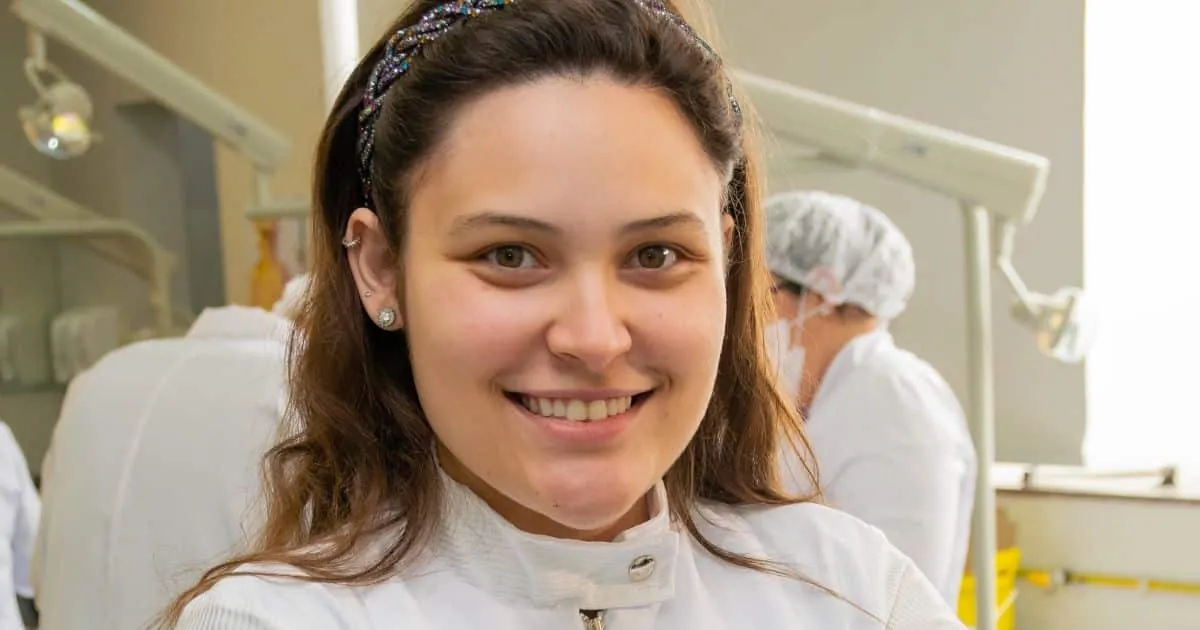
Dr. Victoria Fanti may not have much time in practice or experience as a dentist yet, but her business vision for the field she is now specializing in is clear. She sees combining procedures as the best way to get good results, both for her patients and in terms of financial return.
3 Ways to Combine Procedures
1 – Combining Procedures to Achieve the Best Results
The postgraduate student explains that many of the expected results do not depend on just one specific type of aesthetic procedure. Often, a wrinkle complaint, for example, will not be solved by botulinum toxin alone, which is a treatment that acts on the muscle tissues, paralyzing them and preventing new wrinkles from forming.
So, if wrinkles are already present, what will really address the issue is the application of fillers; however, the tissue needs good flexibility to properly support filler application, so looser skin calls for other types of procedures, such as collagen biostimulators.
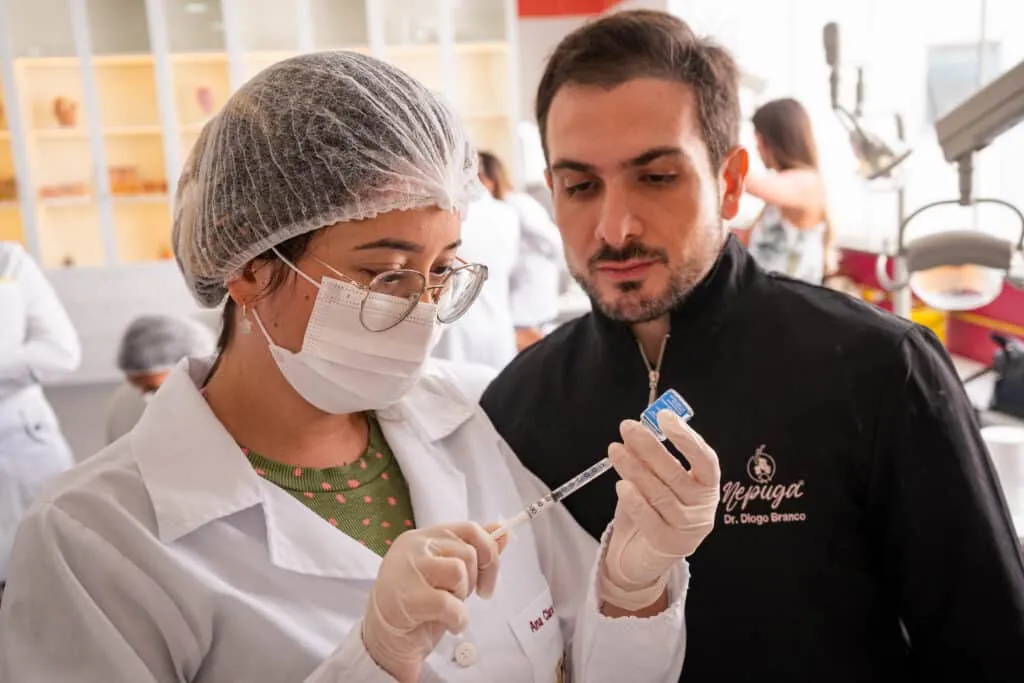
But this is just one example among many possibilities and treatments, meant to show that every case has its own specifics and can benefit from protocols that combine different types of treatments to achieve the best possible results.
Because she is completing a full postgraduate program in Orofacial and Surgical Harmonization, Dr. Victoria also draws a comparison between the program and performing these more complex procedures, since short courses are far more specific and do not prepare health professionals to perform combined protocols, only isolated procedures:
“Today, the specialization brings that broad knowledge that mentorships and short courses don’t provide. To meet the needs of a patient who comes in with a specific demand, if I only know about botulinum toxin, I have no way of telling them that this is going to happen, that their skin is a certain way, that it will react in another way, because we need to study.”
2 – A Look at the Harmony Between Face and Smile
The dentist already works in restorative dentistry, with composite resin veneers, an area closely related to facial aesthetics, since it considers smile harmony, which must be understood together with the characteristics of each patient’s face.
So, professionals in restorative dentistry find orofacial harmonization to be a highly relevant advanced study, broadening their own understanding and clinical eye toward a harmony that truly looks at the face and smile together.
As Dr. Victoria points out, thinking about her work in restorative dentistry and the perspective she has developed from the postgraduate program: “When we think about teeth, we can’t help but also think about people’s faces: the height of the teeth matters, the dimensions of the person’s face play a part.”
A professional specialized in restorative dentistry and orofacial harmonization can then offer a treatment with complete results that are very satisfying and truly meet patients’ expectations and needs. After all, once they have a renewed smile, patients often also look for better-defined lip contours, improvements in skin appearance, and so on. Being able to offer all of these treatments with quality increases the chances of building patient loyalty.
3 – Combining with Functional Procedures
Another possibility for combining treatments and procedures that Dr. Victoria highlights is functional treatments, such as those that aim to help with pain caused by temporomandibular disorders, as she explains:
“Some people have horrible pain in the joints, which is our dental area, and we resolve it using a splint, but besides the splint there is botulinum toxin, both in the temporalis and across the whole muscle to give that relaxation, to loosen the patient’s musculature and, after that, when the pain persists, we do an infiltration with hyaluronic acid inside the patient’s joint cavity.”
Even though these techniques are not the focus of studies in Orofacial Harmonization, throughout the clinical immersions, through advanced study and practice with real patients, professionals have the chance to deeply develop their knowledge of the substances used, how they behave and interact with the body and, of course, the techniques used to inject them.
In other words, through HOF, Dr. Victoria and her colleagues are gaining clinical skills to truly work with extraoral procedures involving the face and neck, allowing them to combine aesthetic procedures performed in these areas with practices specific to other dental specialties, becoming far more complete professionals who are able to meet the demands that come up in their clinics.
Laís Bianquini
NEPUGA content team — Núcleo de Especializações Ana Carolina Puga.


