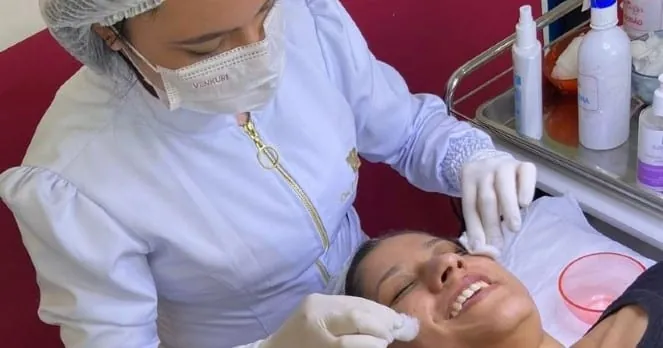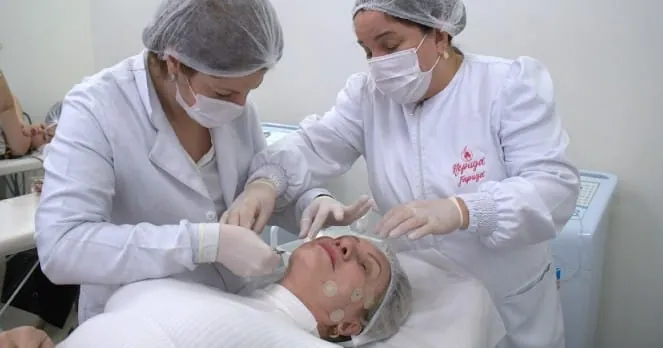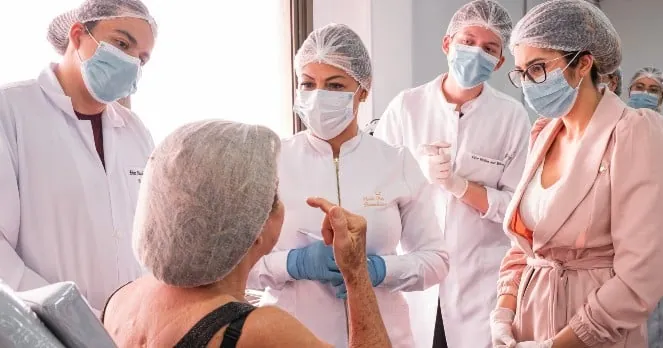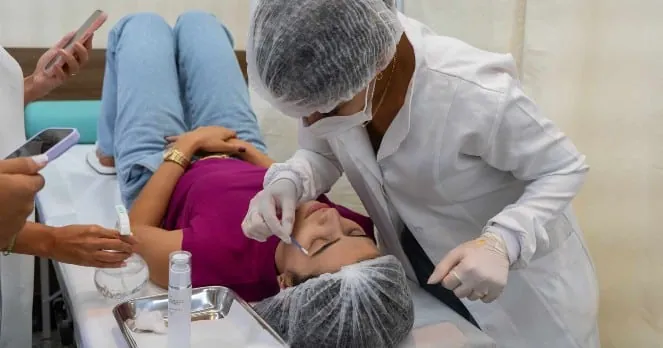
There is no consistent aesthetic result without assessment, planning, and technical mastery. Before any active ingredient, acid, or device touches the patient's skin, there is a decisive step: understanding what that skin really needs. It is precisely this understanding that turns the use of peels in Aesthetic Health into a strategic technique — when applied with judgment, science, and responsibility.
This is the recurring perception of the doctors who experience the course on Mechanical, Chemical, and Enzymatic Peels at Nepuga. More than learning types of acids or degrees of exfoliation, they develop clinical reasoning, confidence in decision-making, and professional autonomy.
“I loved the way Professor Christine Costa led the class. It was very instructive, with clear explanations, which made it much easier to understand and apply in practice.”
When theory and practice go hand in hand, even the most technical content stops being complex and starts to make sense in the office.
Peels in Aesthetic Health start with clinical assessment
Peels in Aesthetic Health are never isolated procedures. They come from careful assessment, active listening, and correctly reading the skin. At Nepuga, doctors learn that there is no standard protocol when it comes to real people.
During the course, fundamental topics are covered, such as:
-
skin phototype analysis
-
identification of aesthetic dysfunctions
-
patient history and risk factors
-
correct choice of peel type
-
defining time, concentration, and combination of actives
This approach avoids common mistakes, reduces complications, and strengthens the patient's trust in the professional.
Types of peels and their indications in clinical practice
Throughout the classes, doctors deepen their knowledge of the main types of peels used in Aesthetic Health:
-
Mechanical peels, indicated for superficial renewal and cell stimulation
-
Chemical peels, with different depths and therapeutic purposes
-
Enzymatic peels, ideal for sensitive skin and progressive treatments
Each technique is presented with a focus on indications, contraindications, mechanisms of action, and pre- and post-procedure care. This allows professionals to stop repeating ready-made formulas and begin building personalized strategies.
When theory meets professional confidence
It is common for content related to the chemical composition of acids to cause insecurity at first. However, it is exactly this knowledge that sets apart the professional who simply performs from the one who decides with authority.
At Nepuga, complexity is not avoided; it is translated. Professors use accessible language, clinical examples, and real situations so that doctors understand:
-
why to choose a certain active ingredient
-
when to combine techniques
-
how to interpret the skin's response
-
how to adjust the treatment plan
This process turns insecurity into technical mastery and strengthens clinical autonomy.
Peels as a strategic entry point into Aesthetic Health
Peels are among the most valued techniques because they offer visible results, good patient acceptance, and wide applicability. When properly indicated, they work in the treatment of:
-
spots and dyschromia
-
skin aging
-
acne and scars
-
uneven skin texture
-
dullness and dryness
In addition, they can be combined with other procedures, expanding the therapeutic possibilities within the office.
For those just starting out in Aesthetic Health, peels are a safe entry point. For those already practicing, they become a strategic resource for boosting results and building patient loyalty.
Far beyond technique: aesthetic-functional reasoning
What sets the course apart is not only the technical content, but how it is integrated into clinical practice. Doctors develop a more critical, analytical, and sensitive view of the skin, understanding that every skin response is unique.
This foundation strengthens:
-
aesthetic-functional reasoning
-
the ability to adapt protocols
-
ethics in recommending procedures
-
clear communication with the patient
By the end of the course, many say they came to see peels not as something isolated, but as part of a larger strategy of care, rejuvenation, and transformation.
Mastering peels means mastering clinical decisions
In Aesthetic Health, applying is not enough. You need to know why, when, and how to apply. Mastering peels allows professionals to work with more safety, predictable results, and technical authority.
Because seeing the skin is important.
But seeing the person is essential.
Success Is in Your Hands.
Laís Bianquini
NEPUGA content team — Núcleo de Especializações Ana Carolina Puga.