In pursuit of the title of aesthetics specialist, graduates Ana Clara Silva Moreira, Bárbara Anne Júlio Papa, Flávia Andrade de Menezes, and Lucélia Santos Buzato, submitted their monograph to the Nepuga/FAPUGA examining committee.
The group, made up of three biomedical professionals and one pharmacist, faced the challenge of finding a topic that would dynamically integrate the concepts covered in the Postgraduate Program in Aesthetic Biomedicine, and also in Aesthetic Pharmacy.
Completing the Postgraduate Program in 2019 at the Belo Horizonte-MG campus, the topic chosen for the group's Final Course Project (TCC) was: “Treatment of acne and its scars using platelet-rich plasma (PRP).”
Earning the top grade, confirmed by the Examining Committee, the project joins the Nepuga/FAPUGA library with the Academic Highlight seal. Investigating the use of PRP in acne treatment, the study's final conclusion points to effective results.
“The aim of this work was to verify the use of platelet-rich plasma as a treatment for acne and its scars. To do so, it is necessary to understand the factors involved in acne and its scars, understand the etiopathogenesis of acne and the five grades of acne, and learn the principle of PRP, growth factors, the preparation method, and the application method of this technique.”
According to the definition presented in the work, acne is the term used to describe pimples and blackheads that appear due to an inflammatory process of the sebaceous glands and pilosebaceous follicles.
“Although it affects males more severely, acne affects both sexes, with greater persistence in females. In addition to the discomfort caused by the lesions, acne also reaches psychological spheres due to aesthetic concerns, especially during adolescence.”
In general, acne is seen as a common factor in adolescence, but in some cases it can have consequences in adult life. “A teenager with acne can become an insecure, shy, depressed, unhappy person with low self-esteem, triggering serious repercussions for the rest of their life,” the study notes.
Among the aesthetic procedures used, it is necessary to determine the most suitable one for each case: “There is a wide range of procedures to treat acne, including chemical dermabrasion, laser, fat grafting, and dermal filler treatments. However, most of them offer less than satisfactory results, because they have limitations and may cause negative consequences.”
Thus, PRP emerges as an effective alternative treatment for acne and its scars: “PRP is the name given to platelet-rich plasma. PRP is the fraction of blood with a high platelet count (above the baseline concentration of 150,000-350,000 pl/uL). Growth factors are present in platelets and are very important in the healing process, including cell proliferation, migration, and differentiation, collagen synthesis, granulation tissue formation, and angiogenesis.”
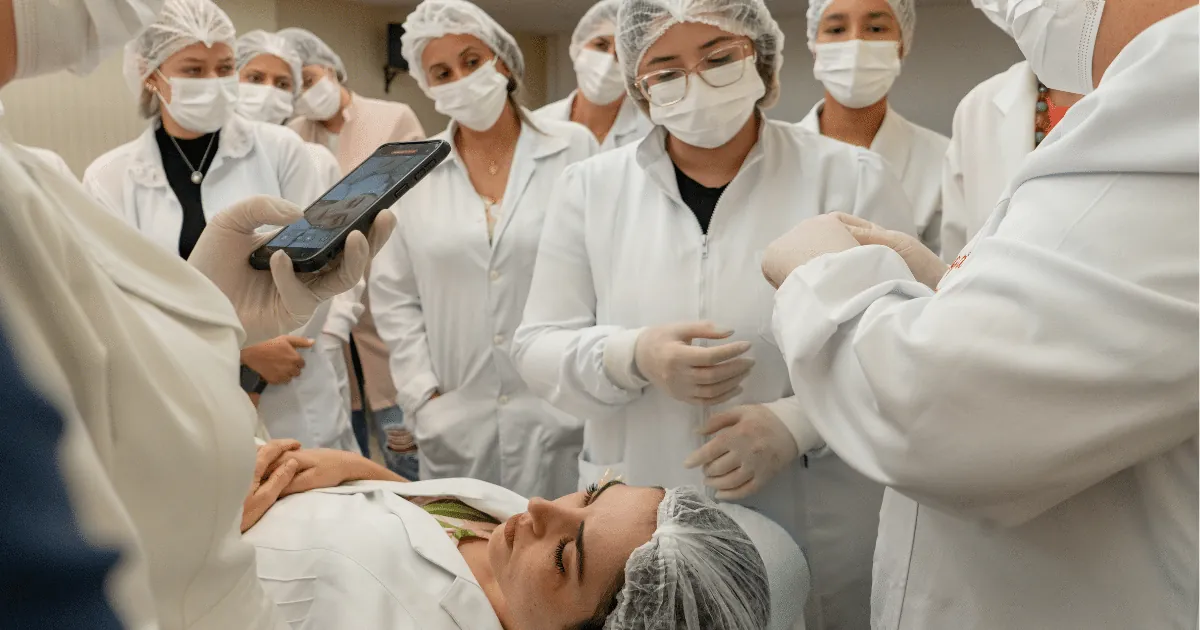
According to the group of specialists, the mode of action of PRP application on scars is based on causing mild inflammation, which stimulates the healing cascade and also helps repair the tissue. “Because of this system, the newly formed collagen progresses and improves, gaining elasticity. This elasticity is what gives scars a milder appearance.”
By analyzing several studies, the postgraduate students reached a conclusion: “It was found that the use of PRP can soften marks and scars, improving their appearance in all skin tones. Platelet-rich plasma has many advantages, among them that it is an autologous product, which means a donor is not needed and considerably lowers the chance of infection and of treatment rejection.”
Read the full Final Course Project!
Academic HighlightsSarah
NEPUGA content team — Núcleo de Especializações Ana Carolina Puga.