“First of all, we thank God for the gift of life and for allowing us to get this far, our families for all their dedication and patience, and for always supporting us at every moment. To everyone who directly or indirectly took part in our training, our heartfelt thanks.”
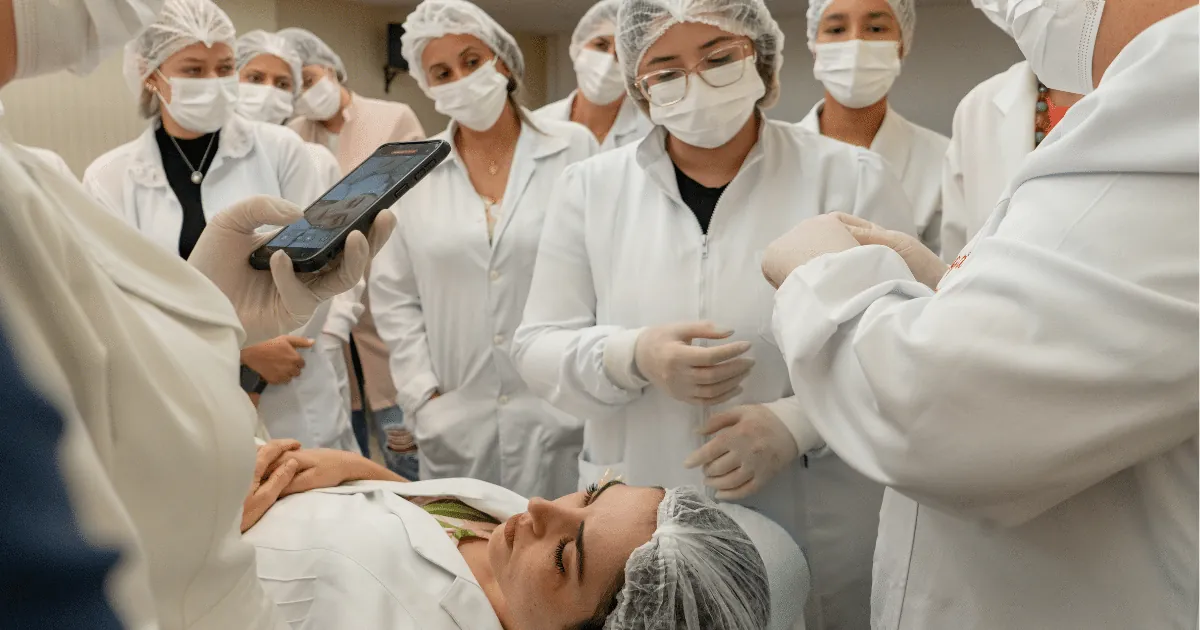
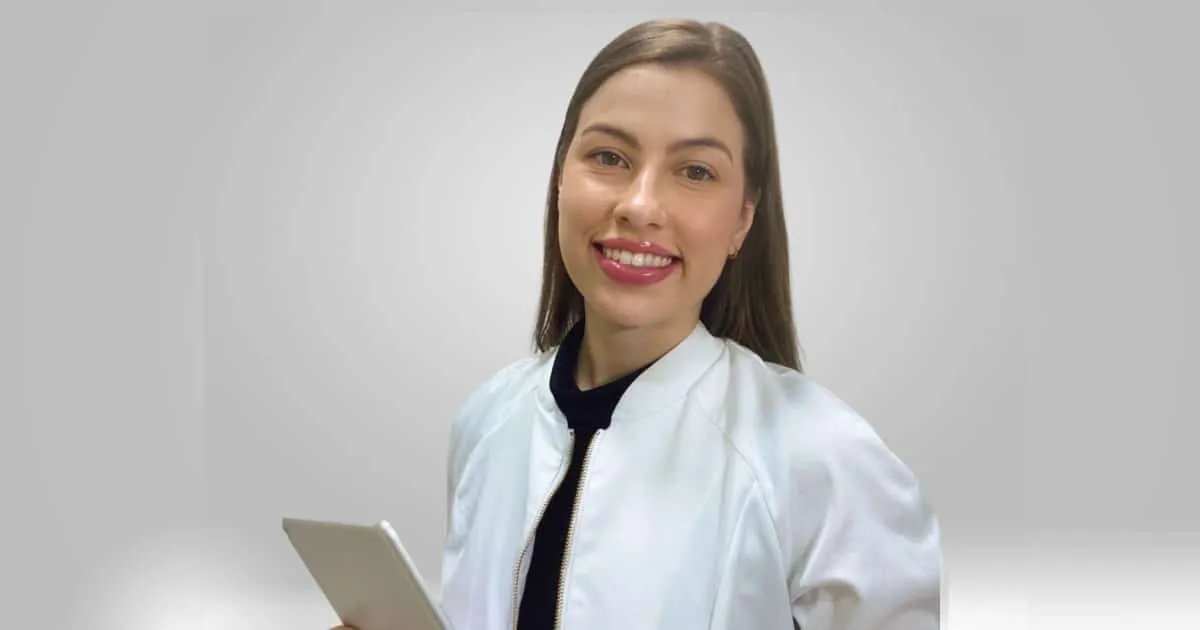
The alumnae Fernanda Bossatto (Aesthetic Pharmacy), Márcia Meira (Aesthetic Nursing), Patrícia Fernanda Lins (Aesthetic Nursing) and Patrícia Frinhani (Aesthetic Pharmacy), submitted their Final Course Project (TCC) to the Nepuga/FAPUGA examination board, seeking the title of aesthetics specialists.
The paper explores the following topic: “Benefits of hyaluronic acid fillers in facial treatments”. Its central goal is to present and discuss the results of scientific studies that demonstrate the benefits of using this filler for facial rejuvenation.
Right in the introduction, the specialists, who graduated in 2019, point out that facial aging is the result of numerous intrinsic and extrinsic factors that interact with one another. “Sun exposure or photoaging, changes caused by the environment, continued tobacco use, and improperly performed aesthetic treatments contribute significantly to changes in the skin, causing wrinkles, hyperchromic spots and loss of elasticity”
In addition, with skin changes, the convexities typical of a youthful appearance tend to become flattened and concave. As a result, the pursuit of rejuvenation keeps growing and drives the development of techniques.
“Recognizing the importance of this volume loss in the aging process led to a paradigm shift in rejuvenation, influencing the choice of minimally invasive techniques. In this sense, facial rejuvenation has moved from the mere disappearance of wrinkles and surgical lifting to an approach focused on muscle relaxation and volumization with restoration of facial contour”.
Use of Hyaluronic Acid in Facial Filling
In this context, the potential of hyaluronic acid has been explored, “Today, the market offers a wide variety of active ingredients, in terms of structure and properties, which, combined with technological advances in aesthetics and consumer demands, serve the development of new treatments. Among these actives, Hyaluronic Acid (HA) stands out, which in addition to being naturally present in the skin, is also synthesized from animal tissue or bacterial fermentation”.
The students of the aesthetic specialization stress that the search for noninvasive methods, as well as new technologies, drugs and other rejuvenation-related products, is an increasingly significant trend. “Skin filling is among the most widely used nonsurgical procedures, and when done with HA, it ranks second among the five most performed procedures in the United States, for example.”
Among the benefits cited by the study, the final result and safety stand out. “HA fillers are currently the most widely used, due to ease of application, predictable effectiveness, a good safety profile and fast patient recovery”.
Despite ongoing research on the active ingredient, the specialists conclude positively, “The results of hyaluronic acid filling for treating facial aging are satisfactory and promising. As a result, it provides the patient with physical and psychosocial well-being and improved self-esteem”.
Academic HighlightsNepuga
NEPUGA content team — Núcleo de Especializações Ana Carolina Puga.