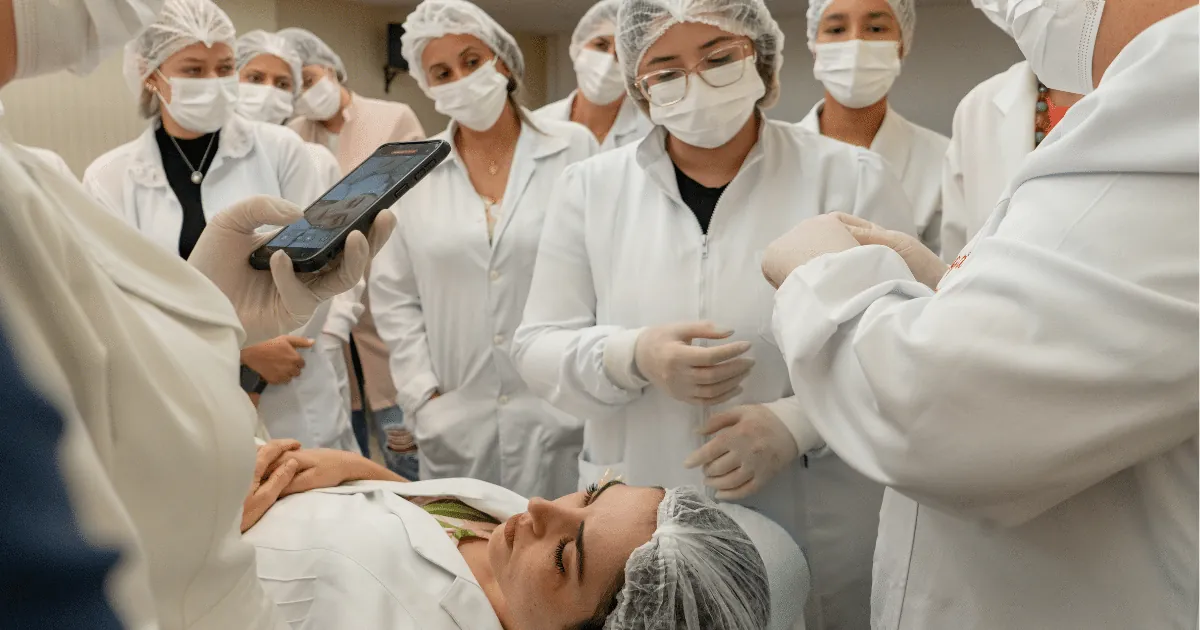
Specialists Ritta Vilar (Aesthetic Pharmacy), Inaiá Egan (Aesthetic Nursing), and Elane de Moura (Aesthetic Pharmacy) submitted their Final Course Paper (TCC) to the Nepuga/FAPUGA Examination Committee in 2019.
The title chosen by the group from the Recife-PE unit was “Botulinum Toxin in Facial Rejuvenation: Pharmacological and Anatomical Concepts for Its Use”. Using a literature review methodology, the authors discuss the main concepts of the topic.
In general, facial wrinkles are signs of aging, weakness, or a lack of health and vitality. As a result, wrinkle-reduction techniques have gained popularity because they are relatively noninvasive and affordable compared to surgical procedures.
Botulinum toxin type A (BTA) has become the leading aesthetic modality for treating wrinkles and expression lines, “The skin is one of the most important organs through which human beings interact with the environment they live in. Dermal atrophy combined with the mimicry of hyperdynamic facial muscles contributes to the formation of visible lines and wrinkles, which are a prominent feature of aging”.
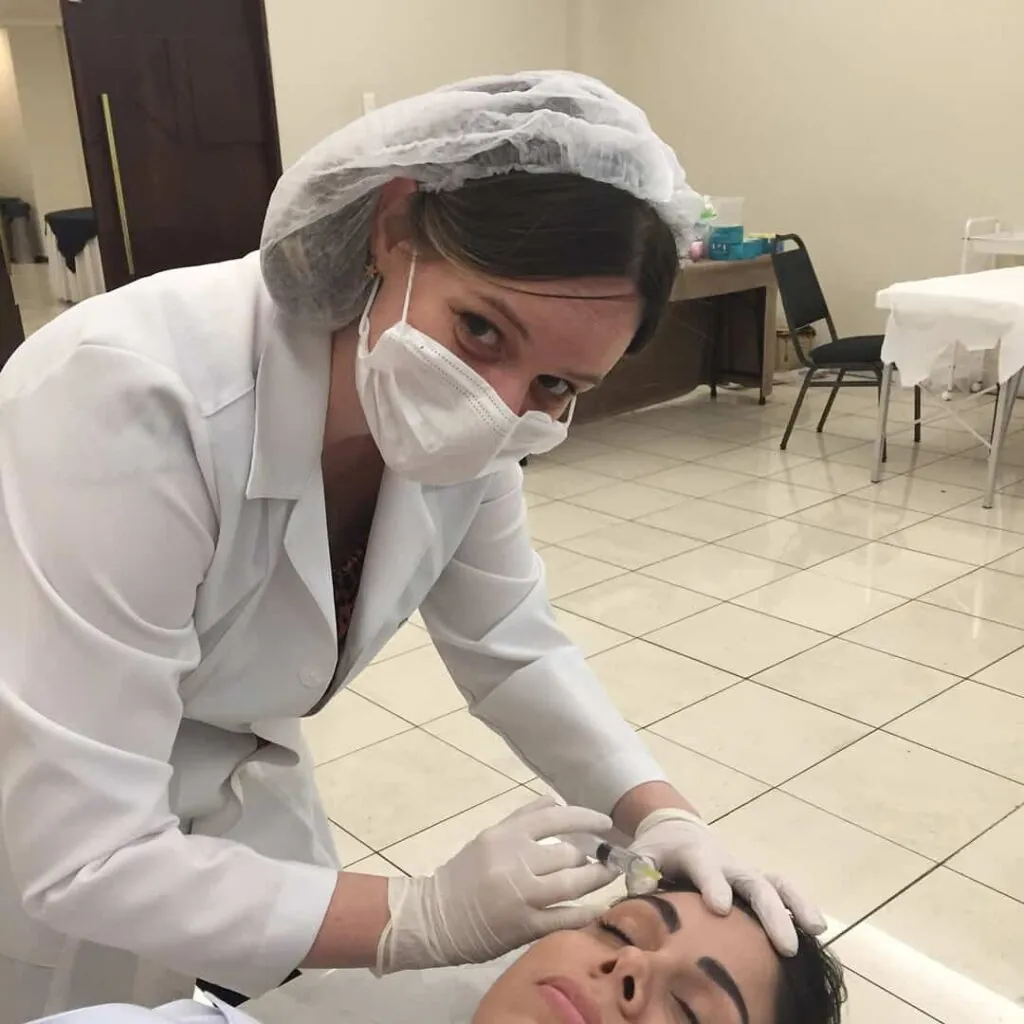
Highlighting the pharmacological concepts of botulinum toxin, the specialists explain:
“Botulinum toxin is a potent neurotoxin produced by a gram-positive, strictly anaerobic, spore-forming bacterium called Clostridium botulinum. It comes in seven different serotypes (A, B, C, D, E, F, and G). Each of these serotypes produces a single neurotoxic form that selectively blocks cholinergic neurotransmission, thereby causing muscle paralysis. For aesthetic purposes, botulinum toxin A (BTA) was singled out”.
As the most popular noninvasive procedure for facial rejuvenation, its application is recommended in several areas, “BT treatment is indicated to shape the eyebrow and nose, soften expression lines on the forehead, lift the corners of the mouth, smooth dynamic wrinkles on the face as well as the neck and décolletage, and correct facial asymmetries”.
Since facial procedures have a major impact on patients' self-esteem and social well-being, the aesthetic specialization paper warns about the importance of knowing facial anatomy:
“This knowledge involves the details of each muscle, its origin, insertion, pulling force, and its role as an agonist or antagonist of facial expressions. Likewise, understanding the pharmacological aspects of BTA and its mechanism of action is extremely valuable in order to understand the goal of the treatment, its onset, and its duration”.
In this way, the group of specialists arrives at a common denominator, “It was possible to conclude that correct anatomical and pharmacological knowledge is essential in order to perform a safe and effective administration technique, in any of its indications”.
Read the Full Final Course Paper!
Academic Highlights : Villar, R. Egan, I. Moura, E. Botulinum Toxin in Facial Rejuvenation: Pharmacological and Anatomical Concepts for Its Use. Nepuga/Fapuga. Recife – PE.
Sarah
NEPUGA content team — Núcleo de Especializações Ana Carolina Puga.