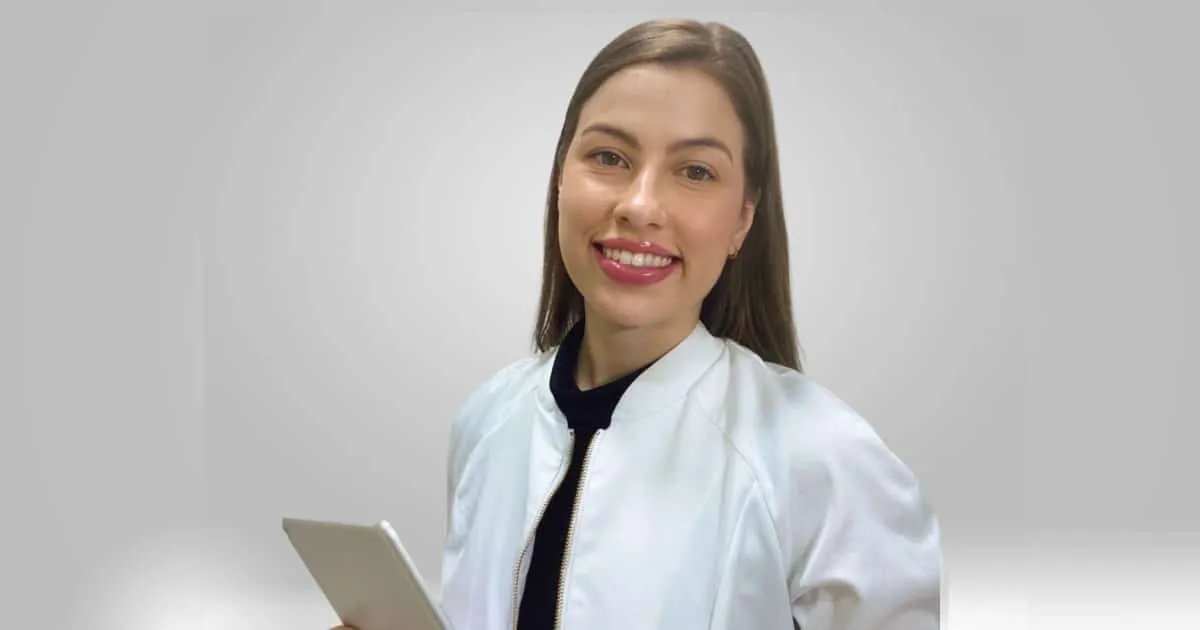
Dr. Ulysses Amâncio de Frias holds a degree in pharmacy, a postgraduate degree in Aesthetic Pharmacy, and a doctorate and postdoctorate from USP. He is currently co-owner of an aesthetics clinic, a professor in postgraduate courses in Aesthetic Health, and a speaker on Advanced Aesthetics.
In 2019, he completed his postgraduate program by submitting his Final Course Project (TCC) on “Facial Harmonization: Updates and Perspectives on the Use of Dermal Fillers, Botulinum Toxin and Biostimulators”.Among his thanks to Nepuga and the faculty, he stresses the importance of the support he received from his wife and stepson along this journey, who helped him not give up on reaching his goals.
“I thank my whole family for the encouragement, help and thoughts that led me to seek more knowledge and always perfection”, he says.In this Academic Spotlight, you will learn a little about Dr. Ulysses’s final study on Facial Harmonization.
Aesthetic Pharmacy: Facial Harmonization
Dr. Ulysses’s study in his final project for the postgraduate program in Aesthetic Pharmacy makes it possible to understand the concept of facial harmonization, since the procedure seeks to provide symmetry and a standard to the patient’s face.
“Symmetry refers to one half of an object being the same as the other half. Beauty is not exact, but there is a system of proportion that includes facial height, width and symmetry. However, the definition is still subjective, since it includes factors such as social, cultural, ethnic and age. In this case, facial beauty is determined by the harmony of proportions and symmetry”, he explains.The standard for a face is characterized by how much a face resembles most other faces. For this, youth is taken into account, since facial change results from aging.
“Thus, facial harmonization emerged as a tool to bring symmetry, standardization and rejuvenation to a face, whether male or female”, says Dr.
For this reason, facial harmonization has been gaining more and more ground, evolving in recent years, and demand for this aesthetic procedure only keeps growing. “This happens by achieving harmonious, non-surgical results with no need for recovery time.”
Fillers in Aesthetic Pharmacy
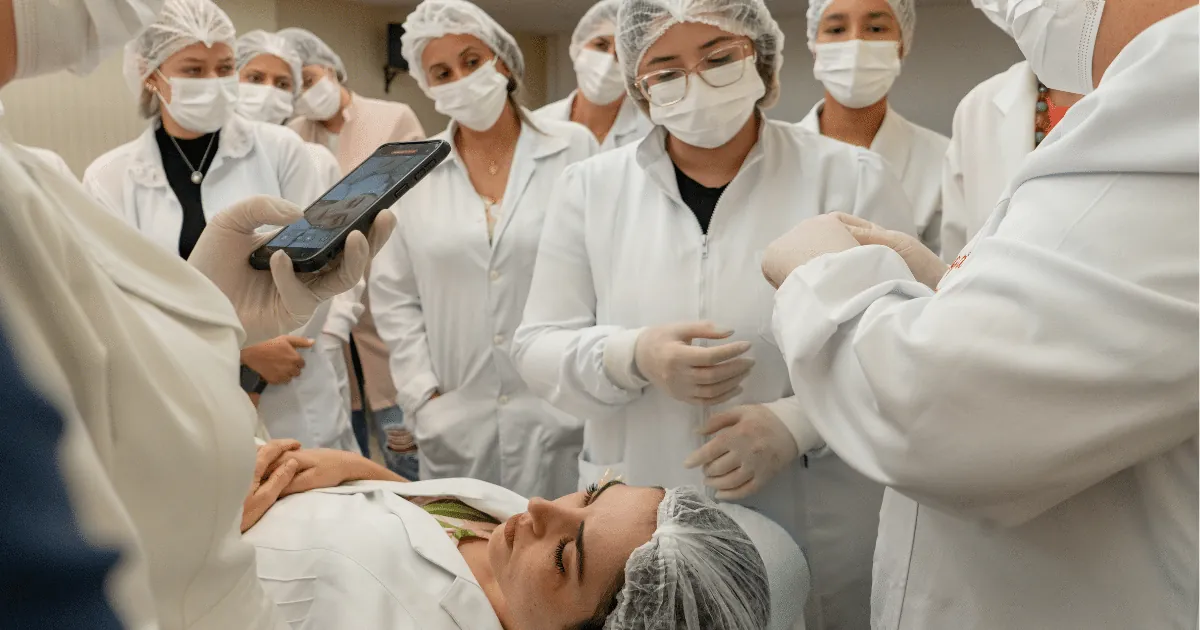
To perform this procedure, the facial corrections that need treatment are carried out with dermal fillers, botulinum toxin and biostimulators. Dr. Ulysses explained each of them in his final project.
“The use of hyaluronic acid dermal filler to correct folds and depressions and to give support to sagging regions is already well known, as is the use of botulinum toxin to promote muscle relaxation and, consequently, improve wrinkles and expression lines.”
In the case of biostimulators, such as Sulptra, Radiesse, Ellansé and PDO, the use is recent and brings a modernity capable of stimulating collagen production and providing facial harmonization in various ways.“In recent years, demand for soft-tissue filler procedures has increased significantly, since they have a much shorter recovery time than surgical procedures and much greater efficacy and safety”, he points out.
In this sense, Dr. Ulysses illustrates that facial harmonization is here to stay in aesthetic pharmacy, since the “key” of the procedure is that people always seek to ‘escape’ aging, but without losing naturalness.
And the way procedures have evolved to give patients that feeling only shows that, through new trends, the beautification process will remain dynamic.
“The procedures used today in facial harmonization have provided a way to rejuvenate faces in a natural, non-surgical and temporary manner. We can therefore conclude that the precepts that govern facial harmonization will continue to evolve, just as they have in recent decades, with the emergence of new products and techniques”, concludes Dr. Ulysses.
Check out the full work:
Academic SpotlightsJosiele Batista
NEPUGA content team — Núcleo de Especializações Ana Carolina Puga.