


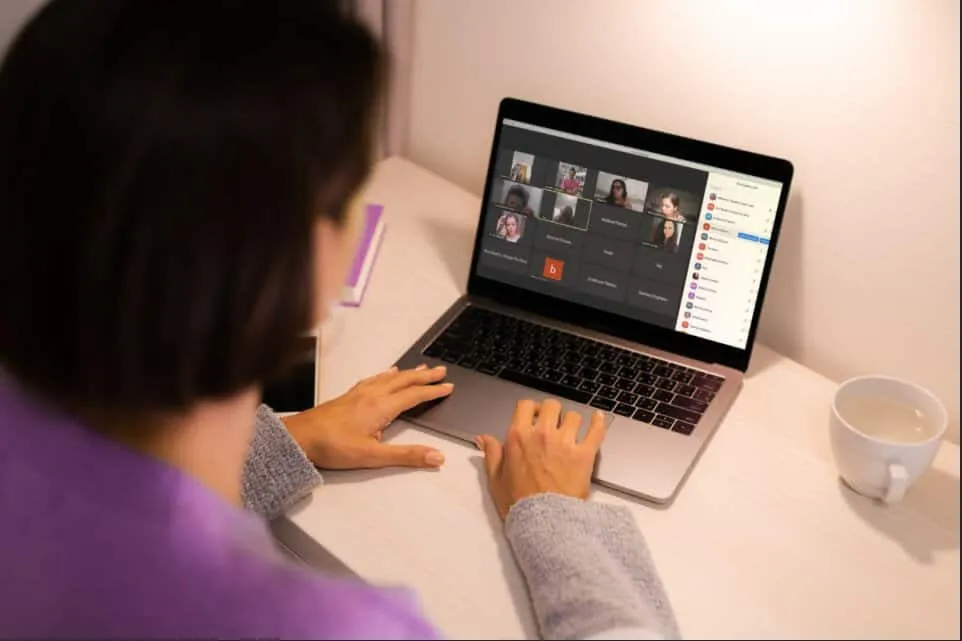
How we teach is very important today, even more so after the pandemic. Learn more about the importance of adapting to change and never stopping studying, drawing on the experience of professionals in the field.
It is not the strongest who survives, nor the most intelligent, but the one who best adapts to change.
In light of the exceptional circumstances experienced worldwide because of the Sars-Cov-2/COVID-19 pandemic, practically all companies, including those in the education sector, had to reinvent themselves so that academic plans could continue while minimizing the harm that health measures and the need for social distancing imposed on the entire population.
But it wasn't only companies that found themselves in the midst of change: teachers, students, professionals, everyone, to some degree, had to adapt. After all, how we teach has changed.
In this context, Nepuga could not act any differently. Director Dr. Ana Carolina Puga explains that from the beginning, when the Ministry of Education exceptionally authorized the replacement of in-person classes with classes through digital media, the institution mobilized every effort to offer this experience to students.
“Within a week, the undergraduate students already had the basic structure of the virtual meetings up and running,” she explains.
And it wasn't easy, for students or for teachers, this change in how we teach.
“I felt there was initial resistance from students, who were used to the in-person study format and had difficulty moving to online study, along with a belief that online teaching was weaker. However, as the months went by, they came to see that the quality of teaching was maintained”, explains Dr. Ana Carolina.
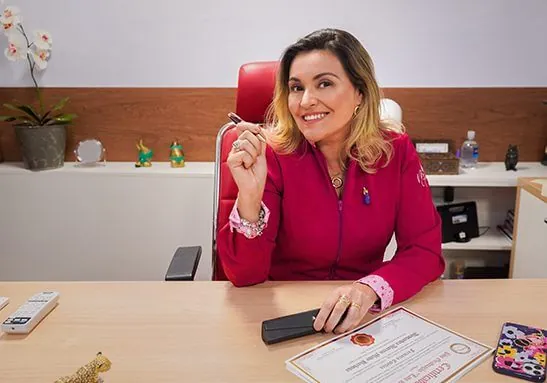
And like any change that brings both burdens and benefits, the director points out that the online format made it possible for many students who would not have done the in-person postgraduate program to specialize.
“The remote learning format during this pandemic showed students in general across the country that studying online takes dedication and focus, and it changed habits in the academic world that will last for a long time”, emphasizes Dr. Ana Carolina.
Teachers Also Had to Adapt to the New Way of Teaching
Professor Gilberto Pergher Junior explains a bit about the change in teaching that the faculty faced throughout this period.
“For those of us who were used to the in-person classroom with direct contact with students, it was a change we also had to adjust to. I had to find ways, alone in front of a computer, to keep students interacting, interested, and learning. Over time, the synchronous Zoom classes got better and better. But at first it felt strange to teach without seeing people. Today we've moved past that moment; we have students committed to remote classes and making the most of their study time as they would in a physical classroom”, he argues.
Professor Wilson Rogers Duarte Moreira also reinforces the anxiety everyone experienced with the changes in teaching.
“We had to learn how to teach online, because student feedback during an in-person class is essential for those of us who are teaching. Not having that immediate feedback in the virtual setting was a challenge. But on the other hand, all the material we recorded could be much richer, because we were able to work on our content, re-recording, editing, refining, and leaving it in the best format for the student,” he explains.
Among the measures taken by Nepuga, the professors highlight the live remote classroom on Zoom, content recorded as video lessons for students, a change in the online system, and a new format for scheduling hands-on classes, following municipal and state determinations, in line with the plan to relax health rules across the country.
Changes in Society and Around FAPUGA
A member of the Society's own evaluation committee at FAPUGA, the Diocesan Bishop of São Paulo and Southeast Regional Secretary, Dom Wagner Perez Rodrigues, also commented on the moment faced by the community in general, especially residents of the Mooca and Tatuapé area, where the college is located. How we teach had to be adapted everywhere in the world.
“It was a time of adaptation. A hard time for all of us, members of the church. Later, when we resumed holding Mass, a series of changes had to be made for the safety of the faithful. Today we are returning to the new normal with redoubled faith, redoubled because we were spared by the virus, or redoubled because we survived it. Many of the faithful passed away during this time, and we have even more spiritual work and community support to do,” explains Dom Wagner.
Those Who Made It Happen Have No Regrets
Dr. Juliana Pedrosa, an aesthetic biomedical professional, finished her specialization in the middle of the pandemic. One of the first students to take the new format of the postgraduate program, in this hybrid format, she now sees patients at her own practice, which she set up two months after finishing her specialization.
“I took the hybrid model, with online classes and then the hands-on practice done in ten days of clinical immersion. It was very beneficial for me, I always came out of classes feeling confident, and today I'm seeing patients at my own clinic”, she says.
Like Dr. Juliana, many professionals, especially those working on the front lines during this pandemic, suffered the effects of the physical, emotional, and financial strain generated by this entire public health context, on top of the change in how we teach.
Some lost their lives, many lost their jobs, and others found themselves worn out by exhausting work shifts. And somehow, they began looking for solutions to change course, to change their professional path.
For those who dared to take a risk, who are not afraid to try, to change, Nepuga will always be ready to welcome them and launch them on the path to success.
NewsMariana Lucera
NEPUGA content team — Núcleo de Especializações Ana Carolina Puga.


