


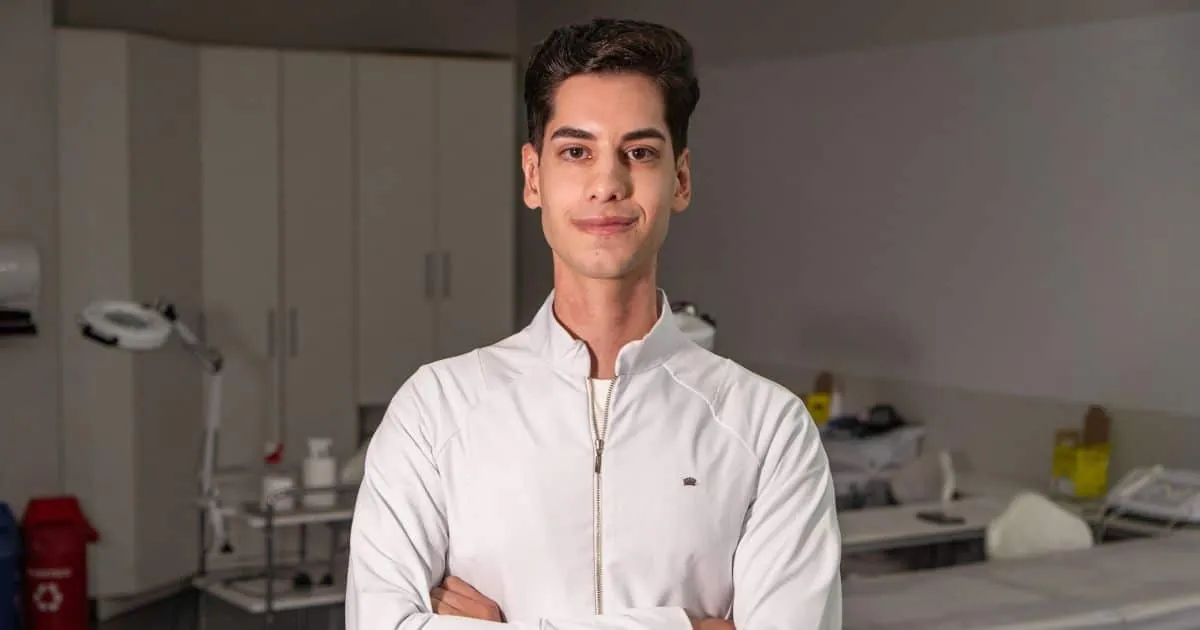
Dr. Lucas Araújo is an example of how dermatofunctional physiotherapy is opening new horizons for health professionals. A recent physiotherapy graduate, Lucas found in aesthetic rehabilitation an innovative and promising opportunity, different from traditional approaches. He represents a growing trend of physiotherapists who are migrating to fields such as dermatofunctional, drawn by autonomy, professional recognition and the relevance of the aesthetics market.
From the start of his academic journey, Lucas aimed to work in health care. He chose physiotherapy out of a desire to care for people and the possibility of rehabilitating them after trauma or fractures. “I’ve always seen caring for others as my focus, and in physiotherapy I found a field I really liked, for the care, for the rehabilitation”, he recalls.
At first, Lucas imagined pursuing orthopedic physiotherapy, a more established and familiar field. “Physiotherapy is generally seen as rehabilitation after trauma or a fracture. I thought I’d care for older adults, something you see quite a lot in school.” However, upon finishing his degree, he came across new possibilities and saw in dermatofunctional physiotherapy a more attractive and innovative path.
The Transition From Orthopedic Rehabilitation to Aesthetic Rehabilitation
During his training, Lucas did internships at clinics, hospitals and even sports settings, such as Allianz Parque. Those experiences helped shape his outlook, but it was discovering dermatofunctional physiotherapy that transformed his perspective. “I saw aesthetics as an innovative field, something that’s growing a lot. I thought: ‘Maybe going down this path is better.’ The pursuit of aesthetics and beauty is on the rise, and that inspired me.”
Aesthetic rehabilitation, which integrates knowledge of skin and muscles, stands out as a specialty that combines science with enhancing patients’ self-esteem. For Lucas, this new focus brought challenges and lessons. “In school, there’s a lot of anatomy, and that helps a lot in aesthetics. But the injectables part, like botulinum toxin and mesotherapy, is something completely new.”
He recalls how proper support was essential for his adaptation. “I thought it would be harder, but when you’re in practice with the patient, it’s a different thing. It’s great.” The transition to aesthetic rehabilitation also showed Lucas the profit potential of the field. “In conventional physiotherapy, it would take a long time to reach the profit of a single aesthetic procedure. That was a deciding factor for me.”
Dermatofunctional Physiotherapy Trends and the Aesthetic Rehabilitation Market
Dermatofunctional physiotherapy, despite being a relatively new field, is expanding rapidly and standing out among the specializations available to physiotherapists. With rising demand for aesthetic procedures and the pursuit of well-being, the market has presented countless opportunities, attracting professionals like Lucas who want a new focus in the profession.
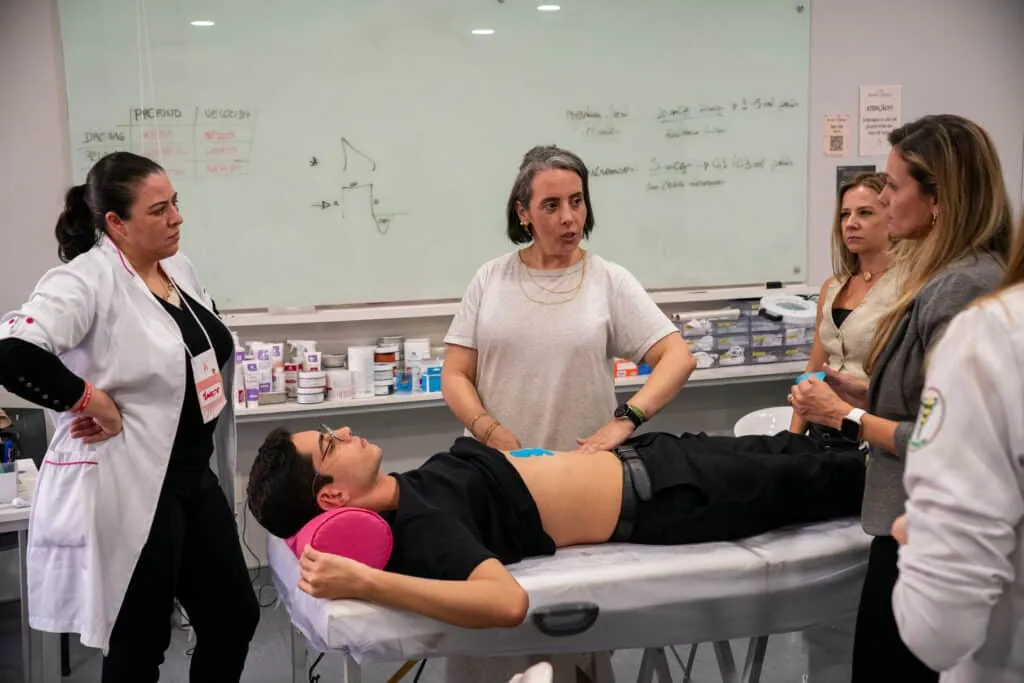
Among the procedures that most caught his attention are injectables, like botulinum toxin. “I’ve always admired the results I saw on the internet and in research. Mesotherapy is also something I’m very interested in, because it combines muscular and aesthetic knowledge in a practical way.”
For him, the foundation of anatomy study, a strong feature of the physiotherapy degree, was essential for his transition to dermatofunctional. “You study a lot about muscles, innervations and origins in school. That’s indispensable for working in aesthetics, especially in body procedures.”
Aesthetic Rehabilitation: A Promising Future
Lucas believes dermatofunctional physiotherapy still has a lot of growing to do and that physiotherapists have an important role in that development. “A lot of openings and opportunities are appearing in the market. It’s a new field, but it’s growing fast.”
Although his entry into the field is recent, Lucas already sets clear goals for the future. “I want to start my own business, have my own office and build something of my own.” Aesthetic rehabilitation has not only redefined his professional possibilities but also reaffirmed his passion for caring for others in a new context: that of enhancing self-esteem and well-being.
With stories like Dr. Lucas Araújo’s, it is clear how dermatofunctional physiotherapy and aesthetic rehabilitation are opening new doors for health professionals seeking innovation, recognition and fulfillment in their careers.
Laís Bianquini
NEPUGA content team — Núcleo de Especializações Ana Carolina Puga.


