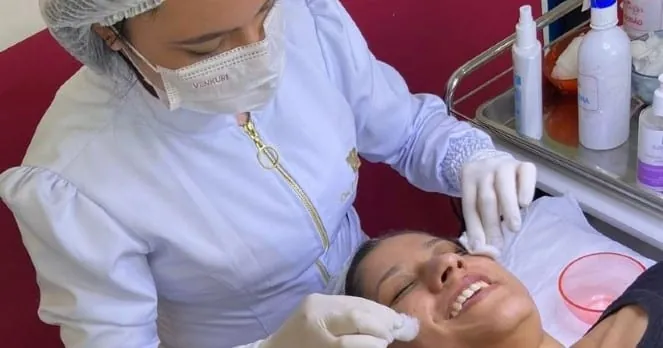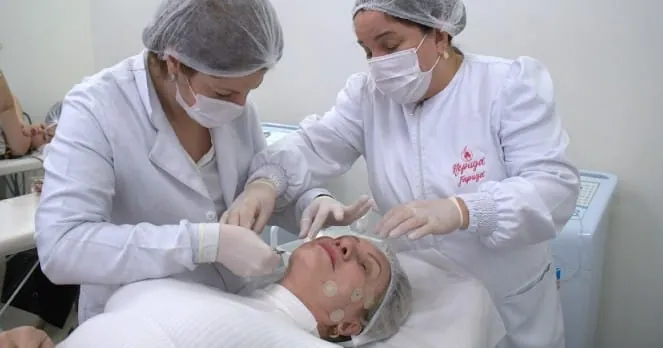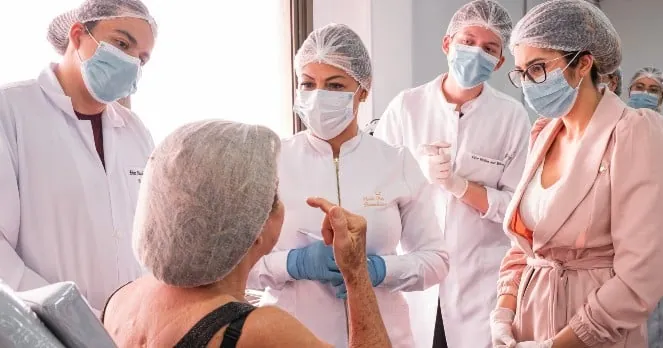
In Aesthetic Biomedicine, confidence is not born from improvisation. It is built with deep knowledge, an understanding of mechanisms of action and clarity about the impact of every clinical decision. That is exactly what the Chemical Peels module delivers to postgraduate students: technical mastery combined with professional confidence.
For Dr. Uimara Souza, an aesthetic biomedical professional, the experience with the module was the real turning point, especially because it broke common fears related to clinical practice with peels.
“One of the modules I enjoyed most was Chemical Peels. I found it fantastic to understand the ability of acids and chemical components to permeate the skin and the way they work, bringing incredible benefits.”
When you understand the why before the how, learning stops being mechanical and becomes strategic.
Understanding the Skin to Decide Better
During the module, students deepen their understanding of the fundamentals that support the safe and effective use of chemical peels. The focus goes beyond presenting active ingredients: the content leads the professional to understand skin physiology, the mechanisms of action of acids and the correct indications for each clinical situation.
This mastery transforms the way you work. Insecurity gives way to clinical reasoning, and execution becomes the result of well-grounded decisions.
For Dr. Uimara, this process sparked a clear professional identification:
“It’s a module that I really want to dive into even more. It’s an area that I would love to work in.”
When teaching connects theory, practice and vocation, it broadens horizons and strengthens choices.
Teaching That Welcomes and Clarifies
Another highlight of the experience is the work of the faculty. In the Chemical Peels module, the instructors deliver the content in a clear, dynamic and accessible way, creating an environment that favors exchange, questions and real learning.
“I had a class with Professor Odair, who cleared up a lot of questions. A very dynamic professor,” says Dr. Uimara.
This teaching approach reduces barriers, brings the postgraduate student closer to the content and strengthens clinical self-confidence.
“It was a module that broke many of my fears and worries about working with chemical peels,” she concludes.
Clinical Safety as the Foundation of Professional Practice
In practice, safety is non-negotiable. That is why each module is structured to prepare health professionals who are able to assess, plan and perform procedures with responsibility and predictability.
In the Chemical Peels module, this translates into:
- a deep understanding of how acids act on the skin
- careful assessment of clinical indications
- decision-making based on scientific knowledge
- ethical and safe practice from the very first appointments
The result is a specialized professional who does not merely apply techniques, but understands the real impact of each choice on the patient’s treatment.
When Learning Eliminates the Fear of Practicing
Accounts like Dr. Uimara’s show that learning the right way changes everything. Fear of practicing gives way to clarity, doubt turns into confidence and knowledge becomes a tool for professional growth.
Each module is designed to strengthen the professional’s leading role and prepare for conscious, safe practice aligned with the demands of today’s Aesthetic Biomedicine.
Because technique without understanding is limiting. Well-applied knowledge transforms.
Success Is in Your Hands
Laís Bianquini
NEPUGA content team — Núcleo de Especializações Ana Carolina Puga.