If you are a biologist thinking about pursuing a Postgraduate Program in Aesthetic Biology, you have probably asked yourself: “am I allowed to practice?”, “how does the regulation work?”, “do I need a postgraduate degree?”, “how do I start safely?”.
In recent years, Aesthetic Biology has gone from a distant possibility to a concrete, regulated, and expanding reality.
In this guide, we bring together everything you need to know to understand this new field of practice, based on up-to-date regulations, clinical practice, and the experience of training thousands of Aesthetic Health professionals.
Already decided you want to start? Go straight to the point:
Already graduated in Biology? Check out the Nepuga Postgraduate Program in Aesthetic Biology
Still an undergraduate? See the Advanced Training Course in Aesthetics and get started before you graduate
In this article you will find:
- What Aesthetic Biology is
- What the regulation says: CFBio resolutions
- Which procedures the aesthetic biologist can perform
- Why move from Biology to Aesthetics
- Aesthetics market data for 2026
- How Nepuga's Postgraduate Program in Aesthetic Biology works
- Postgraduate Program or Advanced Training Course: which to choose
- Frequently asked questions
What Is Aesthetic Biology?
Aesthetic Biology is the field in which biologists with a specialization in Aesthetics can practice, focused on applying biological knowledge to minimally invasive aesthetic procedures.
The Aesthetic Biologist doesn't just execute techniques. They perform assessments, interpret physiological processes, understand cellular responses, and build treatment strategies on a scientific basis.
Training in Biological Sciences already provides a solid foundation for this work, including:
- Cell biology
• Human physiology
• Biochemistry
• Histology
• Inflammatory and regenerative processes
The specialization expands this foundation, bringing clinical practice, technical mastery, and alignment with regulatory requirements.
Can Biologists Practice Aesthetics? What the Regulation Says
Yes. Biologists' practice in aesthetics is regulated by the Federal Council of Biology (CFBio, a Brazilian professional council) and has been consolidated in recent years.
The first relevant milestone was Resolution No. 582/2020, which paved the way for practice in the field.
More recently, this landscape has been strengthened by new regulations:
- CFBio Resolution No. 725/2025
- CFBio Resolution No. 726/2025
- CFBio Resolution No. 734/2025
These resolutions expand, detail, and consolidate biologists' practice in aesthetics, establishing technical criteria, professional limits, and requirements for qualification.
To practice legally, you need to:
- Hold an undergraduate degree in Biological Sciences recognized by Brazil's MEC (Ministry of Education)
- Be registered with the Regional Council of Biology
- Have specific training in the field of aesthetics
- Meet the regulatory requirements in force
- Register your qualification with the Council
This set of requirements ensures legal certainty, professional ethics, and patient protection.
Which Procedures Can the Aesthetic Biologist Perform?
With the proper qualification, biologists can work on different fronts within aesthetics.
These procedures require technical knowledge, anatomical mastery, and a deep understanding of the biological processes involved.
The main procedures include:
- Botulinum toxin
- Dermal fillers
- Collagen biostimulators
- Intradermotherapy and mesotherapy
- Microneedling
- Chemical peels
- Trichology
- Technologies applied to aesthetics
All procedures must be performed with products approved by ANVISA (Brazil's National Health Surveillance Agency) and within the limits set by the Council.
More than executing techniques, professionals need to understand what happens in the body with each intervention.
When Science Becomes Aesthetics
One of the biggest advantages biologists have in aesthetics is the depth of their scientific perspective.
Biological training makes it possible to understand precisely:
- Cellular aging
• Inflammatory response
• Tissue regeneration
• Biostimulation
• Skin metabolism
This knowledge is not just theoretical. It directly affects the quality of results, patient safety, and clinical decision-making.
Aesthetic Biology represents exactly this connection between science and practice.
Why Move from Biology to Aesthetics?
Over the years, many biologists have started looking for new ways to practice.
This happens because, in many cases, the traditional market has limitations such as:
- Low financial recognition
- Little professional autonomy
- Routines limited to research or teaching
- Difficulty advancing
Aesthetic Biology emerges as a strategic alternative. In practice, professionals find:
- Professional autonomy: in aesthetics, biologists can work independently, as self-employed professionals, in clinics or in their own practice.
- Better pay: market estimates indicate that Aesthetic Biologists can earn between R$15,000 and R$25,000 per month with private clients, and over R$30,000 for those who run their own practice and master advanced techniques.
- Quality of life: the routine allows more flexible hours, lighter environments, and a better balance between personal and professional life.
- Professional fulfillment: the Aesthetic Biologist deals directly with patients' self-esteem and well-being, reaping visible and rewarding results from the very first appointments.
The Aesthetics Market in 2026
The aesthetics sector in Brazil is constantly expanding. Demand for minimally invasive procedures is growing, driven by factors such as:
- The search for natural results
- Technological advances
- Greater access for the population
- Appreciation of self-care
In addition, the market has become more demanding. Today, patients look for qualified professionals with solid training and technical backing.
This scenario favors biologists who invest in specialization and practice within the rules in Aesthetic Biology.
How the Postgraduate Program in Aesthetic Biology Works at Nepuga
Nepuga is a national benchmark in aesthetic health training. With more than 20 years of experience, it has already trained more than 80,000 professionals across Brazil.
Nepuga is accredited by the MEC and offers certification valid nationwide.
Program Structure
The Postgraduate Program in Aesthetic Biology offers two course load options, 360 hours and 480 hours, with an average duration of 11 months.
Theory classes are held in a hybrid format: live synchronous classes and asynchronous content (online learning), giving professionals the flexibility to balance the specialization with their routine.
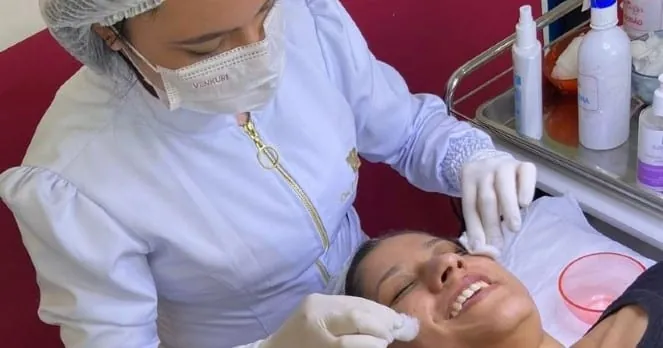
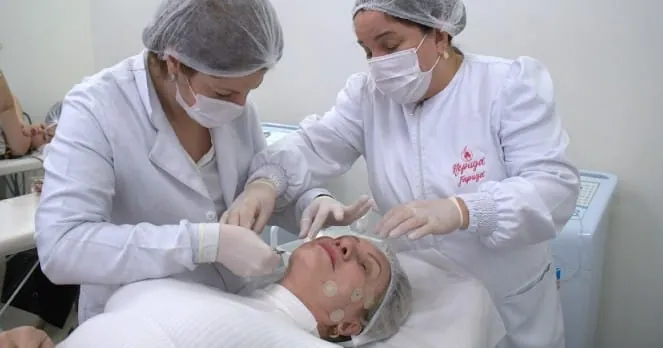
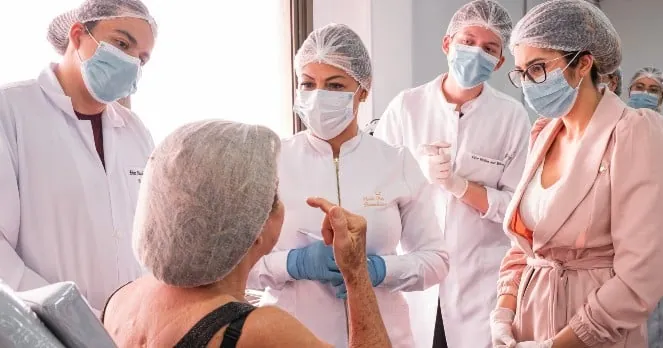
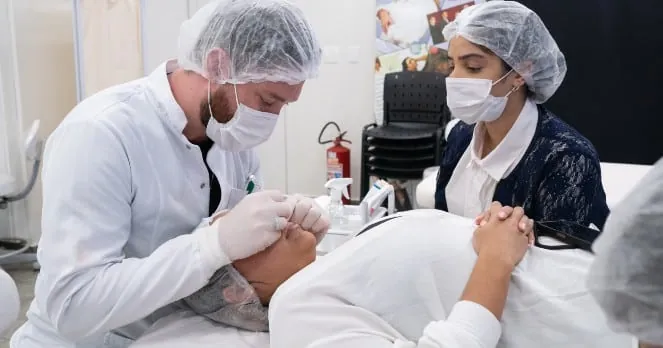
In addition, the specialization offers up to 15 hands-on classes with patient care, supervised by professors who are national benchmarks in the field, so you can start your journey in the field with confidence and safe practice.
Content Covered
The program covers the main pillars of aesthetic practice:
Facial harmonization: botulinum toxin, hyaluronic acid fillers, collagen biostimulators, PDO threads.
Body procedures: protocols with technologies, intradermotherapy, carboxytherapy.
Injectables: advanced techniques focused on safety and clinical reasoning.
Fundamentals: applied anatomy, aesthetic pharmacology, biosafety, professional legislation.
Entrepreneurship: basics of management, marketing, and positioning for those who want to open a practice or clinic.
PUGACODE® Method: The Exclusive Differentiator
One of Nepuga's biggest differentiators is the PUGACODE® Method, developed by Dr. Ana Carolina Puga. It was created around three pillars: safety, economy, and effectiveness.
This method allows professionals to apply techniques with precision and confidence from the very first appointments.
In practice, it includes exclusive tools such as injection point simulators, innovative techniques for body procedures, and an accelerated learning system that makes it easier to memorize markings, making practice safer and more accurate.
Supervised Practice
One of the major differentiators is the Hands-on Experience. Students treat real patients under the supervision of experienced professors.
This process contributes to:
- Development of technical confidence
- Refinement of clinical reasoning
- Building professional confidence
Certification
Upon completing the specialization, professionals receive a certificate valid nationwide. The certificate is recognized by the market and aligned with the requirements of the Professional Councils.
Units Across Brazil
Nepuga has teaching clinics and support campuses in several cities across Brazil, including São Paulo, Belo Horizonte, Brasília, Curitiba, and other capitals, making access easier for biologists from different regions.
Want to start your specialization? Secure your spot in the Nepuga Postgraduate Program in Aesthetic Biology
Postgraduate Program or Advanced Training Course: Which to Choose?
This is a common question. The postgraduate program is intended exclusively for professionals who have already completed their undergraduate degree and allows regulated practice in the field.
Postgraduate Program in Aesthetic Biology
It is intended exclusively for biologists who have already completed their undergraduate degree. Upon completing the program, professionals receive the specialist title and can practice in aesthetics in a regulated way, in line with the Council's requirements.
Nepuga Postgraduate Program in Aesthetic Biology
Advanced Training Course in Aesthetics
It is aimed at students who have not yet completed their undergraduate degree. Students in health programs (Nursing, Biomedicine, Pharmacy, Aesthetics, Physiotherapy, among others) can begin the advanced training right away.
The big benefit: once the student completes their degree, they can fully credit the hours taken in the advanced training and continue into the postgraduate program, without having to retake subjects. In practice, the student gets a head start, reaching the market better prepared and with a competitive edge even before graduating.
Check out the Advanced Training Course in Aesthetics and get started before you graduate
It works as an early preparation, but it does not replace the specialization required to practice.
A Real Story of Transformation
The evolution of Aesthetic Biology can be seen in practice, through professionals who have already made this transition.
Dr. Gisele Thomaz Gueiros, an aesthetic biologist, found in aesthetics a way to broaden her practice without giving up her scientific foundation.
Watch this and other success stories on Nepuga's YouTube channel:
Frequently Asked Questions About Aesthetic Biology
Can biologists apply Botox?
Yes, as long as they are properly qualified under the rules of the Federal Council of Biology.
Can biologists perform facial harmonization?
Yes, as long as they have specific training and practice within the competencies defined by the Council.
Do I need a postgraduate degree?
Yes. The specialization is required to practice regularly in the field.
How long does the postgraduate program last?
The average duration is 11 months, with a course load of between 360 and 480 hours.
Do I need an active CRBio registration?
Yes. An active registration with the Regional Council is mandatory to practice.
Can biologists open a clinic?
Yes, as long as they meet legal and health regulations.
Take the Next Step in Your Career
Aesthetic Biology is a regulated, growing field with high demand for qualified professionals.
If you want to practice with safety, autonomy, and a scientific foundation, specialization is the way.
Already graduated in Biology? Check out the Nepuga Postgraduate Program in Aesthetic Biology
Still an undergraduate? See the Start with the Advanced Training Course in Aesthetics
About Nepuga
Nepuga is the largest aesthetic health ecosystem in Brazil.
Founded by Dr. Ana Carolina Puga, the institution played a fundamental role in consolidating aesthetics as a regulated multiprofessional field.
With more than 20 years of experience and more than 80,000 professionals trained, Nepuga is a benchmark in training, supervised clinical practice, and alignment with the standards of the Professional Councils.
Sources Consulted
CFBio Resolution No. 582/2020
CFBio Resolutions No. 725/2025, No. 726/2025, and No. 734/2025
CFBio/CRBio system regulations
National Health Surveillance Agency (ANVISA)
International Society of Aesthetic Plastic Surgery (ISAPS)
Brazilian Association of the Personal Hygiene, Perfumery and Cosmetics Industry (ABIHPEC)
Laís Bianquini
NEPUGA content team — Núcleo de Especializações Ana Carolina Puga.