If you are a biomedical professional considering a move into aesthetics, it is natural for some questions to come up: “am I allowed to practice?”, “what is the right path?”, “do I need a specialization?”, “is it worth changing fields?”.
In this guide, we gather the main information you need to make a safe decision, based on the experience of those who have been following the training of aesthetic health professionals for almost two decades.
Have you already decided you want to start? Go straight to the point:
Already graduated in Biomedicine? Check out the Nepuga Postgraduate Program in Aesthetic Biomedicine
Still in your undergraduate program? See the Advanced Training Course in Aesthetics and get started before you graduate
In this article you will find:
- What Aesthetic Biomedicine is
- What the regulations say: CFBM (Brazilian professional council for biomedicine) rules
- Which procedures biomedical professionals can perform
- Why move from traditional Biomedicine to aesthetics
- Market overview in 2026
- How Nepuga's Postgraduate Program in Aesthetic Biomedicine works
- Difference between postgraduate program and advanced training course
- Frequently asked questions
What is Aesthetic Biomedicine?
Aesthetic Biomedicine is a specialty of Biomedicine focused on caring for the skin, body and self-esteem through minimally invasive aesthetic procedures.
The professional does not work only on technical execution. They take part in the entire clinical process, from assessment to follow-up of results.
Biomedical training provides a solid foundation in areas such as anatomy, physiology, microbiology and pharmacology, which are essential for safe practice.
The specialization complements that knowledge with clinical practice, specific techniques and alignment with legal requirements.
Can biomedical professionals work in aesthetics? What the regulations say
Yes. The practice of biomedical professionals in aesthetics is regulated by the Federal Council of Biomedicine and is well established in Brazil. This practice is backed by a set of resolutions that define technical criteria, limits of practice and responsibilities.
Among the main regulatory milestones are:
- Resolution No. 197/2011 — addresses practice in aesthetics
- Resolution No. 200/2011 — complements guidelines for the field
- Resolution No. 307/2019 — updates professional practice
- Resolutions No. 347/2022, 348/2022, 359/2023 and 363/2023 — consolidate and expand competencies
To practice properly, the professional must complete some fundamental steps:
- Hold a Biomedicine degree recognized by MEC (Brazil's Ministry of Education)
- Be duly registered with the Regional Council
- Complete a lato sensu postgraduate program in aesthetics
- Comply with the Council's current rules
- Register the specialty
Which procedures can aesthetic biomedical professionals perform?
A biomedical professional with proper training can work with a variety of minimally invasive procedures.
These techniques require technical knowledge, anatomical mastery and clinical responsibility.
Among the main procedures are:
- Facial harmonization
- Botulinum toxin application
- Hyaluronic acid fillers
- Collagen biostimulators
- Lifting threads
- Intradermotherapy
- Chemical peels
- Aesthetic technologies
Besides execution, the professional is responsible for assessing the patient, defining the treatment plan and following up on results.
Why move from traditional Biomedicine to aesthetics?
Over the years, many biomedical professionals have started looking for new possibilities within the health field itself. This happens because the routine in traditional areas often has significant limitations.
Among the main points reported are:
- Inflexible routines
- Limited financial growth
- Low professional autonomy
- Repetitive activities
Aesthetic Biomedicine emerges as an alternative that allows a different kind of practice. In practice, the professional finds:
- Greater career autonomy
- Potential for financial growth
- Flexible hours
- Direct contact with patients
What changes in practice
Professional autonomy: in aesthetics, biomedical professionals can work independently, as freelance professionals, in clinics or with their own practice.
Better pay: market estimates indicate that aesthetic biomedical professionals can earn between R$15,000 and R$25,000 per month with private appointments, and may exceed R$30,000 for those who run their own practice and master advanced techniques.
Quality of life: the routine allows more flexible hours, lighter environments and a better balance between personal and professional life.
In addition, there is a relevant factor: the direct impact on patients' self-esteem and well-being.
The Aesthetic Biomedicine market in 2026
The aesthetics market in Brazil continues to expand and is established as one of the most relevant in the world. Brazil is the 3rd largest aesthetics market in the world, according to the International Society of Aesthetic Plastic Surgery (ISAPS), with growing demand for non-surgical and minimally invasive procedures.
The aesthetics sector has grown more than 500% in Brazil in recent years, according to data from ABIHPEC (Brazilian Association of the Personal Hygiene, Perfumery and Cosmetics Industry). In addition, the Brazilian aesthetics market moved US$3.4 billion in 2023, with a projection of reaching US$9.8 billion by 2030.
Procedures on the rise: facial harmonization, botulinum toxin, collagen biostimulators and PDO threads are among the most sought after.
Diverse audience: men already account for about 30% of the clientele for aesthetic procedures, significantly expanding the market.
In addition, 2026 marks a period of stricter regulation, which gives value to professionals with solid training and recognized certification. Biomedical professionals with a postgraduate degree from institutions accredited by MEC and that meet the Council's requirements have a clear competitive advantage in this scenario.
How the Postgraduate Program in Aesthetic Biomedicine at Nepuga works
Nepuga is a national reference in Aesthetic Health training. Founded by Dr. Ana Carolina Puga, the mother of Aesthetic Biomedicine and a pioneer in the regulation of Aesthetic Health in the country, Nepuga has been specializing professionals for 20 years and has already certified more than 80 thousand specialists. The institution is accredited by MEC and its certificates are valid throughout the national territory.
Course structure
The Postgraduate Program in Aesthetic Biomedicine offers two course-load options, 360 hours and 480 hours, with an average duration of 11 months.
Theory classes take place in a hybrid format: live synchronous classes and asynchronous content (EAD, distance learning), providing flexibility for professionals to fit the specialization into their routine.
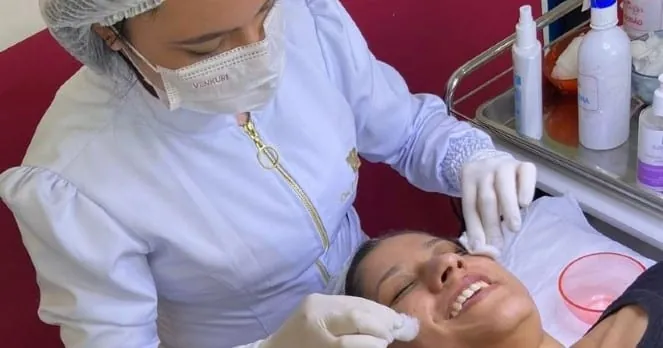
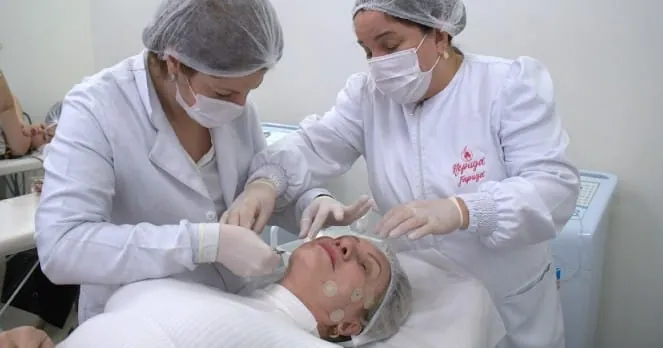
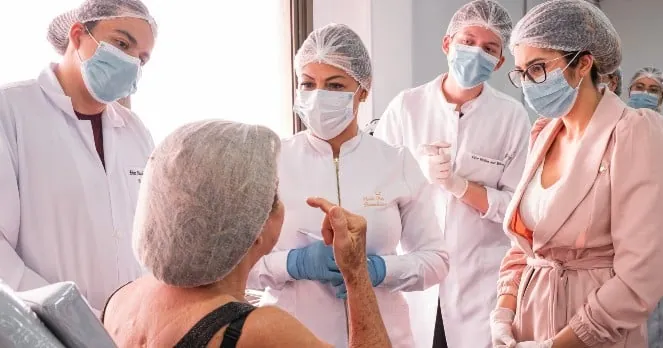
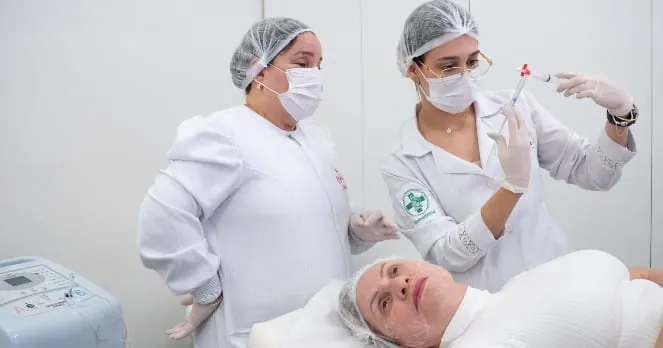
In addition, the specialization offers up to 15 hands-on classes with patient care, supervised by professors who are national references in the field, so you can start your journey in the field with confidence and safe practice.
Content covered
The program covers the main pillars of aesthetic practice:
Facial harmonization: botulinum toxin, hyaluronic acid fillers, collagen biostimulators, PDO threads.
Body procedures: protocols with technologies, intradermotherapy, carboxytherapy.
Injectables: advanced techniques focused on safety and clinical reasoning.
Fundamentals: applied anatomy, aesthetic pharmacology, biosafety, professional legislation.
Entrepreneurship: basics of management, marketing and positioning for those who want to open a practice or clinic.
PUGACODE® Method: the exclusive differentiator
One of Nepuga's biggest differentiators is the PUGACODE® method, developed by Dr. Ana Carolina Puga. It was created with a focus on three pillars: safety, economy and effectiveness.
PUGACODE® allows professionals to apply techniques with precision and confidence from their first appointments.
In practice, the method includes exclusive tools such as application-point simulators, innovative techniques for body procedures and an accelerated learning system that makes it easier to memorize markings, making practice safer and more accurate.
Supervised practice
One of the major differentiators is the Hands-on Experience. Students treat real patients, supervised by experienced professors.
This process contributes to:
- Development of technical confidence
- Improvement of clinical reasoning
- Building professional confidence
Certification
Upon completing the specialization, the professional receives a certificate valid nationwide. The certificate is recognized by the market and aligned with the requirements of the professional Councils.
Units across Brazil
Nepuga has teaching clinics and support campuses in several cities in Brazil, including São Paulo, Belo Horizonte, Brasília, Curitiba, among other capitals, making access easier for biomedical professionals from different regions.
Want to start your specialization? Secure your spot in the Nepuga Postgraduate Program in Aesthetic Biomedicine
Postgraduate program or advanced training course: which to choose?
This is a common question. The postgraduate program is intended exclusively for professionals who have already completed their undergraduate degree and allows regulated practice in the field.
Postgraduate Program in Aesthetic Biomedicine
It is intended exclusively for nurses who have already completed their undergraduate degree. Upon completing the course, the professional receives the specialist title and can work in a regulated manner in aesthetics, in accordance with the Council's requirements.
Learn about the Postgraduate Program in Aesthetic Biomedicine
Advanced Training Course in Aesthetics
It is aimed at students who have not yet completed their undergraduate degree. Students in health programs (Nursing, Biomedicine, Pharmacy, Aesthetics, Physiotherapy, among others) can start the advanced training course immediately.
The great benefit: after completing the undergraduate degree, the student can fully apply the hours taken in the advanced training course and continue into the postgraduate program, without having to retake subjects. In practice, the student gets ahead, reaching the market better prepared and with a competitive edge even before graduating.
Learn about the Advanced Training Course in Aesthetics
Real stories of biomedical professionals who have already begun their success journeys
The best way to show the impact of the training is to hear from those who have been through it. Watch accounts from colleagues who completed the Postgraduate Program in Aesthetic Biomedicine at Nepuga on our YouTube channel:
Frequently asked questions about Aesthetic Biomedicine
Can biomedical professionals apply Botox?
Yes. A biomedical professional specializing in aesthetics can apply botulinum toxin, as long as they hold a postgraduate degree in the field and meet the requirements of the resolutions of the Federal Council of Biomedicine.
Can biomedical professionals do facial harmonization?
Yes. Facial harmonization is among the procedures aesthetic biomedical professionals can perform, including hyaluronic acid fillers, collagen biostimulators and lifting threads, respecting the Council's rules.
How long does the Postgraduate Program in Aesthetic Biomedicine last?
Duration varies by institution. In structured programs, the course load is 360 or 480 hours, lasting 11 months, including theory and supervised practice.
Do I need an active CRBM registration to practice?
Yes. To carry out any professional activity, including aesthetics, you must have an active and regular registration with the Regional Council of Biomedicine (CRBM).
Can an aesthetic biomedical professional open their own clinic?
Yes. Biomedical professionals can work independently and set up their own treatment space, as long as they meet legal and health requirements and the Council's rules.
What is the salary of an aesthetic biomedical professional?
Earnings vary depending on the practice model. In clinics, income can range between R$5,000 and R$10,000. Independent professionals or those with their own clinic can reach higher revenue, depending on structure, schedule and positioning.
Can I start in aesthetics before graduating?
Yes. Health students can start advanced training courses during their undergraduate program. However, professional practice is only permitted after graduation and compliance with the Council's requirements.
What is the difference between a postgraduate program and an advanced training course?
The postgraduate program is intended for graduated professionals and allows regulated practice in the field of aesthetics. The advanced training course can be started during the undergraduate program and works as early preparation, but does not replace the specialization required to practice.
Take the next step in your career
Aesthetic Biomedicine is a consolidated, regulated and expanding field. To work with safety and consistency, specialization is essential.
Already graduated in Biomedicine? Learn about Nepuga's Postgraduate Program in Aesthetic Biomedicine
Still in your undergraduate program? Start with the Advanced Training Course in Aesthetics
About Nepuga
Nepuga is the largest aesthetic health ecosystem in Brazil. Founded by Dr. Ana Carolina Puga, the institution played a fundamental role in building the field in the country.
With 20 years of operation and more than 80 thousand trained professionals, Nepuga is a reference in training, supervised clinical practice and alignment with regulatory requirements.
Sources consulted
Resolutions of the Federal Council of Biomedicine (CFBM): No. 197/2011, No. 200/2011, No. 307/2019, No. 347/2022, No. 348/2022, No. 359/2023 and No. 363/2023
CFBM Normative Instructions: No. 001/2012, No. 003/2015, No. 004/2015 and No. 005/2015
Code of Ethics of the Biomedical Professional — CFBM Resolution No. 330/2020
Professional qualification guidelines established by the CFBM/CRBM system
Market data:
International Society of Aesthetic Plastic Surgery (ISAPS)
Brazilian Association of the Personal Hygiene, Perfumery and Cosmetics Industry (ABIHPEC)
Sector market reports on aesthetics and health (2023–2026)
Laís Bianquini
NEPUGA content team — Núcleo de Especializações Ana Carolina Puga.