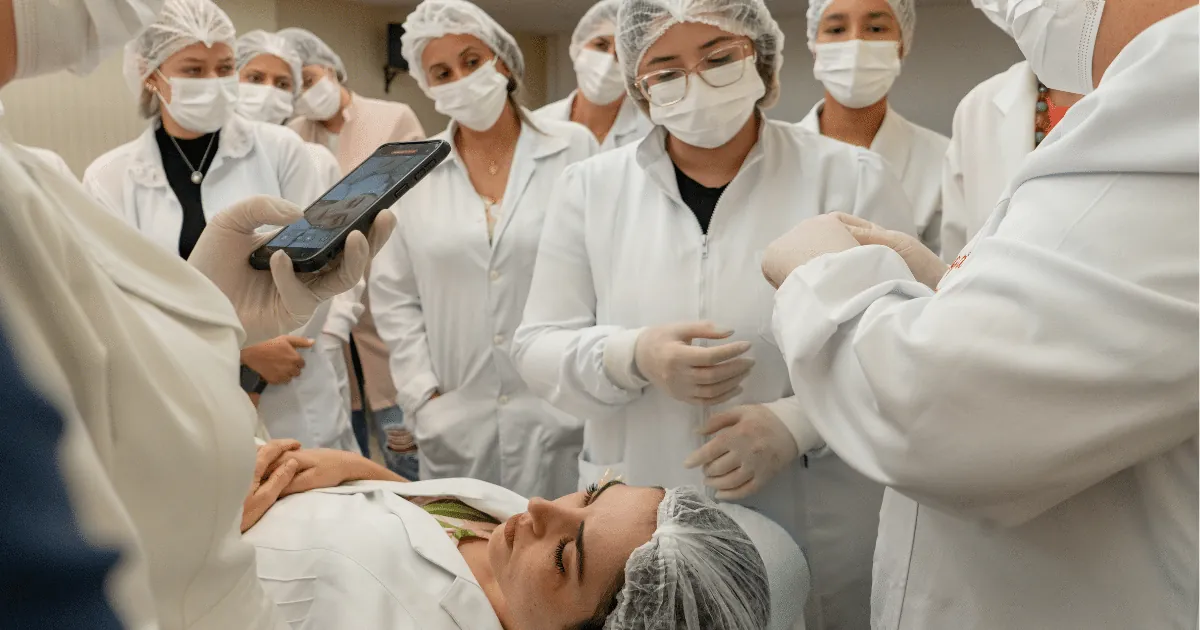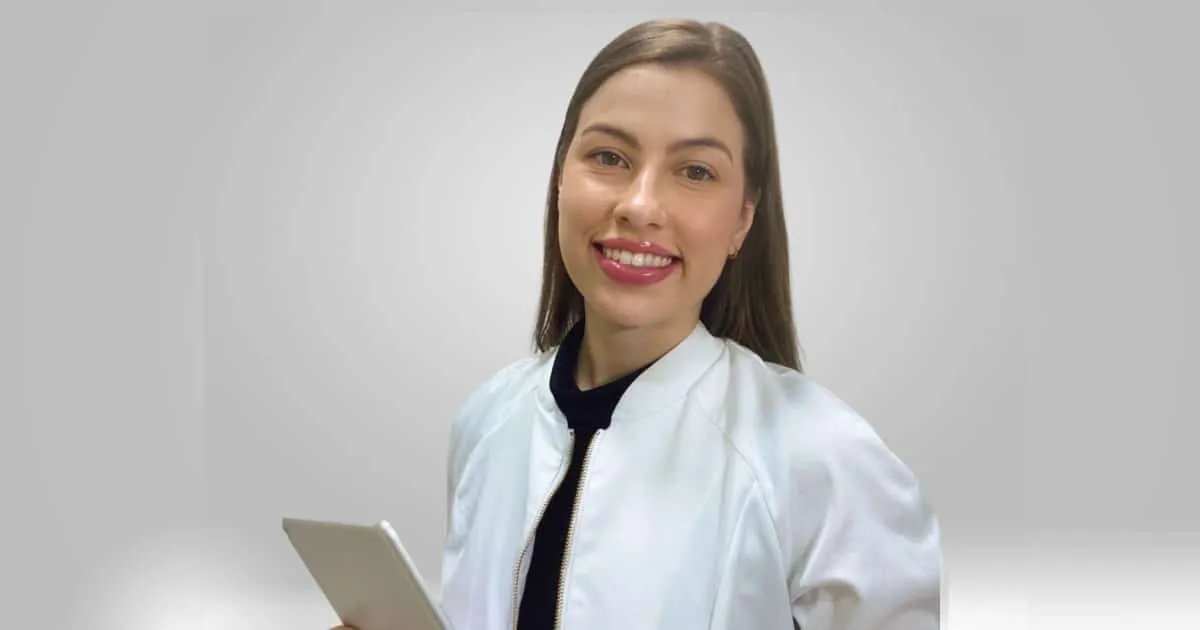
Dr. Nathália de Morais, a specialist in aesthetic biomedicine, presented in her final project for the Postgraduate Program in Aesthetic Biomedicine a topic that addresses a major trend in the sector.
Dr. Nathália Morais Claro holds a degree in Biomedicine from the University of Vale do Paraíba (UNIVAP), is qualified in Clinical Analysis and Research with an emphasis on Microbiology, and recently completed a postgraduate program in Aesthetic Biomedicine at Nepuga/FAPUGA, at the São José dos Campos-SP campus.
Completing her postgraduate program in 2019 with excellence, she earned outstanding grades and a great position in the job market. She currently works as a Laboratory Analyst at Golden Química do Brasil, where she has been for 3 years.
As her final course project, Dr. Nathalia produced a monograph using the literature review technique.
The topic involved an investigation of skin aging, its physiology, and its consequences. It considered the main and most unwanted characteristics, shown on the face as wrinkles, expression lines, loss of tissue volume, among others.
“The skin is one of the largest organs of the human body and covers its entire surface. Skin aging is a natural, progressive, and inevitable process, influenced by intrinsic and extrinsic factors, in which physical, psychological, and social changes occur over time.”
The doctor, who has a degree in Aesthetic Biomedicine, goes on to discuss the effects of aging on the skin.
“Aging of the facial skin is more noticeable because the face is more easily exposed, in addition to being the part of the body with the greatest interpersonal significance and the focus of attention during communication. The skin is the first to be disadvantaged by aging, with skin changes caused by time as the drawbacks. (2) Clinically, the appearance of wrinkles, sagging, spots, decreased tissue regeneration capacity, loss of muscle tone, increased capillary fragility, and roughness is observed.” She goes on to explain the available procedures:
“Skin aging, despite being natural, is a process for which there are more and more treatments and procedures to delay it. The search for aesthetic procedures, permanent or non-permanent, to achieve a standard of beauty has been growing over the years. In this context, one of the most sought-after procedures is facial filling, because it is minimally invasive, financially accessible, and faster than cosmetic surgery, in addition to being practically painless.”
From this perspective, the student addresses the most recommended treatments, comparing the effectiveness of each substance: “Hyaluronic Acid (HA) and Calcium Hydroxyapatite (CaHA), which are substances found in the human body, present themselves as excellent biocompatible, non-permanent fillers used for skin hydration procedures, volumizing, and even sculpting the facial contour”.
The Aesthetic Biomedicine graduate points out that the great demand for this type of procedure stems from the same cause.
“Nowadays the aging process directly influences the growing demand for aesthetic procedures, especially facial ones. Facial injectable filling is one of the most sought-after due to its fast and satisfactory results”.
But for patients who want to learn about the topic, or aesthetics professionals looking for knowledge in the field, Natasha closes her thesis with an assertive conclusion in the study on the applicability of the substances mentioned:
“CaHA showed longer-lasting results than HA because it stimulates collagen synthesis. However, HA has advantages in the treatment of complications with the use of hyaluronidase. Finally, both injectable fillers are considered satisfactory and safe for clinical use, with attention needed only to the quality of the products and the care of choosing a qualified and trustworthy professional to perform the procedure”.
Check out Dr. Nathália Morais Claro's Final Course Project in full!
: Claro, N. M. The use of hyaluronic acid and calcium hydroxyapatite as fillers in aesthetic biomedicine. Nepuga/FAPUGA. São José dos Campos, SP. 2019.
Also read the case study of Dr. Natasha Claro, talking about “THE USE OF HYALURONIC ACID AND
CALCIUM HYDROXYAPATITE AS FILLERS IN AESTHETIC BIOMEDICINE”.
Academic Highlights
Sarah
NEPUGA content team — Núcleo de Especializações Ana Carolina Puga.