


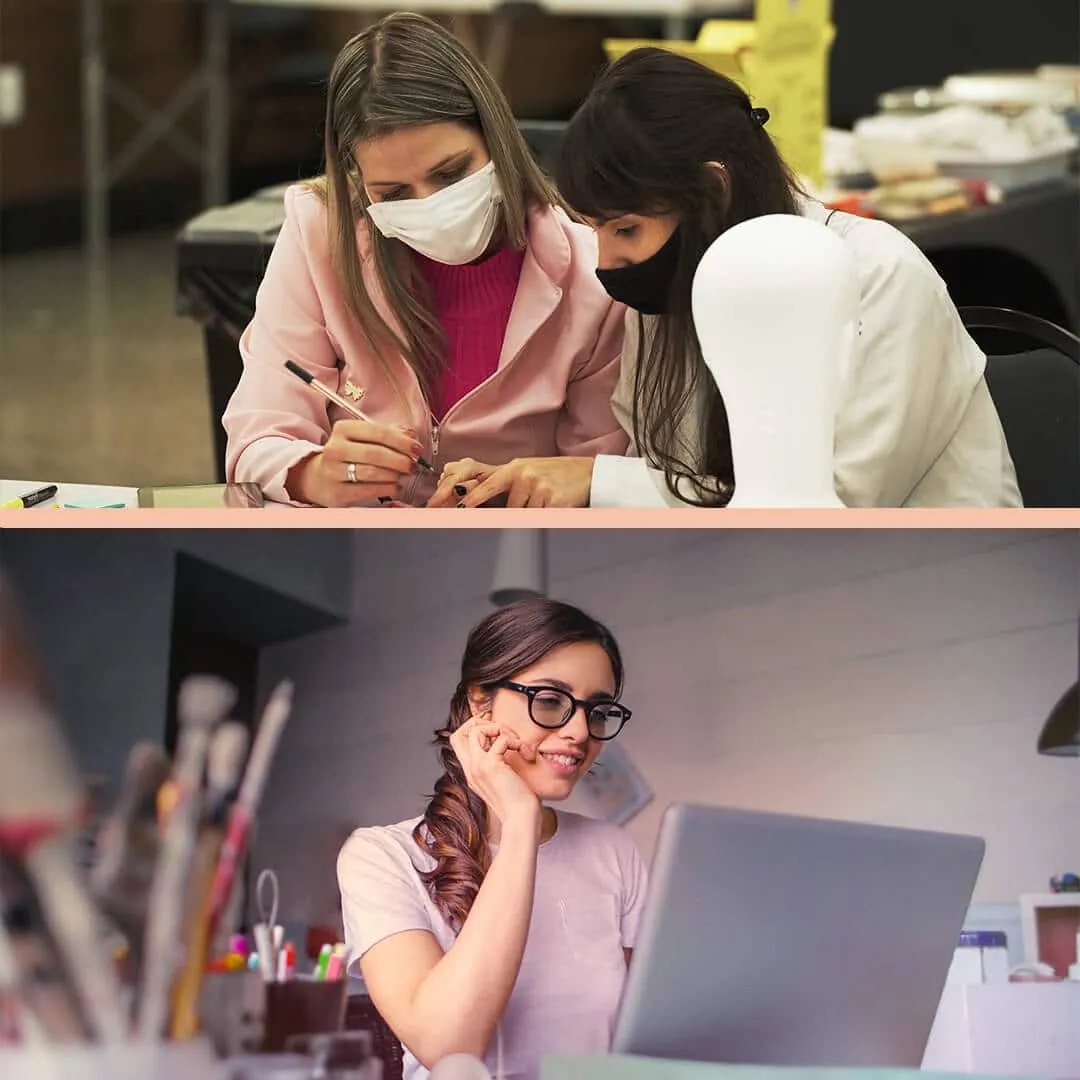
Every field had to reinvent the way it learns and teaches. As a result, hybrid learning in aesthetic health has become a reality in Brazil and around the world.
With the onset of the covid-19 pandemic, overnight, teachers and students found themselves facing online classes. Video lessons and other tools were both allies and obstacles for educators in this new challenge, for which they were little or not at all prepared.
At Nepuga/FAPUGA this was also a reality: with classes scheduled to start in March 2020, the pandemic caught the institution by surprise. With theoretical and hands-on classes in an in-person format, the dynamics had to be readapted.
Within two weeks, the classrooms moved to recording studios, and with the commitment of Dr. Ana Carolina Puga, MSc, all the professors, and the institution's team, it was possible to move the postgraduate program to the hybrid model.
The director points out that hybrid learning made it possible for many students who would not have done the in-person postgraduate program to specialize. “The remote learning format during this pandemic showed students in general across the country that studying online takes dedication and focus, and it changed habits in the academic world that will last for a long time”, emphasizes Dr. Ana Carolina.
Hybrid learning in aesthetic health
Also known as blended learning, hybrid learning in aesthetic health and in all other fields became more prominent with the advent of the internet.
In short, it is nothing more than combining various platforms, such as video lessons, live classes, supplementary materials, tutorials, and in-person classes.
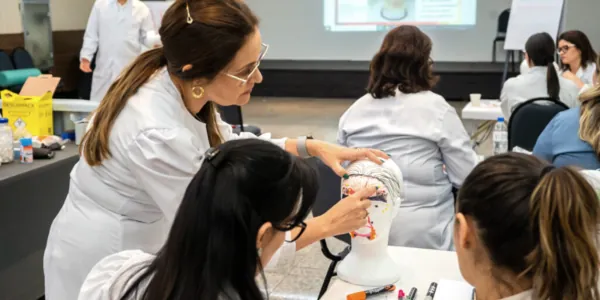
“Going back to classes, for Nepuga as well as for any other institution, was a big change for everyone. Before, the postgraduate program was entirely in person, one weekend a month, and now students can watch the theory online and schedule the hands-on sessions based on their own calendars”, says Reinaldo Mariano, secretary of Nepuga São Paulo and a member of AGPG.
Considered a trend in education for the future, the blend of in-person and online teaching combines the conventional classroom with content produced with technological support.
This indicates that it will remain increasingly strong in students' lives in the post-pandemic world, and what at first seemed like a setback to many is, for others, the only possible way to gain access, made possible by hybrid learning in aesthetic health.
Easier access to the postgraduate program
Together with the institution, students in hybrid aesthetic health learning worked to get through the difficulties as best they could, and in the end many were surprised by this model and how practical it is.
“Scheduling the hands-on sessions made things easier for students in general, because they have the support of the physical unit where they can study, plus the freedom to choose the day they want to take the classes. That is much better than having specific days set in advance”, adds Reinaldo.
As a result, many student accounts reached the institution, among them that of postgraduate student in aesthetic biomedicine, Dr. Graziella Souza. She trusted hybrid learning in aesthetic health and points out that at first she did not think she would adapt to the hybrid teaching model, but she was surprised.
“The online classes made things much easier for me, especially when it comes to commuting, and having the classes recorded was very important too”, she says.
Other advantages
Other factors are also taken into account by Nepuga/FAPUGA students regarding hybrid learning in aesthetic health. Among them, being able to be more present in family moments.
“Doing a postgraduate program in aesthetic pharmacy was a dream of mine from 5 years ago, but since my work schedule was 6x1 I couldn't do it because it was the model with classes on Saturday and Sunday every 15 days. I started in the hybrid model, and that was the best option for me, because now I can spend more time with my family”, says Dr. Gabriella Albino, a postgraduate student in aesthetic pharmacy.
The shift to hybrid learning in aesthetic health was also, for many, the chance to turn plans into reality and start a life transformation. Dr. Vanessa Tavares, a student in the postgraduate program in aesthetic biology, is one of the professionals who benefited from this change.
“Look, for me hybrid learning was the best thing that ever happened, because I have a two-year-old son, and not having to travel for the theory classes is great, because I can plan better and spend less. I only had to travel for the hands-on classes, and I thought that was excellent because this part of aesthetics needs practice, you know, you need that clinical immersion. Maybe if it weren't hybrid I wouldn't be able to make this dream come true”, she says.
NewsSarah
NEPUGA content team — Núcleo de Especializações Ana Carolina Puga.


