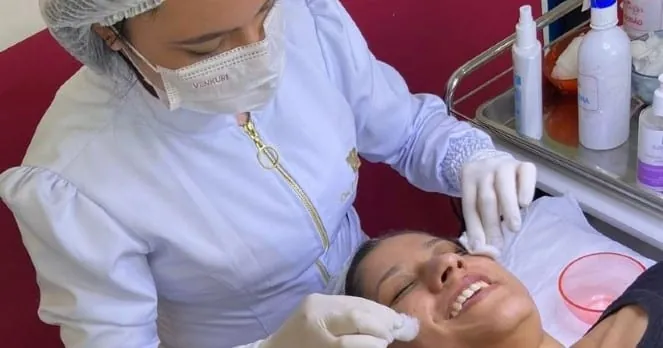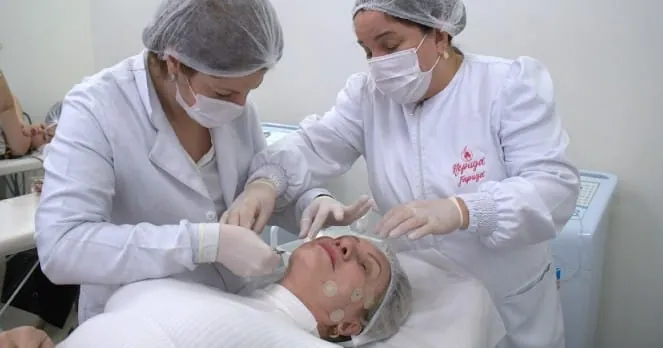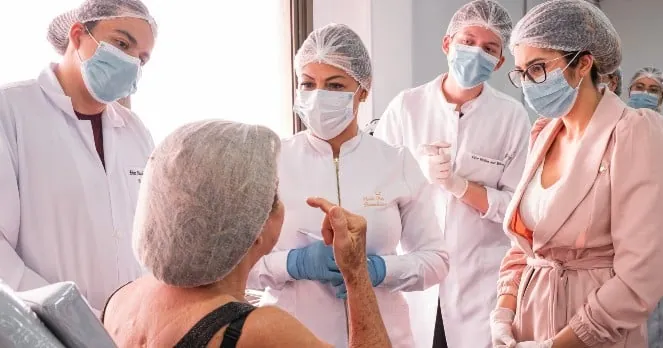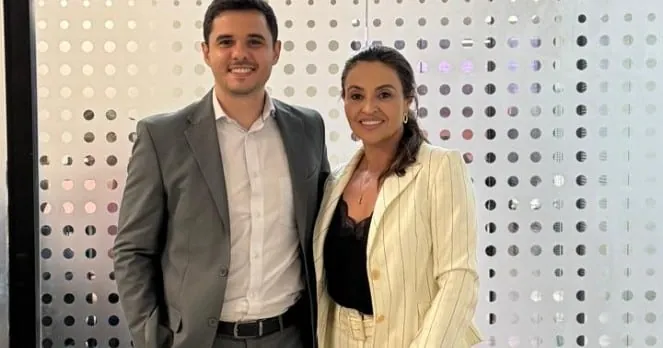
At our Ribeirão Preto campus, we welcomed a visit from the President of the Regional Council of Physiotherapy of the 3rd Region (Brazilian professional council), Dr. Raphael Martins Ferris, for a meeting that brought together qualified dialogue, an exchange of experiences, and important reflections on the present and future of practice in Aesthetic Health.
In a conversation with Dr. Ana Carolina Puga, central topics for the development of Aesthetic Health were discussed, including professional regulation, responsibility in clinical practice, the training of specialists, and the role of educational institutions in building a safer, more structured market.
More than an institutional visit, the meeting symbolizes the necessary coming together of those who train, those who regulate, and those who practice, fundamental pillars for the consistent evolution of aesthetics in Brazil.
The growth of aesthetics and the need for regulation
Throughout the conversation, one of the central points was the expansion of aesthetics within the health professions in recent decades. This movement has brought new opportunities, but also the need for organization and responsibility.
According to Dr. Raphael, this growth requires close attention from professional councils:
“The aesthetics market has developed a lot in recent years and has become part of the reality of many health professions. With that comes the need to regulate what is being done.”
He highlights that procedures such as botulinum toxin, mesotherapy, and other injectable approaches have become part of the daily practice of different professionals and, as a result, have become the focus of discussions and rulemaking within the councils.
“Specific regulations were created to organize both the use of these resources and the training of professionals. The goal is to ensure quality of care and safety for society.”
This statement highlights an essential point: regulation does not arise as a barrier, but as a structure that allows the field to grow in a responsible and sustainable way.
The council's role: protect, guide, and structure
Another important highlight was the reflection on the role of Professional Councils in this changing landscape.
More than oversight bodies, the Councils take on a strategic role in organizing professional practice.
“The council plays a very relevant role for both professionals and society. It is through the council that we can define how these procedures should be learned and applied.”
This work directly affects how professionals develop and, above all, the safety of those who will be treated.
Building clear guidelines, aligned with market reality and grounded in solid science, helps strengthen practice and gives professionals legal certainty, an essential point, especially in times of change and legislative debate.
The strength of the connection between education and regulation
One of the most relevant moments of the meeting was the discussion on the importance of closer ties between councils and educational institutions.
This link was identified as essential to ensure that training keeps pace with real market demands and that regulation is built on what actually happens in practice.
“For a long time we believed that regulation came only from the government. Today, we understand that the market also indicates what needs to be regulated, and those in the middle of it are the educational institutions.”
This view places institutions in a strategic position: they are the ones who translate the market into training and prepare professionals to work responsibly.
“Getting closer to institutions produces a much more real effect on what is being taught and how professionals are being trained. It is also an opportunity for councils to learn from what is being developed.”
This exchange strengthens both sides and directly contributes to more consistent progress in the field.
Recognition of a journey that helped build the field
During the visit, there was also recognition of the historic importance of Nepuga and Dr. Ana Carolina Puga in the development of Aesthetic Health in Brazil.
The building of this field did not happen by chance; it was driven by professionals who looked beyond their time and took on the responsibility of opening paths.
“It is very important to recognize leaders who had the ability to structure the market responsibly. That even makes it easier for the councils to understand and for professional practice to be organized.”
This recognition reinforces the role of institutions that not only keep pace with the growth of aesthetics but actively contribute to building it, always focused on quality, safety, and responsibility.
A message for those in training
At the end of the conversation, Dr. Raphael gave direct guidance to professionals who are in the process of specializing, especially those who are starting out or consolidating their practice in aesthetics.
“This is the time to learn responsibly. Recent years have brought new possibilities for physiotherapy, with legal certainty to perform advanced procedures.”
He stresses that the training period should be seen as an essential stage for developing real skills:
“It is during the postgraduate program that professionals develop skill, confidence, and the ability to treat patients effectively. The most important thing is to ensure that what is delivered is safe and well executed.”
More than mastering techniques, training requires awareness of the impact of one's practice, a direct commitment to care and to the results delivered.
We keep building together
Dr. Raphael Ferris's visit reinforces an essential point for the present and future of Aesthetic Health: the evolution of the field depends on the connection between education, practice, and regulation.
It is in this alignment that safer, more ethical practice is built, better prepared to keep pace with market growth.
We remain committed to training professionals who understand this responsibility and who bring to practice not only technique, but awareness, safety, and purpose.
Because transforming Aesthetic Health is also about building, together, a more solid path for everyone.
Laís Bianquini
NEPUGA content team — Núcleo de Especializações Ana Carolina Puga.