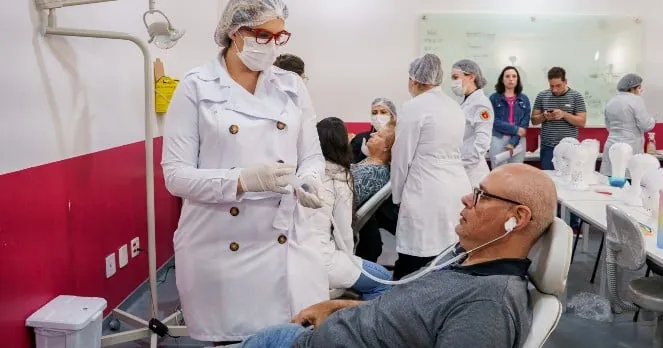
The Federal Nursing Council (Cofen) denied registration of a specialty in aesthetics without completion of hands-on classes. In other words, an aesthetics course for nurses at the lato sensu level must have a minimum number of clinical immersion hours, which is the hands-on part of the training.
The announcement was made during the 546th Ordinary Plenary Meeting (ROP). The Opinion did not approve the registration of an Aesthetic Nursing specialist for nurses who have not completed these hands-on activities during the specialization course.
The Technical Chamber of Teaching and Research Opinion 71/2022, which deals “with hands-on classes in the Aesthetics Specialization,” mentions the following point as the conclusion of the study: “[…] decided against granting registration to the applicants, and that Cofen notify all Regional Councils about not granting registration in this specialty if the 100 hours of hands-on classes are not duly proven”.
See the concluding part of the document:
It is based on Federal Legislation, Cofen Regulations, and also the policies in force in the country. For example, Cofen Resolution 626/2020 determines that a nurse with a lato sensu postgraduate degree in aesthetics must complete at least 100 hours of hands-on classes – even in the case of a distance-learning (EAD) course.
In the opinion of specialist and federal councilor Silvia Neri, the absence of hands-on classes in an aesthetics course for nurses harms the professional's training, which is reflected in the quality of care provided to patients. “Cofen cannot endorse a course without a minimum of hands-on hours. Besides trivializing practice in education, it puts the standard operating procedure itself at risk”.
The document also says it is the responsibility of the educational institution to make supervised classes available to ensure that the nurse completes the hands-on hours .
“[…] the mandatory hands-on hours required in the aforementioned Cofen resolutions are entirely the responsibility of the training institution, even if they take place in settings outside its governance scope, so that it is responsible for monitoring and evaluating the required activities, which must also appear in the academic transcript”.
An aesthetics course for nurses in a hybrid format!
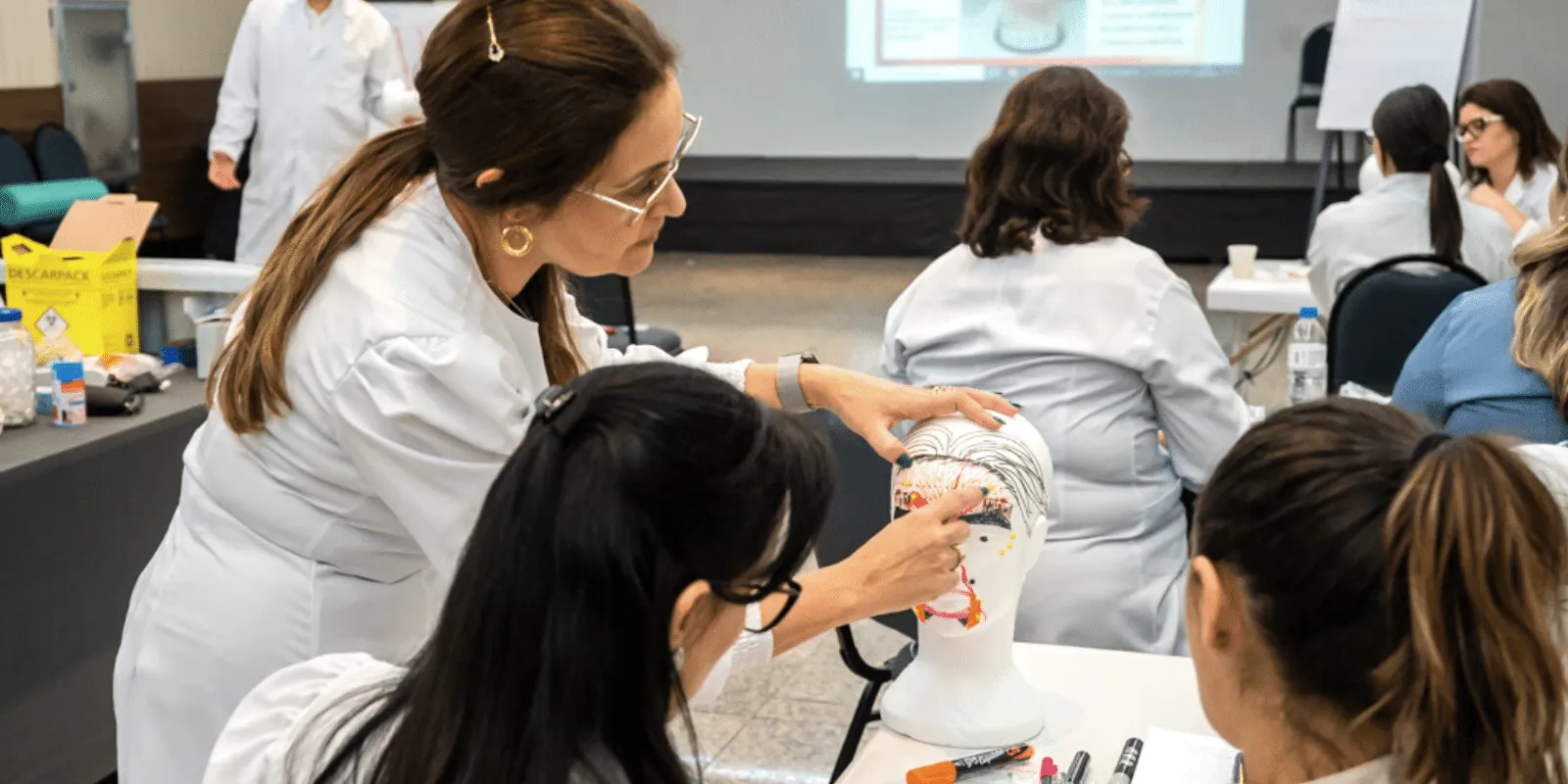
One idea for an Aesthetic Nursing specialization that follows all of Cofen's guidelines for qualifying as an aesthetic nurse is the hybrid course. In this format, the curriculum is split between the theoretical and hands-on parts. See how it works.
The theoretical classes are online, and nurses can study at any time of day and anywhere in the world with internet access and a password. Some classes are recorded and others are live, usually on Saturdays, on apps such as Zoom and Google Meet.
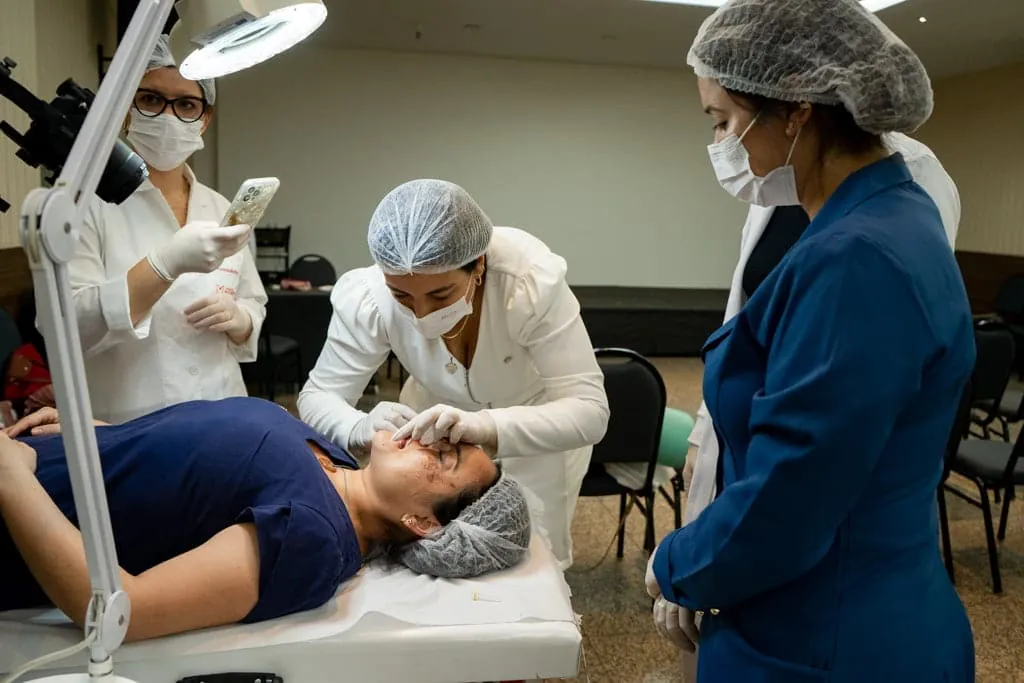
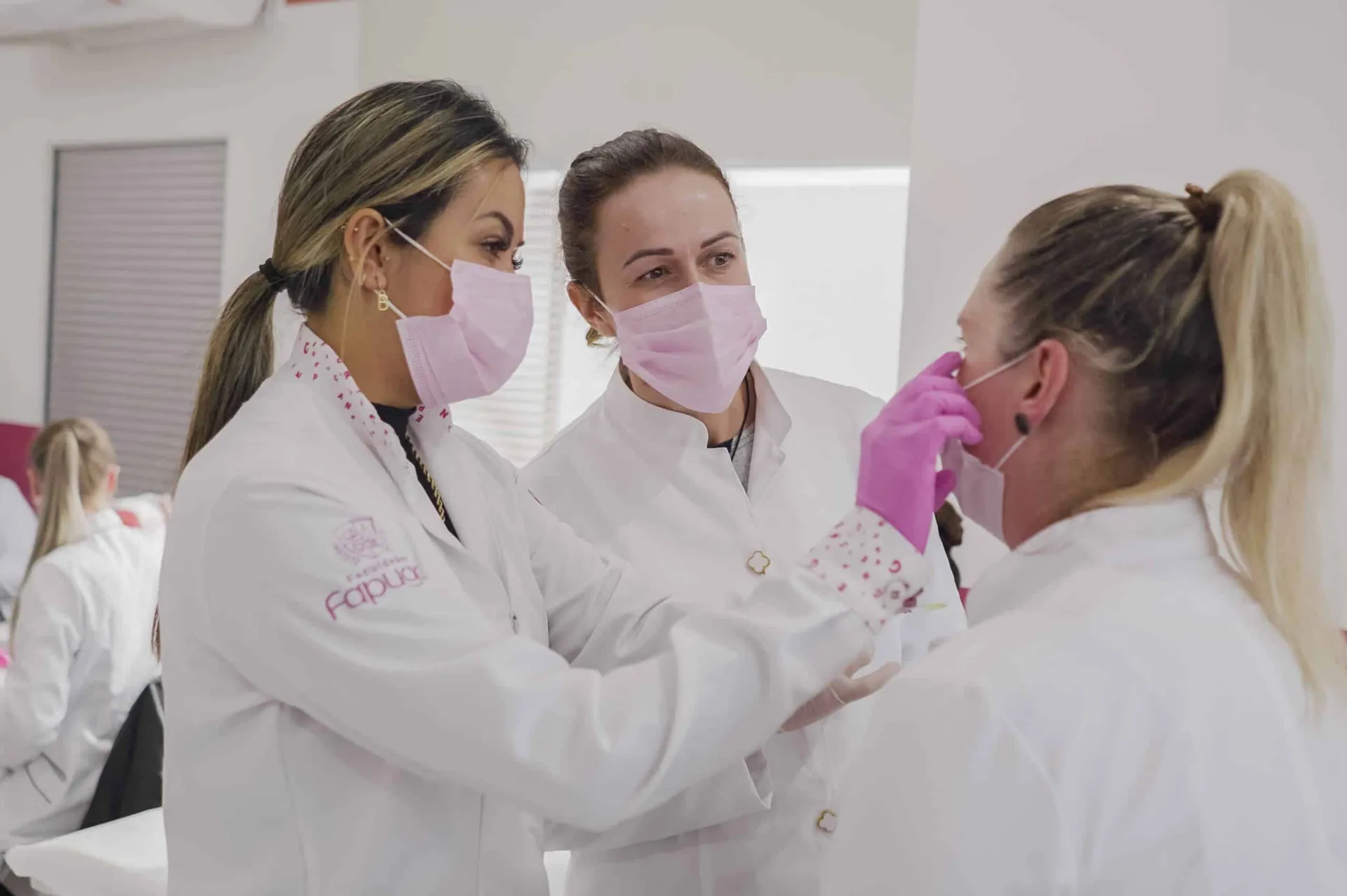
Then come the hands-on classes, which can be scheduled at in-person campuses, which are units that higher education institutions (IES) have to allow a full clinical immersion, an exchange of experience between nurses and professors, and deeper study of the methodologies.
At Nepuga, hands-on classes are called clinical immersions because they truly represent the day-to-day work of an aesthetic nurse in the job market, inside a clinic, seeing patients, performing procedures, among other differentiators.
So much so that the immersions take place in locations that have modern equipment, materials, and products commonly used in clinics. Supervision is provided by a technical lead, trained to work with Nepuga's methods.
In addition, during in-person learning, nurses can work with model patients, which allows them to carry out a complete patient visit, elevating the professional's experience, as they leave the course prepared to work as an aesthetic nurse.
The hybrid course to obtain Council qualification
By learning about hybrid courses, nurses can avoid problems in the future, which we will see below. In fact, many feel deceived because only after entering the job market do they notice that hands-on classes are mandatory.
On the internet, see this comment from Elizangela Caetana da Silva: “I took my course by distance learning and didn't know about the 100 hands-on hours. The school didn't mention it, and when I went to ask Coren (Brazil's regional nursing council) for my registration, they denied it. I didn't have the hands-on hours”.
That is why it is very important for health professionals to know about the requirement imposed by the Council and, from there, look for an educational institution that offers this clinical immersion in addition to theory in an aesthetics course for nurses.
In the same post, Cidinha Ramos replied to Elizangela's comment. “It was really good to learn about the 100 hours required by Coren. When I do my postgraduate program, I'll want a hybrid one”.
Caution with online aesthetics courses in distance-learning (EAD) format
As we saw above, Cofen only qualifies professionals who have a certificate from an aesthetics course for nurses with clinical immersion, which is the hands-on part of the training. Besides this requirement, there are also other drawbacks to choosing 100% EAD courses.
For example, the professional will have to postpone working as an aesthetic nurse, since the Nursing Council will not qualify them until they get the required 100 hands-on hours. That is why the idea of taking the hybrid postgraduate program makes so much sense, to save time and enter the market faster.
Another point is that in distance learning people cannot do networking, which is the exchange of experience among health professionals and also with professors. In a clinical immersion, on the other hand, there is the chance for conversations, creating new business partnerships, and much more.
Did you know that many innovative ideas and partnerships arise during these in-person moments? After all, personal contact allows this kind of unique opportunity, aiming to reach incredible levels within aesthetics, which is one of the fastest-growing markets in the world.
How to get qualified in aesthetics after an EAD course?
One of the most common questions among professionals who took the aesthetics course for nurses in the distance-learning format is how to get qualified by the Council. After all, as we saw, Cofen requires hands-on classes in addition to theoretical ones. So now what?
Especially because without this approval from the Council, the nurse cannot be the technical lead of their own aesthetics clinic and its procedures, and will have to work providing services under the guidance of someone who is qualified.
To change this situation, one alternative is to look for an IES that offers the hybrid course and clinical immersions and is authorized by Brazil's MEC (Ministry of Education). Then, after finding that institution, the next step is to request a review of the curriculum.
That way, it will be possible to know which courses must be taken to meet the Council's requirements. Remember that only with the 100 mandatory hands-on hours – or more – will the nurse obtain Cofen qualification, as the title of this content says.
In-Person Courses|News|Postgraduate FAQIrving Malaguti
NEPUGA content team — Núcleo de Especializações Ana Carolina Puga.