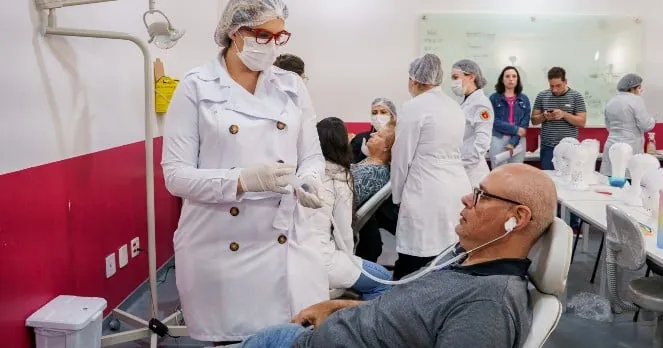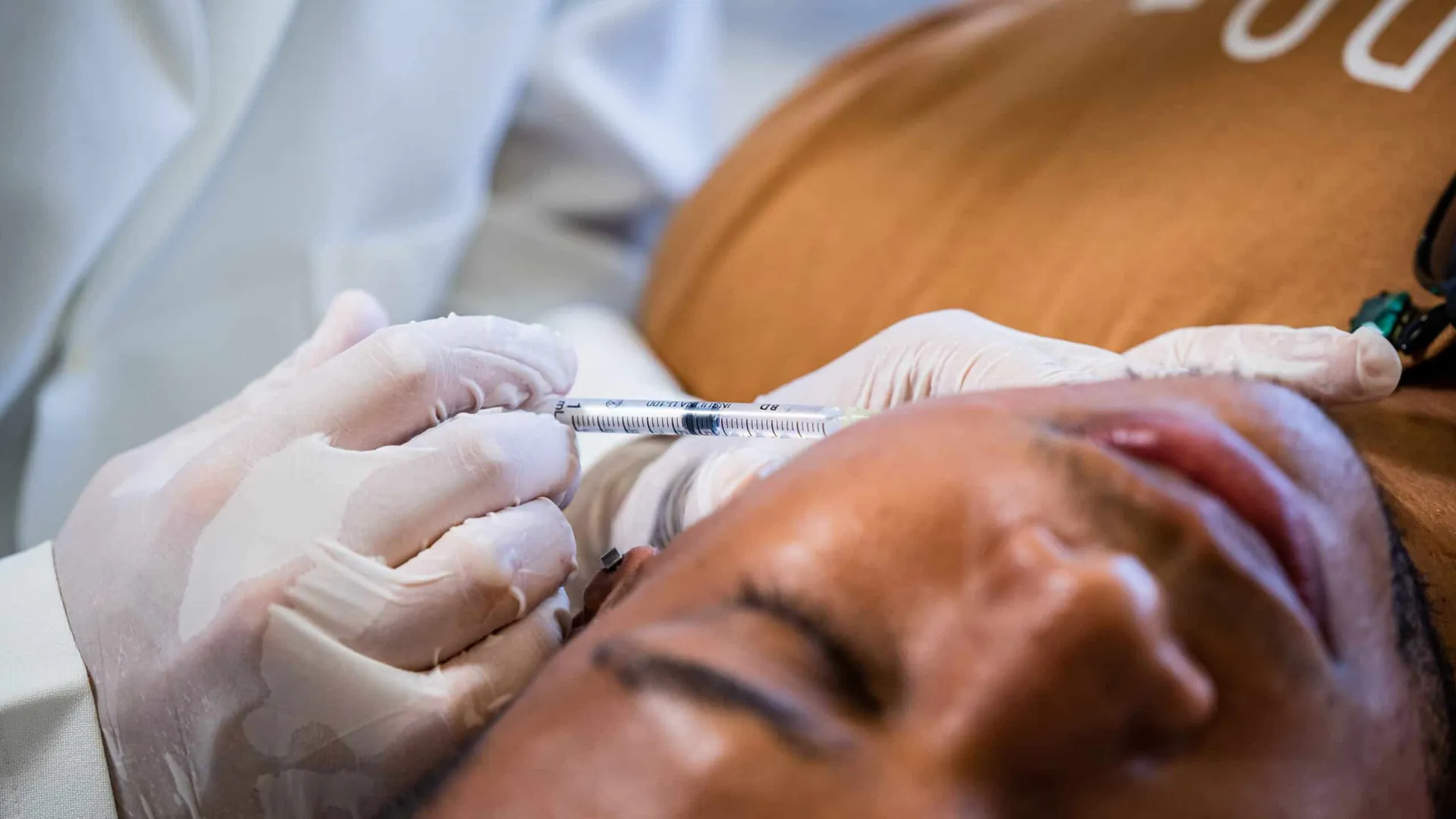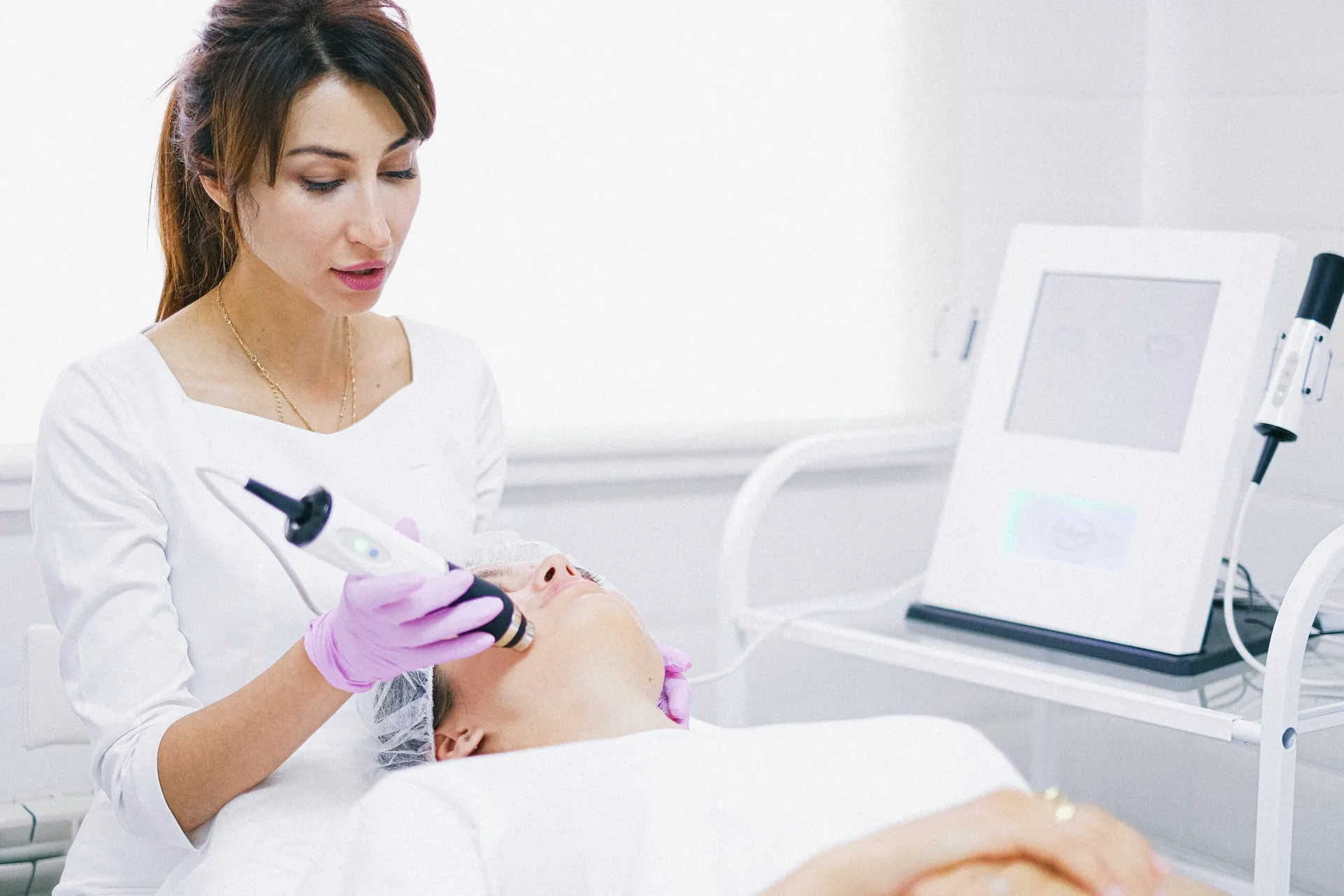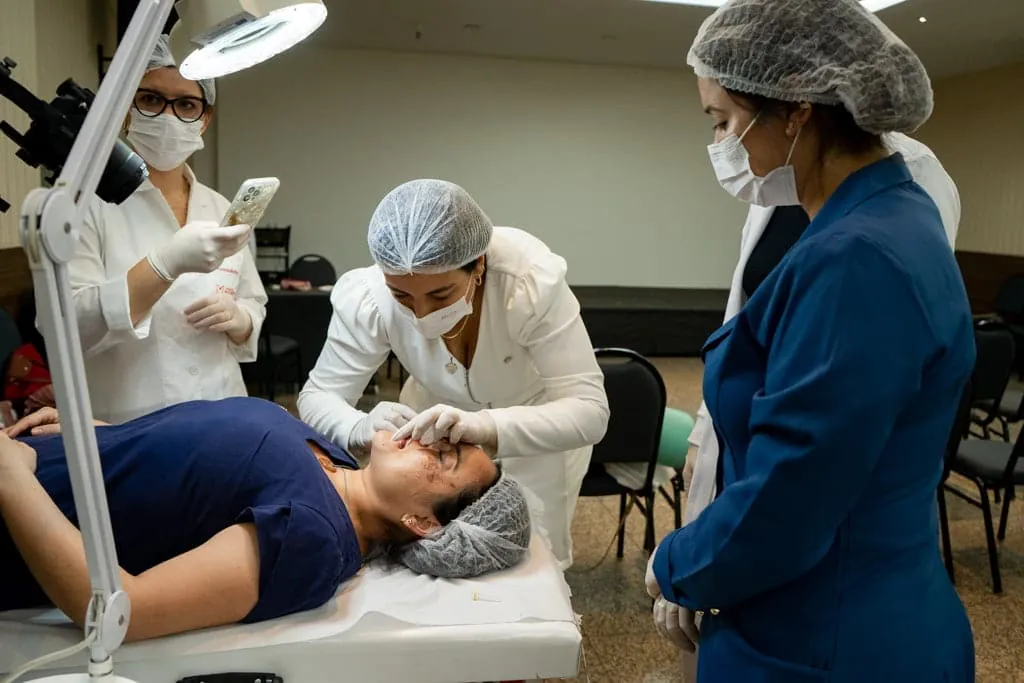
In the process of training to become an aesthetics specialist, hands-on classes – clinical immersions – provide the right level of confidence, both for professionals and for their patients. Regarding the rules across different healthcare professions, see how many practice hours are required for qualification in aesthetics in each one, and keep reading to understand more about the importance of this practice.
It is worth remembering that, regardless of the profession, healthcare professionals must first hold a regular undergraduate degree in order to take a postgraduate program strictly in their own field.
During university training, it is also possible to take University Advanced Trainingcourses, in which students go deeper into subjects that are part of the postgraduate program, so to speak getting a head start on specialization content and putting the professional ahead in their training.
Based on the criteria you will find in this article, as well as those established by the Ministry of Education and by each profession's resolutions, once a Lato Sensuspecialization course, or free course in aesthetics, has been properly completed, the professional meets the concrete conditions to apply for qualification in aesthetics with the regional council in their jurisdiction.
Aesthetic Pharmacy
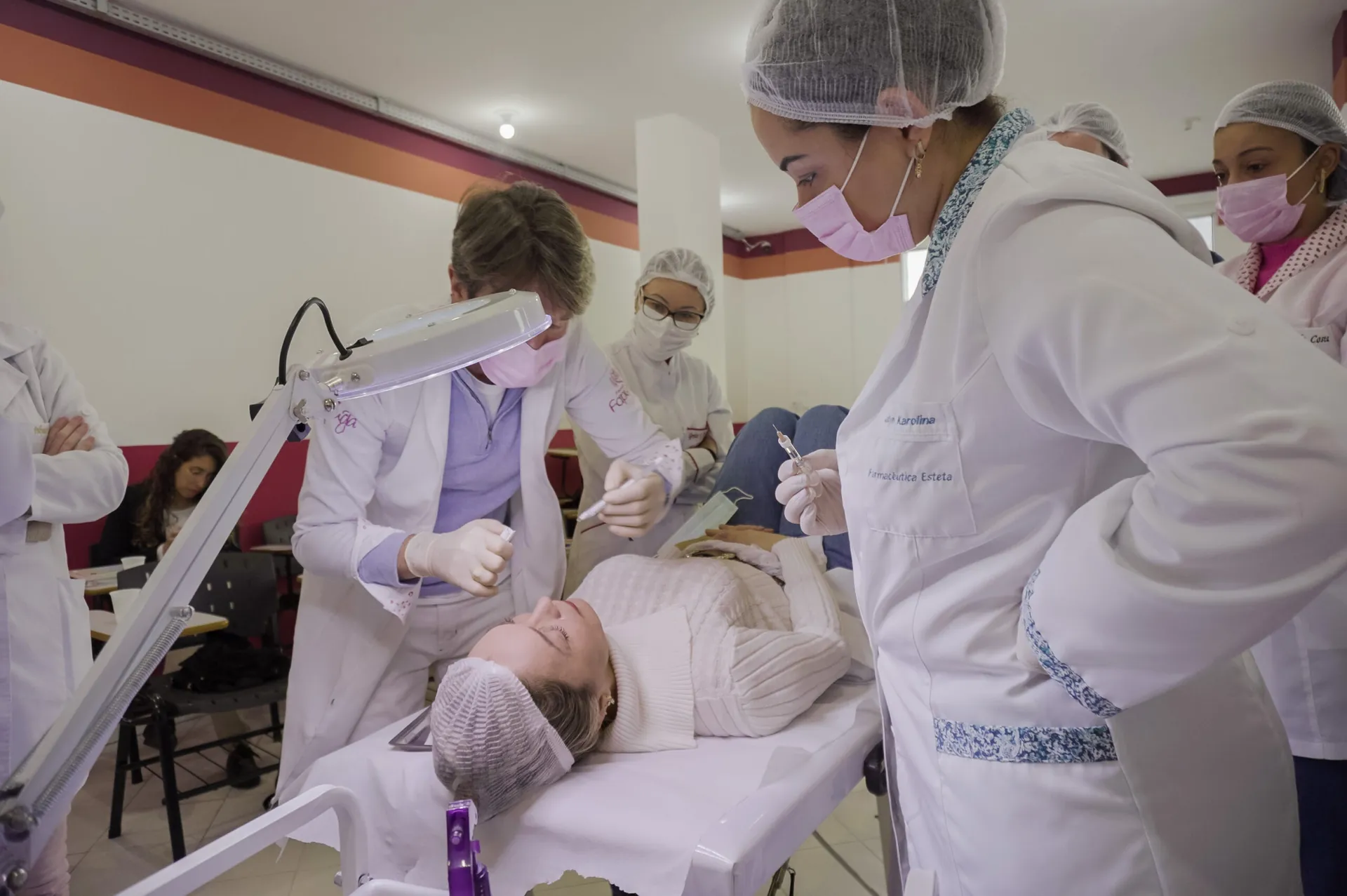
For aesthetic pharmacists, according to Resolution No. 616 of 2015, a professional who has completed a Lato Sensu postgraduate program in aesthetic health that is duly recognized by Brazil's MEC (Ministry of Education), or even a free course recognized by the Federal Council of Pharmacy (CFF, Brazilian professional council), is eligible to obtain the qualification.
Therefore, for practicing Aesthetic Pharmacy, there is to date no fixed number of hands-on class hours set by the CFF that determines whether qualification is granted, at least not explicitly in a council resolution regarding the postgraduate program.
As for free courses, the CFF published in a technical note that, among other parameters, a minimum of 108 practice hours in total is required.
Aesthetic Nursing
As for the requirement for nurses, Resolution No. 715, of 2023, (which partially amends the text of resolution 529/2016) of the Federal Nursing Council (Cofen, Brazilian professional council) is explicit in defining that:
"Art. 4: nurses must have a lato sensu postgraduate degree in aesthetics in accordance with the legislation established by the MEC, with a minimum of 100 (one hundred) hours of supervised hands-on classes."
Aesthetic Biomedicine
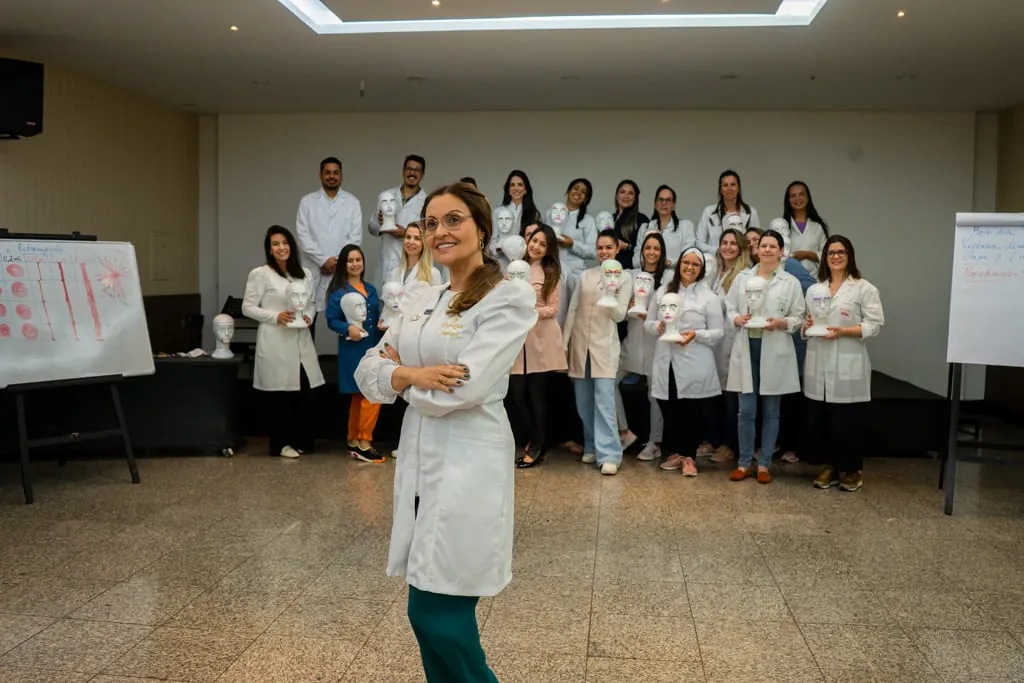
The Federal Council of Biomedicine (CFBM, Brazilian professional council) also does not directly determine this in the resolutions that establish parameters for the qualification of biomedical professionals in aesthetics.
However, it provides in Resolution 200/ 2011 that, to apply for qualification in aesthetics with the council in their region, the professional must present, under Art. 5:
"(…) The biomedical professional must meet one (01) or two (02) of the requirements in art. 3 mentioned above and submit with their application:
a) Certificate and/or Diploma with a specialist title in Aesthetics, obtained or recognized by the Brazilian Association of Biomedicine – ABBM and/or a Postgraduate Certificate (Lato or Stricto Sensu), in accordance with the LDB (Law of Education Guidelines and Bases) and other determinations and norms established by CAPES – MEC."
And, regarding the undergraduate degree in Biomedicine, it establishes that:
"Art. 6 – A biomedical professional is considered entitled to apply for definitive qualification
who is pursuing an undergraduate degree in the field, observing the minimum supervised internship of
five hundred (500) hours."
Orofacial and Surgical Harmonization
For dentists, the Federal Council of Dentistry (CFO, Brazilian professional council) only defines, through Resolution No. 198 of 2019, that specialization courses in Orofacial Harmonization will be recognized if, as provided in Article 5:
"(…) They have a minimum course load of 500 (five hundred)
hours, divided into at least 400 (four hundred) hours in the area of concentration, 50
(fifty) hours in the related area and 50 (fifty) hours for mandatory subjects."
It therefore does not specify the required hours of practice. It does stress, in Article 8 of the resolution, that the specialist title in Orofacial Harmonization must be obtained through training at an educational institution registered in the council's system, or otherwise regulated by the MEC.
Aesthetic Biology
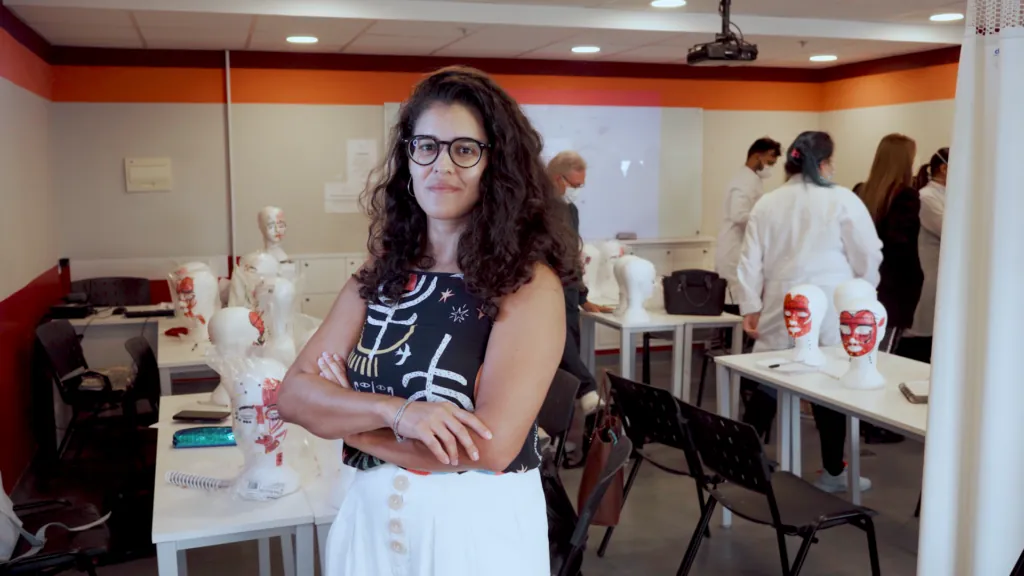
For biologists, resolution No. 582 of 2020, of the Federal Council of Biology (CFBio, Brazilian professional council), only determines, in Article 6:
"For qualification and practice in the area of Aesthetic Health, the minimum requirement is knowledge of cell biology, human histology, human anatomy, chemistry, biochemistry, biophysics, human physiology, microbiology, immunology, parasitology, pharmacology, biotechnology, general pathology, aesthetic health, complications of aesthetic health procedures and first aid, in addition to a supervised curricular internship of 360 hours in the undergraduate degree or Lato sensu postgraduate program (Specialization)."
Applies to all professions
So, anyone looking for courses and institutions that provide proper training to pursue qualification in aesthetics just needs to pay attention to whether the institutions are duly recognized, since that recognition involves parameters that include a detailed analysis of the curricula, both quantitatively and qualitatively.
The importance of clinical immersions in training aesthetics specialists
As mentioned earlier, it is in the hands-on moments of the postgraduate program that healthcare professionals gain the confidence needed to actually practice aesthetics.
The foundational knowledge is, yes, extremely important in training, and its quality is equally significant. What stands out about the practical component is the development of complex skills, which stem not only from procedure techniques but also from patient management in terms of care and integrative care.
And that is why we talk about Aesthetic and Integrative Health, the field of professionals properly trained to perform aesthetic procedures and understand the different nuances demanded by the patient who walks into their office, through a trained eye that best understands their physiological, anatomical and behavioral characteristics.
Article updated on March 2, 2023.
In-Person Courses|News|Postgraduate Program FAQ|Aesthetic HealthLaís Bianquini
NEPUGA content team — Núcleo de Especializações Ana Carolina Puga.