Nursing is one of the most traditional degrees in the world. This model is believed to have emerged in 1840, with Florence Nightingale, who created methods to treat wounded soldiers. But this old profession has something new: aesthetic nursing.
Aesthetic nursing is a specialization for nurses that emerged a few years ago and allowed these professionals to treat people's health, not just illnesses. It is one of the most profitable and lucrative options for those who are tired of night shifts.
In this text, you will learn everything about how it came about, how it works, and which procedures the aesthetic nurse can perform on patients. By the way, what is the salary in aesthetic nursing? Can this professional apply Botox? Let's answer these questions!
“Nursing is a progressive art, such that standing still is going backward. I chose to be a nurse because I love and respect life” – Florence Nightingale, founder of modern nursing.
Aesthetic Nursing as a Specialization for Nurses
Every professional wants to increase their income and be valued throughout their career. However, that doesn't always happen. And even though nurses are extremely important to health worldwide, night shifts and overtime don't always come with a financial gain.
This reality helps explain why aesthetic nursing has become a viable and common specialization in nurses' lives. Among the advantages: more flexible work hours, better quality of life, and, of course, the chance to earn more money.
The aesthetics market is one of the fastest-growing on the planet, focused on care for patients' health. To work with this audience and demand, professionals need to be trained and hold certification from Brazil's Nursing Council. We'll explain all of this!
Which Nursing Field Pays the Most
After college, people wonder which path to take, not least because becoming a specialist in a subject can generate better results, whether in profit or even in authority on the subject. And in nursing, it's no different.
Then comes the question: what is the best field to specialize in within nursing? The most common are: ICU nursing, neonatal nursing, emergency nursing, nephrology nursing, cardiovascular nursing, among others. And which one pays the most? Take a look!
- Clinical nurse – R$ 3,100
- Family health nurse – R$ 3,200
- ICU nurse – R$ 3,400
- Obstetric nurse – R$ 3,500
- Nephrology nurse – R$ 4,000
- Auditor nurse – R$ 5,000
- Aesthetic nurse – R$ 7,000+
Does that mean the salary in aesthetic nursing is the highest among all specialties? This question needs to consider several points and details, such as region, work format, hours worked, and much more.
In the case of aesthetic nursing, just go to Google and type the phrase “aesthetic nurse salary” to see that the nationwide average is above R$ 7,000. But there are accounts proving that revenue can be much higher, not to mention other benefits.
How Much Does a Nurse in Aesthetics Earn
For those wondering whether it's possible to get rich as a nurse, consider the aesthetics market as the main answer. To give you a baseline, professionals working in health and beauty clinics earn from R$ 7,000 per month, and may be the Technical Managers (RTs) of the place.
In other words, the question of how much a nurse who applies Botox earns follows the same path; but there is a differentiator to consider. If the professional owns their own business, this income can double, triple, and grow many times over. After all, besides a salary, they get a share of the profit.
Like Botox application, other noninvasive procedures can be performed by the aesthetic nurse, which brings in more earnings since these are profitable treatments. On the list, remember services such as toxin application, fillers, and harmonization.
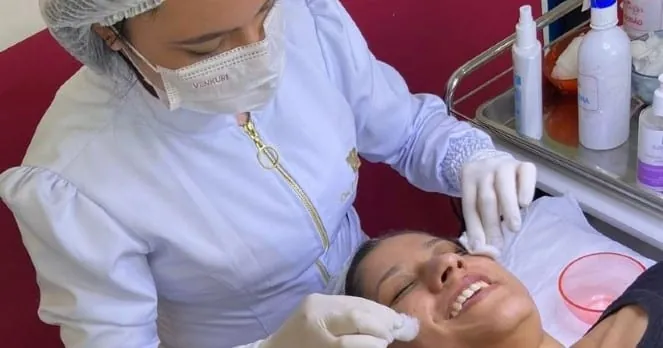
According to the resolutions, which you will learn about below, the aesthetic nurse can work with aesthetic procedures, offering patients an initial consultation and anamnesis, in search of the best methods. This can happen in aesthetic clinics, dermatology clinics, spas, private offices, and hospitals.
Can Someone Who Studies Nursing Apply Botox?
Thinking about career growth, a nurse can specialize in pre- and postoperative care, as well as in creating cosmetic projects and developing research. However, the aesthetic field is the one that attracts the most because of its financial returns.
Thus, there are several aesthetic procedures that these professionals can perform. In fact, the aesthetic nurse can perform harmonization, through the application of toxins (Botox) and acids (such as hyaluronic acid and calcium hydroxyapatite). We have a list of the main ones, check it out.
Intradermotherapy
Intradermotherapy is a noninvasive technique that aesthetic nurses can apply. It is simply the use of injections compounded with medications, vitamins, and other substances. The result depends on each patient's goal.
Electrotherapy
Electrotherapy uses electrical currents to generate therapeutic and aesthetic results. It is thus considered a complementary treatment, which can serve as analgesia, muscle stimulation, and to oxygenate the skin and promote collagen production, for example.
Laser Therapy
In aesthetics, laser therapy is considered excellent for treating dark circles and works in facial rejuvenation. The technique uses pulses and light applied directly to the person's skin, so it can also treat keloids and hypertrophic scars. It has been tested on more extensive wounds, such as ulcers.
Vacuum Therapy
Vacuum therapy can be used in treatments of various types, while in aesthetics it drastically reduces cellulite and localized fat. It works as a body-shaping, slimming, relaxing, and draining massage, considered suitable for several goals.
Micropigmentation
This is an eyebrow-filling technique done hair by hair, using a device that works with needles stimulated by an electric current. Many call it a dermograph, which applies ink to gaps and outlines the area.
Dermopigmentation
Similar to micropigmentation, dermopigmentation is a technique of the upper layer of the dermis, which does not compromise other layers of the skin, without causing problems to the skin. The duration varies from person to person and depending on the technique used.
Carboxytherapy
Another possible treatment in a career in aesthetic nursing is carboxytherapy, which works through the infusion of carbon dioxide into the skin. It is an old method that still brings excellent results today, especially with regard to tissue regeneration.
Cryolipolysis
Cryolipolysis reduces body fat through controlled vacuum freezing. The goal is therefore to destroy fat cells. The method is noninvasive and should be performed in aesthetic clinics by trained professionals.
Ultrasound
In aesthetics, ultrasound devices work as a technology that treats localized fat and body contouring. The device, which emits sound above the audible frequency, produces microvibrations that break down adipocytes. Consequently, the tool also allows for stimulating collagen and treating cellulite.
Drainage
A therapy that works very well for health and well-being. Lymphatic drainage helps reduce cellulite and fat by stimulating lymphatic circulation, helping the body eliminate toxins and nourishing the tissues.
Acupuncture
Out of curiosity, did you know that nurses can work with aesthetic acupuncture in their aesthetic clinics? This is one of the procedures that has been giving the most financial return in Brazil and should only be performed by professionals trained in aesthetics.
Is It Worth Specializing in Aesthetic Nursing?
The traditional nurse has always been seen as the health professional on the front line, something much talked about during the pandemic. Today, they have alternatives to this intense and tiring work, and the best example comes from aesthetics.
In a quick comparison, the general nurse, such as one who works in a hospital, is responsible for caring for people, but almost always dealing with diseases and the treatments to fight them. They can perform simple procedures and assist doctors during surgeries, for example.
Meanwhile, an aesthetic nurse is a health professional with a specialty, focused on a field that only grows. With the Postgraduate Program in Aesthetic Nursing, the professional will be able to care for patients' health (and not just illnesses). They are qualified to offer the most diverse aesthetic treatments, such as those mentioned above.
From this practice perspective, it should also be considered that the chances of being more valued are much more real in aesthetics. While the salary of a hospital or clinic nurse is rigid, in aesthetic clinics there are no limits, especially when the nurse owns the place.
To prove all of these benefits of aesthetic nursing, we have gathered some stories!
- “You can set your own hours and have a good financial return” – Patrícia de Souza
- “I chose aesthetics to spend more time with my family” – Adriana Bessa
- “I get home from the hospital dead tired. In aesthetics, I'll have flexible hours” – Railda Aires
- “After the ward, I opened my aesthetic clinic” – Thales Cunha Gonzaga
- “I already see a financial return and it's great” – Talita Miazzo
- “It's good to improve self-esteem for patients” – Alexandre de Oliveira
- “Aesthetics changed my life. I feel empowered and happier” – Juliana Ferreira
- “With aesthetics, I can have financial independence” – Nathany Kelly
- “I have a daughter, so I need flexibility in my routine” – Renata Ribeiro
- “For those working night shifts, starting a business means having a peaceful life” – Maryellen Sprenger
With these examples, which are recently told real accounts, you can get a view of those who were in your place and chose the specialization in aesthetic nursing. Interested? Keep reading to find out what it takes to become a specialist in this field.
What Nurses Need to Work in Aesthetics
To work in aesthetics, nurses need to have proven technical training. That is, complete a postgraduate program at an educational institution authorized by MEC (Brazil's Ministry of Education). Then they go through authorization from the Nursing Council.
But besides knowing that, consider that it is worth knowing the history of aesthetic nursing in Brazil, which is what allowed these health professionals to work in aesthetics in a regulated way.
In 2010, after many battles with health authorities, Dr. Ana Carolina Puga managed to make Aesthetics a possible qualification for biomedical professionals. In other words, biomedical professionals gained the right to perform aesthetic procedures.
In the following years, the Federal Councils of other professions moved toward the same goal until 2014, when it was nursing's turn. That year, COFEN (Federal Nursing Council, a Brazilian professional council) took the first steps, and in 2016 the regulation took effect.
In fact, Resolution 529/16. It authorized the legal and regulated practice of nurses specializing in Aesthetic Health. From then on, the professional can perform various treatments in specialized clinics.
It is important to know that the resolutions have been updated over the years. The latest is 626/20, which aims to bring legal certainty to professionals. What matters is knowing that today aesthetic nurses are authorized to work with aesthetic procedures.
And that is the history of the regulation of aesthetic nursing in our country. But if you still have that question about what a nurse needs to apply Botox or do fillers, consider taking the first step: starting a postgraduate program.
But note: your choice must be an educational institution (IES) accredited by MEC that meets all the requirements demanded by the Council, such as having in-person classes. Learn all about this in the next section.
Which Is the Best Postgraduate Program in Aesthetic Nursing
So that this section answers all your questions about the postgraduate program in aesthetic nursing, we will address 3 common questions from nurses. For example, what the program is like, what you learn, and whether the course is in person. That way, you will have a better chance of making the best choice for your specialization.
What Is the Specialization in Aesthetic Nursing Like?
The specialization in aesthetic nursing is a postgraduate program. This means it is a course that comes after the nursing degree. During college, health professionals can learn about several disciplines and areas of practice, and aesthetics is one of them.
From there, they can opt for the specialization in aesthetics. But here are some valuable tips: not everyone with a postgraduate degree in aesthetics becomes an aesthetic nurse. How so? We explain: besides the postgraduate program, you also need certification from the Council.
So the secret is to choose a college that offers a postgraduate program that follows the rules for the Council to certify the professional, such as hands-on classes. There are courses that are in person, which is good for several reasons; but they don't include hands-on classes, which the Council requires. We'll see more about this in the last section.
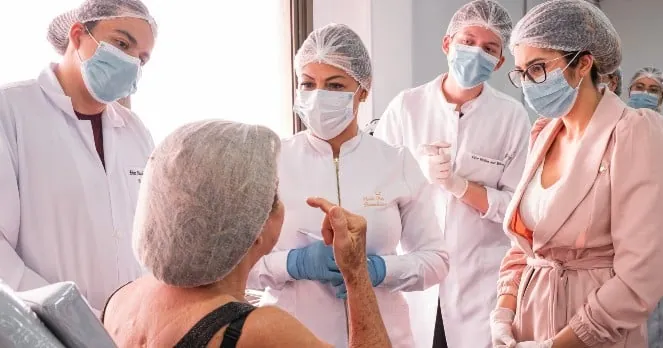
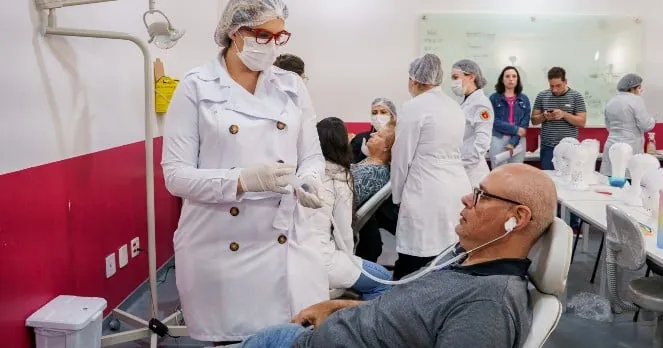
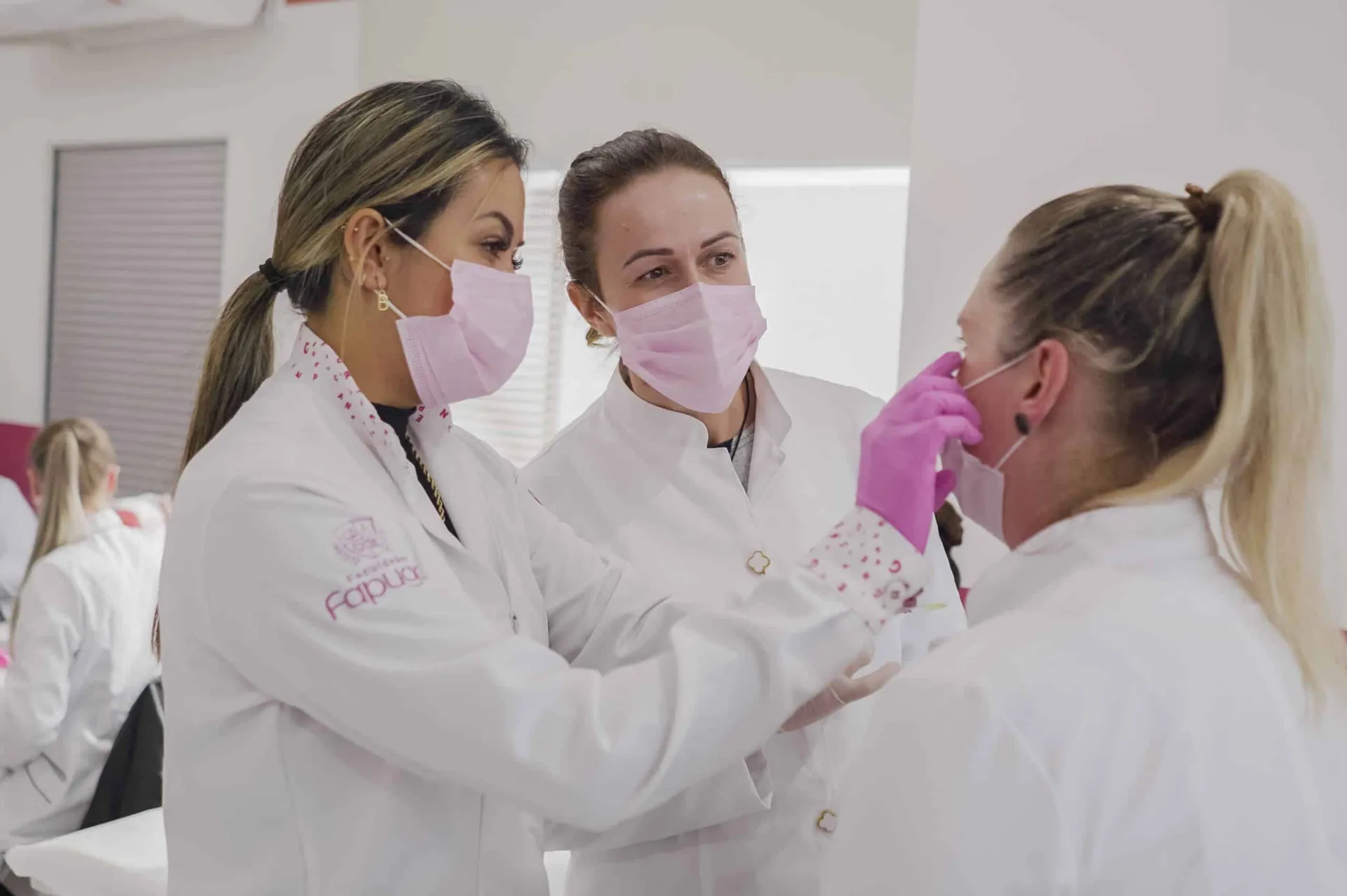
The fact is that at Nepuga classes are divided into two parts. The first is theory, which takes place entirely online. Then come the clinical immersions, when health professionals can get hands-on and learn the aesthetic techniques on real patients.
What Do You Learn in Aesthetic Nursing College?
There is a common question on the internet about the curriculum in aesthetic nursing college. Let's go through the points. The first is that the most up-to-date nursing schools do include the topic of aesthetics in their schedules.
However, this doesn't mean they are specializations, as required by the Council, to train an aesthetic nurse. What happens is that the undergraduate degree offers some nuances and an introduction to the topic in order to present it to the future health professional.
The second point is understanding that the Council does require the specialization (in a postgraduate program accredited by MEC and with hours of hands-on classes) to certify the aesthetic nurse. Therefore, this postgraduate program becomes essential.
At Nepuga, the postgraduate program in aesthetic nursing is 480 hours, to be completed in 11 months. And also 12 clinical immersions, essential for Council approval. The practice takes place on real patients and with MEC certification.
Among the topics in the curriculum are: injectable aesthetics, Facial Harmonization, Ozone Therapy in Aesthetics, Botulinum Toxin, Filler Application, PDO Threads and PRP, Intradermotherapy and Mesotherapy, Microvessels (PEIM), and others.
Is the Aesthetic Nursing Course In Person?
The last section is just to recall what we have already seen. Postgraduate programs in aesthetics can even be fully distance-based, in what is called 100% EAD (distance learning). However, it is not advisable because that way the Nursing Council will not certify the professional.
On the other hand, it is also known that online classes work well when the topics are more theoretical, due to their advantages. That's why Nepuga has hybrid courses, theoretical and practical, authorized by MEC and following the Council's rules.
In fact, these hands-on classes are called clinical immersions at Nepuga precisely because they simulate a day-to-day of patient care, practice, and the interaction of nurses with their patients.
Blog|In-Person Courses|InstitutionalIrving Malaguti
NEPUGA content team — Núcleo de Especializações Ana Carolina Puga.