Letícia Spiller, Luiza Brunet, and Megan Fox are some of the celebrities who have had blepharoplasty. Their before and after is incredible and inspires many people. But not everyone is willing to undergo surgery. That is where the alternative comes in: non-invasive blepharoplasty.
What the blepharoplasty procedure is
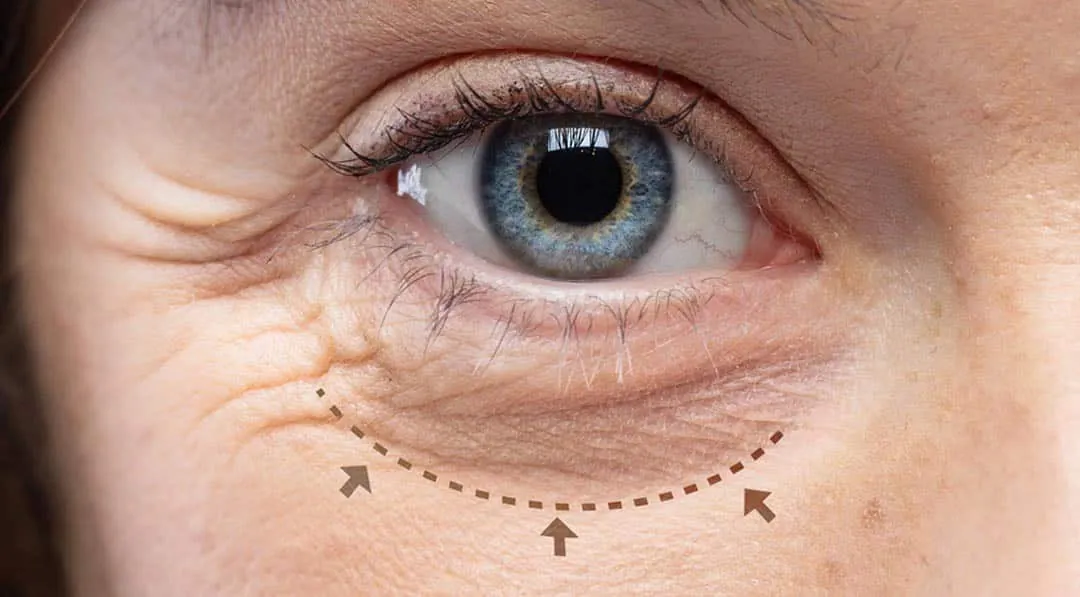
Blepharoplasty is nothing more than eyelid surgery, a surgical procedure used to treat excess skin that gives the look of “droopy eyelids.” During the procedure, excess skin, muscle, and even fat pads can be removed.
However, mistakes in blepharoplasty are very dangerous, especially because it is surgery. This high-risk operation can harm the eyes in case of medical failures, such as injuries to the eyeball and cornea. That is why there is an alternative: non-surgical blepharoplasty.
How does the eye look after eyelid surgery? Recovery time for returning to work can be up to 30 days, meaning the person should be off work for at least a month after eyelid plastic surgery. Absolute rest is required for 7 days, after which the patient can gradually return to activities.
What non-invasive blepharoplasty is
For those who do not want to go through the surgical process, the good news is that there is a procedure that replaces blepharoplasty, indicated for removing excess skin and treating wrinkles around the eyes. The non-surgical version is approved by Anvisa (Brazil's National Health Surveillance Agency).
And the good news is that there are several ways to do it, such as Plasma Lift or Plasma Jet, a session with numbing cream that lasts no more than 40 minutes and is then performed with plasma. In this way, blepharoplasty without incisions rejuvenates the area.
In short, in laser blepharoplasty, instead of the surgical scalpel, a focused CO2 laser is used, which cuts and cauterizes the skin. This makes recovery faster and scars almost imperceptible. In fact, the lines are camouflaged by the natural folds of the eyes.
How is non-surgical blepharoplasty done? The non-surgical method works through plasma technology, in which controlled sublimation of the superficial skin produces the desired effects by changing structures and promoting skin tightening.
Other questions
Now that you know the difference between surgical and non-invasive procedures, keep reading to discover other interesting facts about them.
How long does the effect of blepharoplasty last
Eyelid surgery has an average duration that varies from patient to patient, typically ranging from 5 to 8 years. That is the time it takes for the loose skin to start forming again, when the patient feels the eyes heavy once more.
How long does the effect of non-invasive blepharoplasty last
More durably, eyelid surgery performed with a laser can last up to 10 years. And there are cases in which a permanent and noticeable effect is seen for an even longer period, up to 15 years.
How much does blepharoplasty cost
Currently, this surgical procedure costs from R$ 8,000 at the main clinics in São Paulo. The price is an average, which will be suggested after evaluation by the plastic surgeon.
How much does non-invasive blepharoplasty cost
The price of laser blepharoplasty starts at R$ 8,000, depending on the region. This figure considers large capitals such as São Paulo. Keep in mind that it is in line with the average price of eyelid surgery, with a very similar result.
How to specialize in non-invasive blepharoplasty
With the main advantage of not requiring surgery, many people choose the non-invasive option, which is less risky and may have longer-lasting results. But for that, patients should pay attention to a few details.
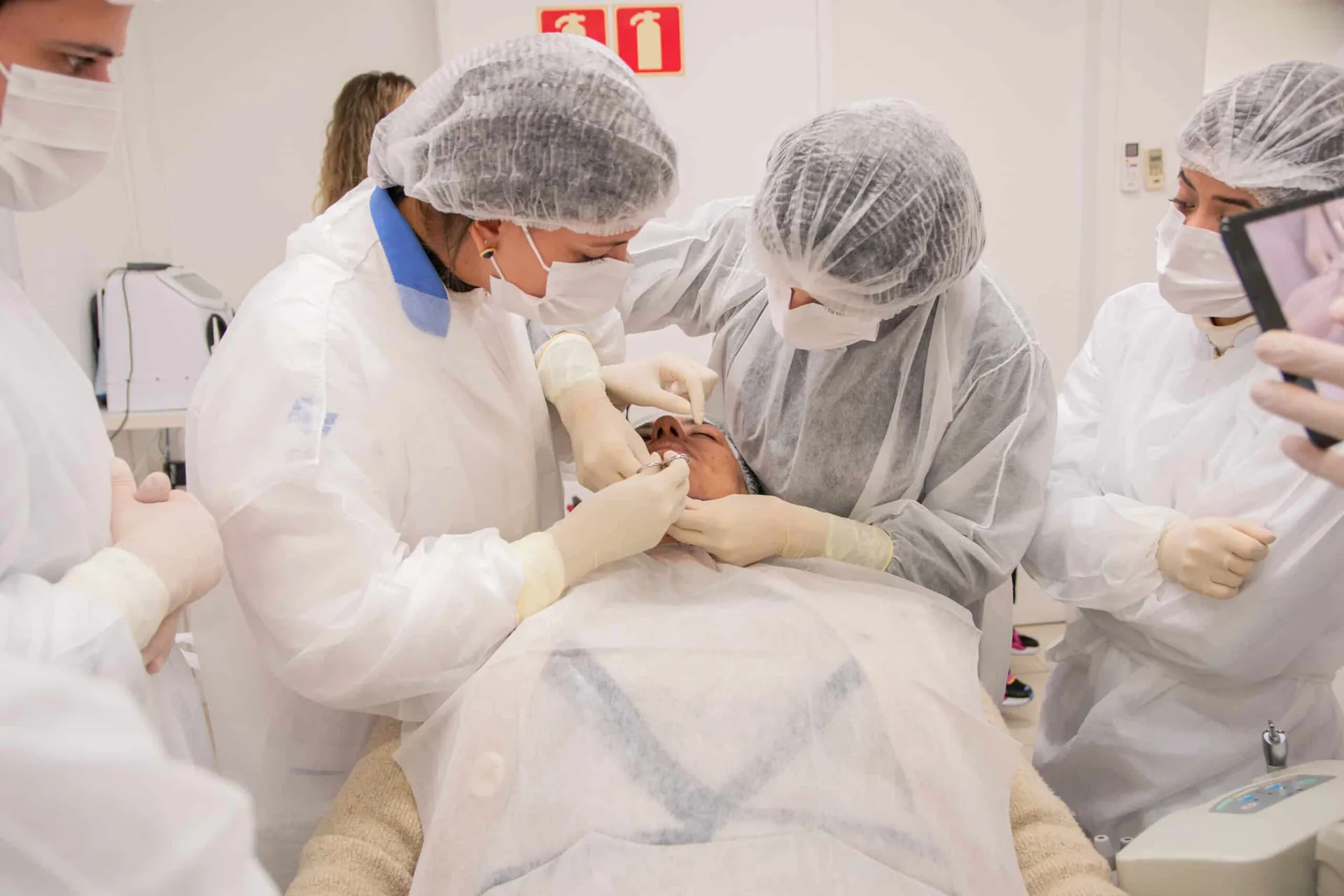
The first is to have the treatment only with professionals qualified for it, who have a postgraduate course with hands-on classes and Anvisa approval. For example, they need to know how to use the device that performs non-invasive blepharoplasty.
At Nepuga, the HOF course (Orofacial Harmonization) is what trains health professionals to work with non-invasive facial aesthetic procedures. That makes it a great choice for those who want to specialize in this area.
Read also – Rhinomodeling: The 5 Main Questions About Using Hyaluronic Acid in the Nose
Orofacial and Surgical Harmonization|NewsIrving Malaguti
NEPUGA content team — Núcleo de Especializações Ana Carolina Puga.