A certificate can be just a document, just as a course can be limited to meeting the protocols of a preset curriculum. But that is far from the case for the class that has just finished the Postgraduate Program in Orofacial and Surgical Harmonization. It is a cycle of great dedication that produces HOF specialists.
It was 12 months of great dedication, with a truly revolutionary payoff for the careers of the dentists who chose to become aesthetics specialists beyond the smile.
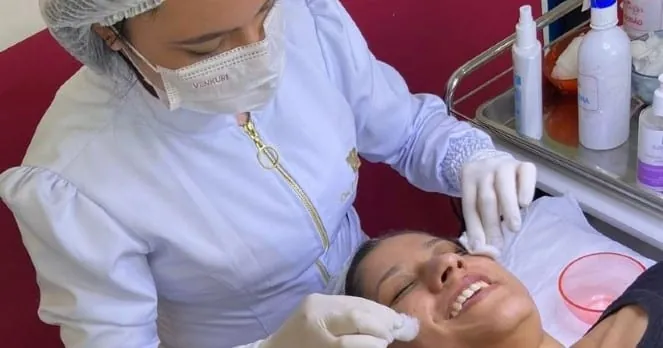
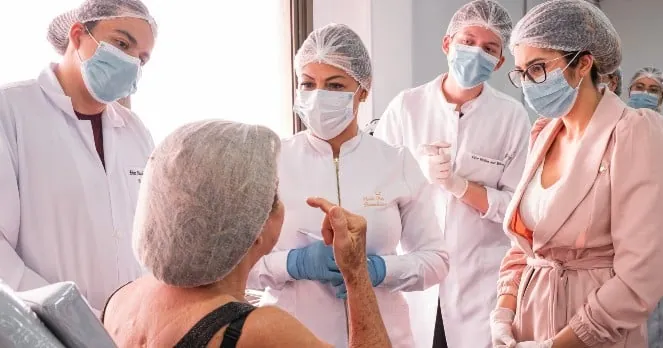
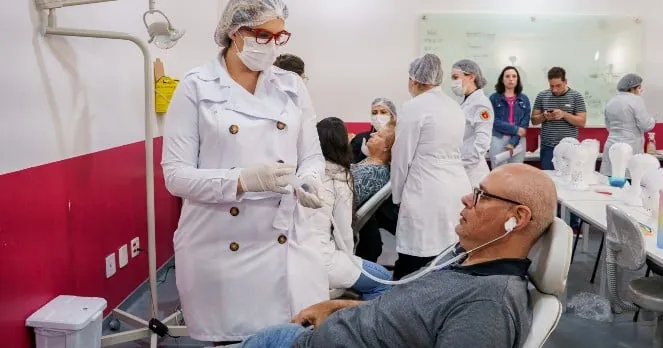
Everyone who truly committed had the chance to work with real patients, alongside highly qualified instructors and technical supervisors, and achieved visible changes in their own skills and confidence. They are truly leaving the program with the confidence to practice and to perform the procedures they learned with autonomy.
So much so that a large share of the HOF graduates are already devoting themselves to facial aesthetics in their own offices, and earning significant financial returns as a result.
A moment to celebrate
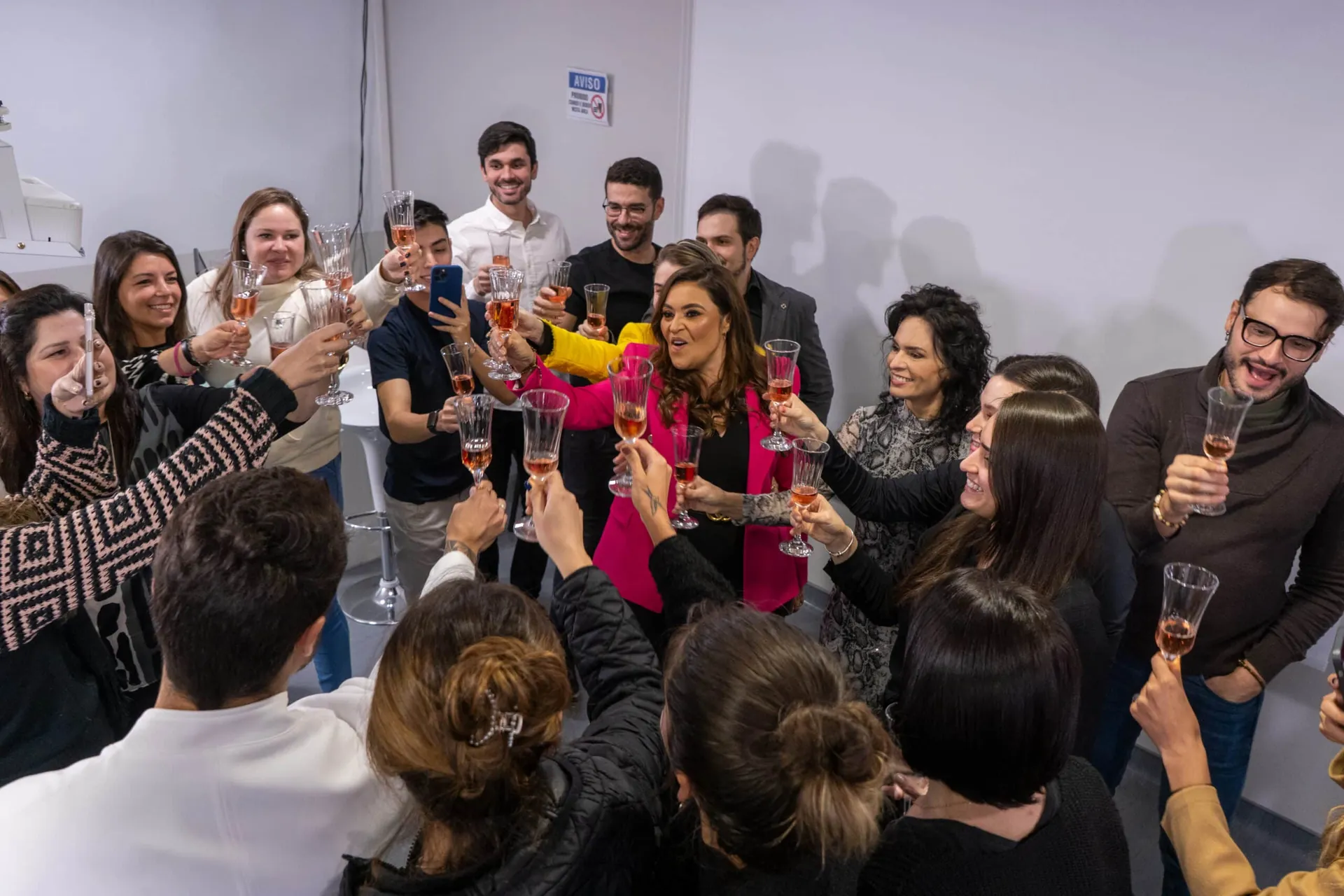
Of course, this final stretch had to be special. Last Sunday, the postgraduate students were surprised with a celebration prepared with great affection. See the highlights below:
On the occasion, Dr. Ana Carolina Puga was also present, and took the opportunity to congratulate everyone for their dedication. She also spoke about the processes involved in conceiving and delivering the HOF Postgraduate Program, mentioning that the course changed a lot before reaching the form actually put into practice.
The experiences with this class of postgraduate students will surely be used to improve the course even further. In this context, Dr. Ana left a message that also applies to the careers of the professionals who have just become specialists with Nepuga:
“I love feedback. Even more negative than positive, because it gives us the opportunity to grow. I hope you will be like this in your own offices too. Because you deal with people, and the feedback you receive from people has to serve as a springboard to reach your goal, never as an anchor to sink you.”
A brief look back at the most important modules of the HOF program
At a closing moment like this one, it is important to remember everything that happened and to see the whole more fully, noticing that all the developments and changes were part of a process.
Ozone Therapy
Thus, in this class the first clinical immersion period was like a preparation for everything to come. Through the Ozone Therapy practice, the postgraduate students learned ways to handle possible complications, as well as a powerful tool for promoting tissue asepsis.
Toxin and Fillers
The next module was toxin and fillers, which are among the most sought-after procedures in aesthetics. With many opportunities to practice and gain confidence, this module soon led to new opportunities for attracting patients and meeting demands already present in their respective offices.
Injectables
In addition to the specific module dedicated to fillers and botulinum toxin, there were still several opportunities to refine specific techniques. Especially during the next module, which focused more on collagen biostimulators and PDO threads, the need for some additional room to develop advanced techniques with fillers became apparent, and that is what was done.
The other practices in this period were also very worthwhile, with several real patients present to benefit from collagen biostimulators and PDO threads. On this occasion, the patients reported feeling very comfortable with the postgraduate students and, although real results take time to show, they already expressed satisfaction with the preliminary results.
In the same period, there was also an entire day devoted to technology devices, including microfocused ultrasound, radiofrequency with LED light, lasers, and electrocautery. The highlight was the hottest devices on the market: the Ultraformer III and the Lavieen.
Surgical Procedures
And then came the most anticipated period, the surgical procedures, which was put to very good use, with many patients to perform mechanical double chin liposuction, buccal fat removal (bichectomy), and cervical and temporal lifts. These procedures call for even more caution, since they are invasive and deliver permanent results.
One of the biggest highlights of surgical practice for aesthetic purposes that dentists can perform is the reduced investment compared with other types of procedures, because of the high cost of filler substances, biostimulators, and others.
So, unlike aesthetic procedures with non-permanent results, performing surgical aesthetic procedures requires a larger initial investment in durable equipment.
We have already covered details about the surgical module in other posts here on the blog, with more detail on the procedures; we have also gathered the progress report from the postgraduate students and talked about each of the modules.
Despite the responsibility these procedures involve, the dentists reported feeling confident in class and are now also able to perform them outside the classroom, with their own patients. In other words: full use of the module the HOF class most anticipated.
The last clinical immersion
On the 26th and 27th, the immersion period that closed the course took place, dedicated to practicing PRP and PRF. The graduates were thus able to put into practice one more procedure with different purposes, which stands out for not requiring investment in high-value substances, since it uses the patient's own blood.
Another benefit of these procedures is the ability to serve a public that is curious about facial harmonization or more specific fillers but worries about how the results will turn out, since a filler using Platelet-Rich Plasma has a shorter duration.
In addition, the plasma is also a biostimulator and can be used in protocols combined with microneedling, to even out the skin and reduce visible pores, as well as soften scars and stretch marks.
HOF Specialists: Much More Than a Paper Framed on the Wall
Recalling a bit of each of these stages is recognizing the whole path traveled so far, through the dedication of each of the postgraduate students, who are now truly HOF specialists.
All the patients, faculty, and staff were part of building the specialists who have now graduated, and who deserve to be proud of what they have achieved.
All the time, energy, and resources were part of the quality of care present in every office, expressed in each of the careers and lives impacted by this training. It doesn't happen overnight, it's not just a paper framed on the wall, it's a window that opens to a life change.
Orofacial and Surgical Harmonization|InstitutionalLaís Bianquini
NEPUGA content team — Núcleo de Especializações Ana Carolina Puga.