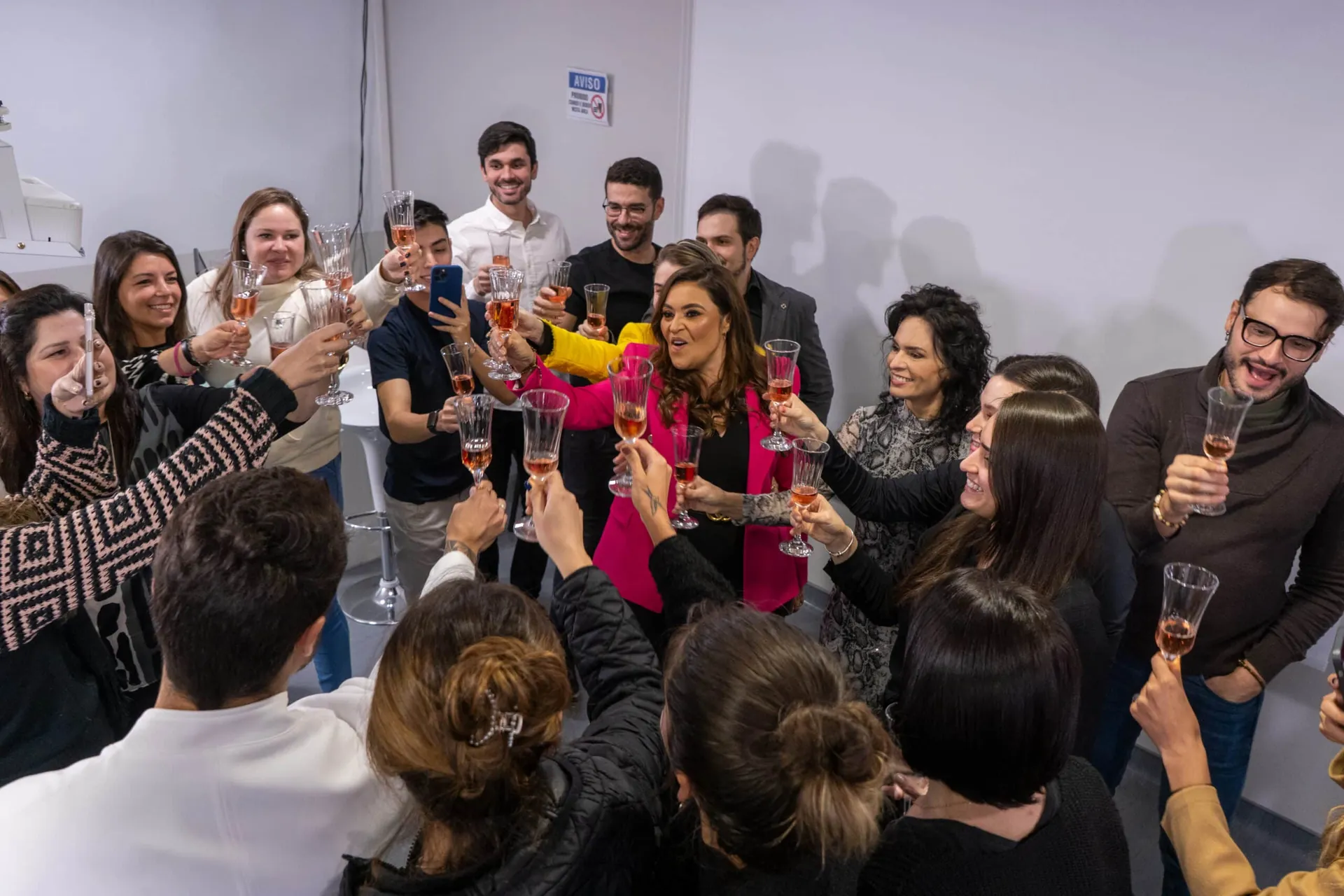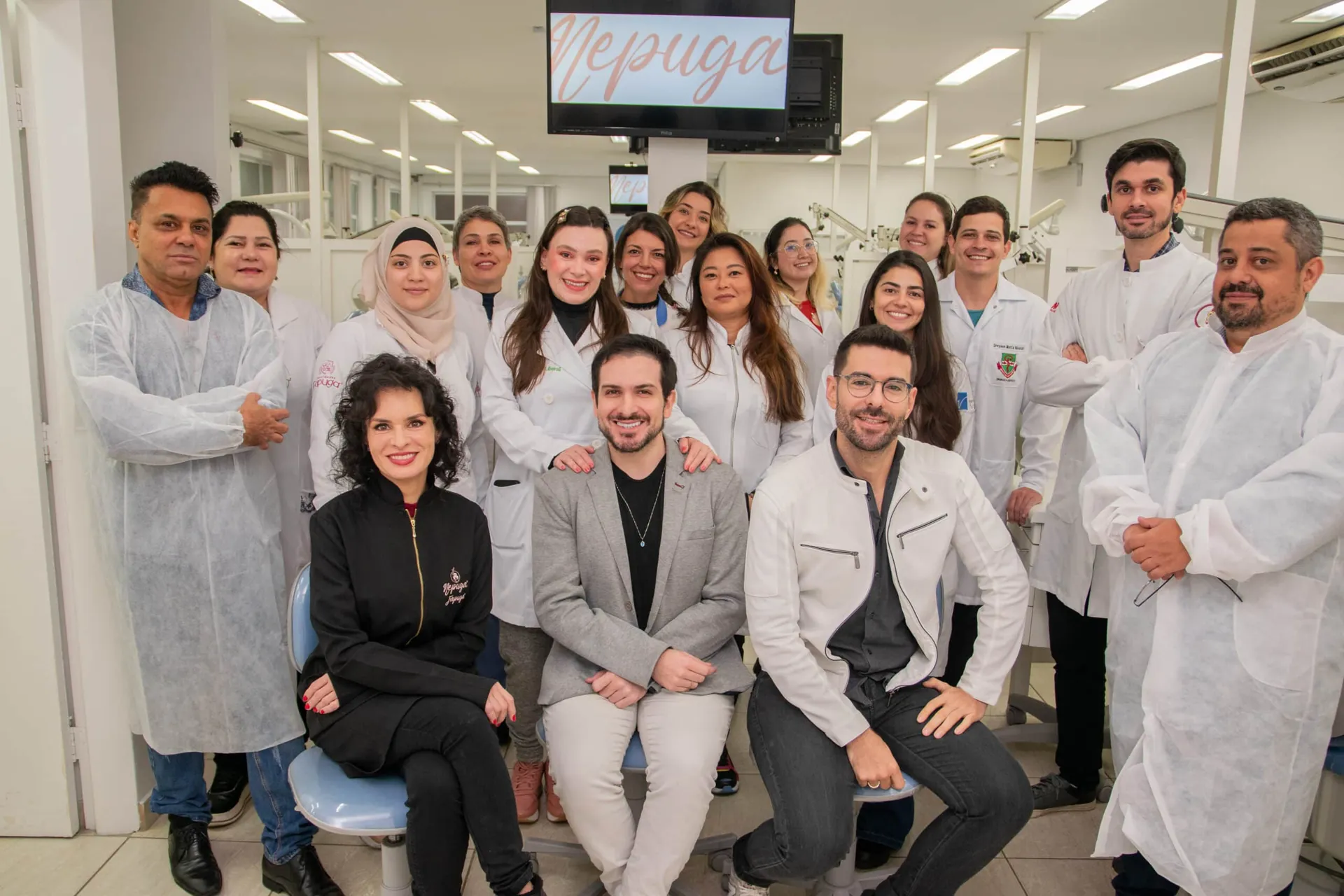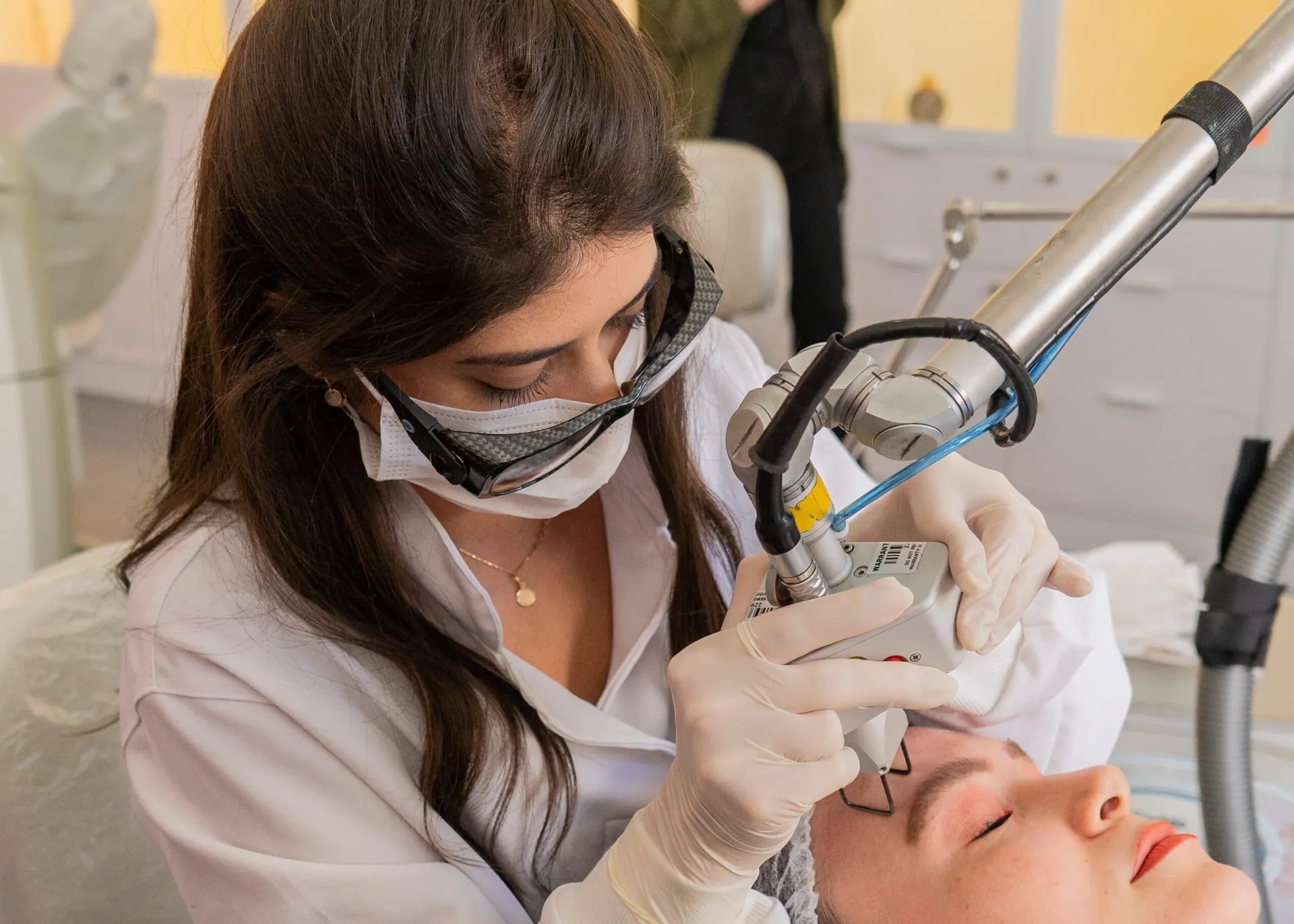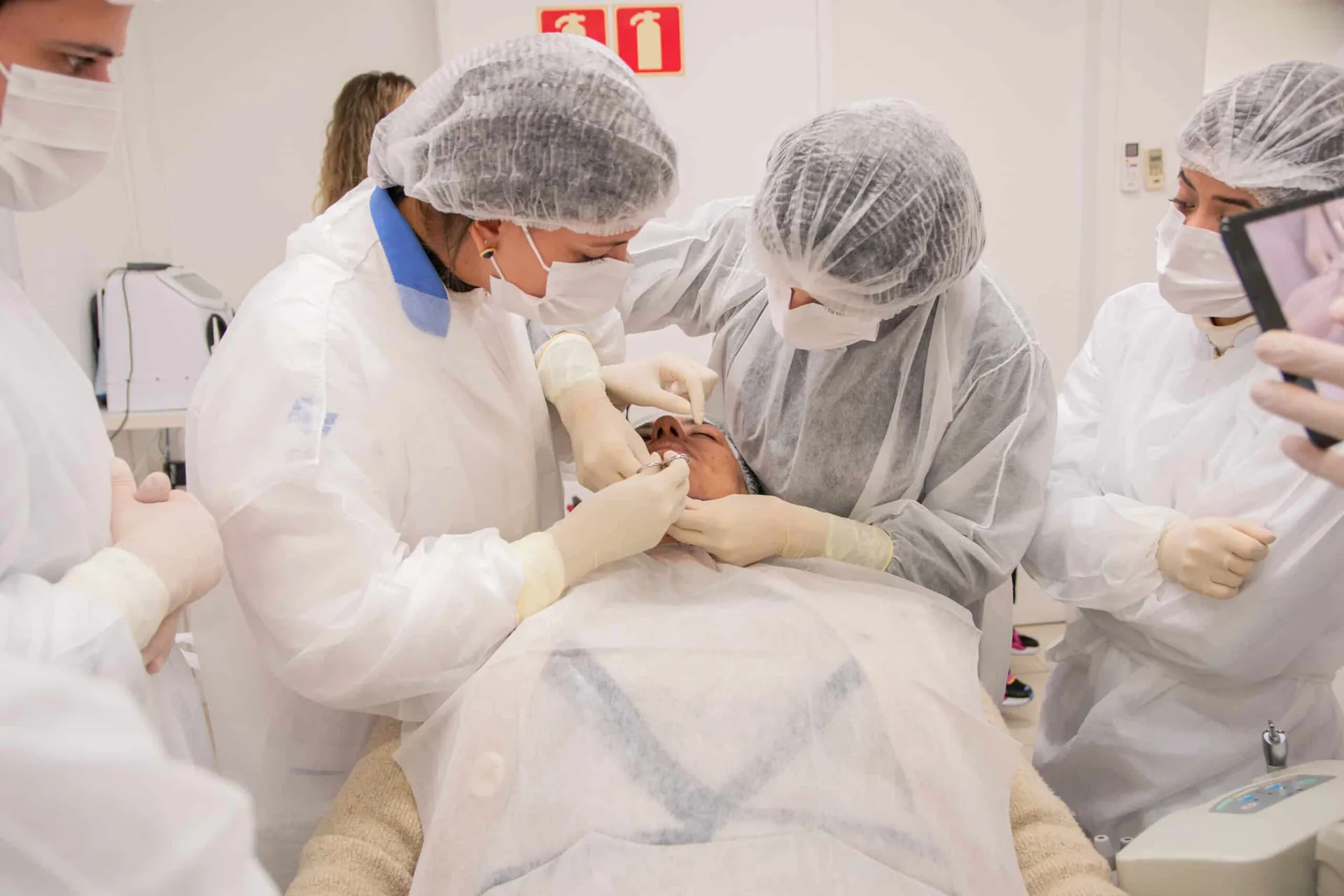
From June 16 to 19, one of the most anticipated moments of the HOF postgraduate program (Orofacial and Surgical Harmonization) took place: the clinical immersions in surgical procedures, which is also one of the last immersion periods of the course.
On that occasion, our filming team was there to follow it up close and was able to see, besides the progress of the immersion, the postgraduate students' perspective, proposing an analysis of all the progress made so far thanks to the in-depth training the specialization makes possible.
An Overview of This HOF Postgraduate Class
To talk about progress, it is important to point out that this class is made up of professionals with very different experiences, from recent dentistry graduates to the most experienced, from those who had never performed extraoral procedures to those with years of experience in orofacial harmonization.
The class also includes specialists in different areas, such as orthodontics, endodontics, oral and maxillofacial surgeons and implantologists. All of them are looking to combine what they already offer with extraoral aesthetic procedures, which are in high demand in their offices.
The surgical module brings an even more special differentiator to the postgraduate students in their various dentistry backgrounds. For those most experienced in orofacial harmonization, it is a new level of practice. For beginners, a complete education.
The True Differentiator of Surgical Procedures
“Differentiator” is a term so often used that it may be worn out in this sense too. So it is worth reaffirming: just like the use of injectable anesthesia to perform aesthetic procedures, the ability to perform surgical procedures sets dentists apart, and by a lot, from other professionals who can work in aesthetic and integrative health.
There is room, however, for professionals from various backgrounds in aesthetics, each with very valuable views and contributions in what belongs to each approach.
And the pursuit of proper training is what will truly place professionals in prominent positions, as well as give them trust and recognition from society. Trust that is already being consolidated, as can be seen from the demand for procedures that the postgraduate students report so often.
The Postgraduate Students' Own Accounts of Their Progress
With a picture of this HOF class established, we can now talk about progress based on the postgraduate students' own accounts.
The excitement with which they talk about all the progress and skills developed is almost palpable. We selected some of their comments on this:
Developing Skills During the Immersions
“Look, if I put together all the clinical immersions from the beginning until today, I had astronomical learning, very big learning. I have been studying facial harmonization since 2017, and in recent years I have greatly intensified my practice. And what is essential in the clinics for us? Developing manual skill, not just the theoretical part, but manual skill. Because a dentist who works with facial harmonization has to have technique in order to do the applications.
Today I am totally different, another person. I had a worldview, I had a view of procedures, I thought I was limited in performing some procedures, or that I would never perform them. Especially the more advanced procedures, because I was afraid, I was insecure. And now I am not, I have total confidence to perform them, under my own authority in my office.” – Lívia Liberalli.
The Constant Exchange of Experiences
“It changed a lot, mainly my clinical eye, the knowledge, all the theory and the practice. It is also interesting that in the specialization we have people at various levels of harmonization seeking the title, so we can exchange ideas with someone who already has a lot of practice, who guides us with some tips too, and with others who are also starting from zero, so we share our insecurities.
I think from the beginning to the end I made a gigantic leap… I already had some references, I was already following Dr. Diogo, I had a certain immersion in harmonization, but I had not gone that deep. And now I feel quite confident with the procedures.” – Paulo Hideki.
Being Able to Provide Care Beyond the Smile
“I think now I will be able to achieve my ultimate goal, because I always strive to enhance a person's beauty, so they find themselves in the best way, in their best version. So now, besides the smile, also caring for the face, I think I will achieve that goal masterfully, so they find their best version, enhancing their beauty without taking away their essence, their characteristics, but always making their self-esteem go up.” – Aline Bomfim.
“In my day-to-day in the office, before I was already doing aesthetic procedures, but they were all geared toward conventional dentistry, so: whitening, veneers… And they wanted to combine them with extraoral procedures involved in HOF, like toxin, filler, but I did not offer them, so now I can combine them and improve their self-esteem as a whole, inside and outside the smile.” Leticia Ranghiere.
An Important Career Turning Point
Currently, most of the postgraduate students are already working with orofacial harmonization, and those who are not yet show a lot of interest in putting everything they learned into practice, but this time in the offices where they see patients.
As in all the other modules, in the surgical procedures module the number of patients allowed everyone present to practice and develop the motor skills needed to feel confident and offer these procedures in their clinics as well.
These professionals' progress throughout the specialization is visible. It will be essential for them to keep studying and improving whenever necessary, but they are no longer the same as before this period, which now adds up to almost a year of training and, with it, a very important career turning point.
Orofacial and Surgical Harmonization|NewsLaís Bianquini
NEPUGA content team — Núcleo de Especializações Ana Carolina Puga.