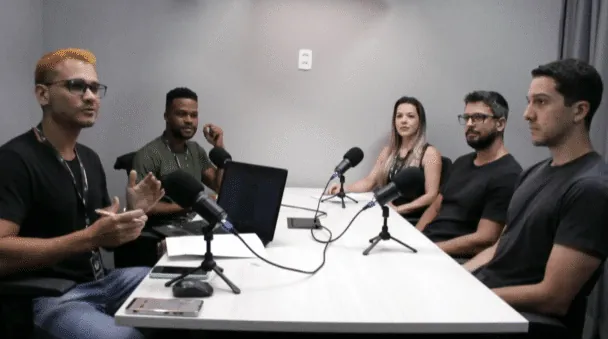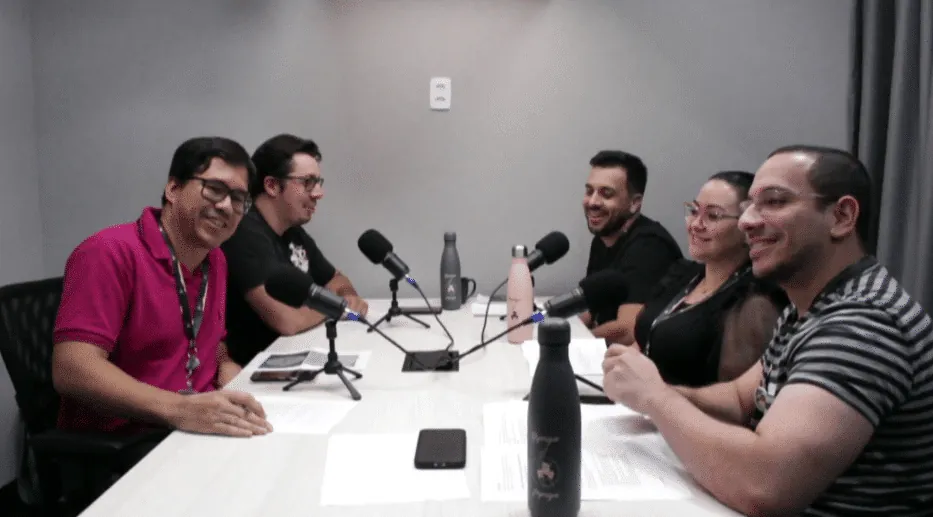
Intrapreneurship is almost a tongue twister, but once past the initial shock, typical of those who have never heard of the concept, it becomes possible to understand its applications in the corporate environment and bring it closer to everyday practice. And that is what one of the groups in the integration and development project carried out internally at Nepuga over the past few months did.
The group assigned to this topic was made up of sales advisor João de Souza, Lucas Diniz, who is part of the institution’s IT team, Leda Leocadio, a marketing writer, and Pamela Carla, from the academic office.
In their research, the group initially found definitions they considered somewhat rigid, focused on developing new products, services or processes within an institution as an initiative of employees in different departments.
Intrapreneurship Beyond the Big Idea
From there, they were able to develop a conversation about other ways to be intrapreneurial that do not necessarily start from a big idea, possibilities much more grounded in everyday reality, in the organization’s already established goals, and focused on possible improvements with an impact on the collective benefit.
Of course, intrapreneurial big ideas are inspiring and achievable, and the group brought up some of these examples, showing how innovative thinking can lead to grand initiatives.
One of those examples was the development of the PlayStation console, which initially was not part of Sony’s vision but made perfect sense to one of the company’s employees, Ken Kutaragi, who did not give up on his idea when it was not so well received at first, and managed to convince the company that developing the console fit the company’s goals and potential, bringing to life one of the most popular video game systems in the world.
But What Is the Difference Between Proactivity and Intrapreneurship?
Seeing a company’s potential and taking action to make ideas and improvements happen can be characterized as proactivity. So what is the distinction between being proactive and being an intrapreneur?
For the group, intrapreneurship needs to be better structured to be put into practice: you need to understand the why behind the initiative, what goals you want to reach through it, which steps are necessary and, as mentioned before, the initiative must be related to the goals of the corporation where it is meant to be implemented.
Thus, intrapreneurial initiatives have a lot to do with creativity and proactivity, but those traits, if not well structured, are not always enough to implement robust ideas that require the participation of many people and investment of resources.
Another important trait is the willingness to take risks. After all, new ideas can be frightening at first, may even face resistance from the team, and will probably be quite refined compared with what was first thought up. That is why the willingness to try, and possibly fail, is part of the process.
Entrepreneurship in Practice
Turning to practice, Lucas recalls another point about what can be considered intrapreneurship:
“When we talk about this entrepreneurial profile, who will bring innovation to the company but won’t necessarily do something that never existed, they’ll take some practice that’s sometimes already widely adopted in the market and bring it to the environment where it isn’t being used yet.”
In fact, two initiatives adopted internally were mentioned that can be considered entrepreneurial ideas because of their innovation and implementation for the collective benefit of the company. They were the implementation of the Trello platform in internal planning, an idea brought by Lucas himself; and the development and integration project, started by Paula Teodoro of the Human Resources department.
A Special Guest
In addition to the research and discussions within the team itself, the quartet found that another coworker could make valuable contributions to the debate, because Lucas Carnio, from the pedagogical team, had previously taught entrepreneurship and intrapreneurship classes at an institution of the S System (Brazil’s network of professional training institutions), and also holds a degree in Business Administration and has experience as an entrepreneur.
Exchanging ideas with Lucas before and during the podcast brought an even more complete perspective to the group assigned this topic. That is why he was invited to take part in the podcast, a pleasant surprise for those who followed along.
On that occasion, Lucas Carnio weighed common sense against his own experience in a definition of what, for him, it really means to be entrepreneurial:
“We still associate entrepreneurship a lot with starting a company, and I also took that path first. But over time you discover that the concept of entrepreneurship ends up being much bigger than simply opening a business or having a CNPJ (Brazilian company registration number); the act of entrepreneurship will always be about aiming at something, taking an action of some scale, going out and doing it”.
The Development Project
From all the research and exchange of ideas, new perspectives opened up for rethinking forms of innovation in everyday life, and especially at work, through a lens that recognizes the collective and the potential within the company itself.
This is one of the last articles about the internal development integration project, but you can check out all the articles here on the blog and keep up with the enriching exchanges on topics such as Self-Efficacy, Communication, Resilience, Emotional Intelligence and Limiting Beliefs.
OrganizationalLaís Bianquini
NEPUGA content team — Núcleo de Especializações Ana Carolina Puga.