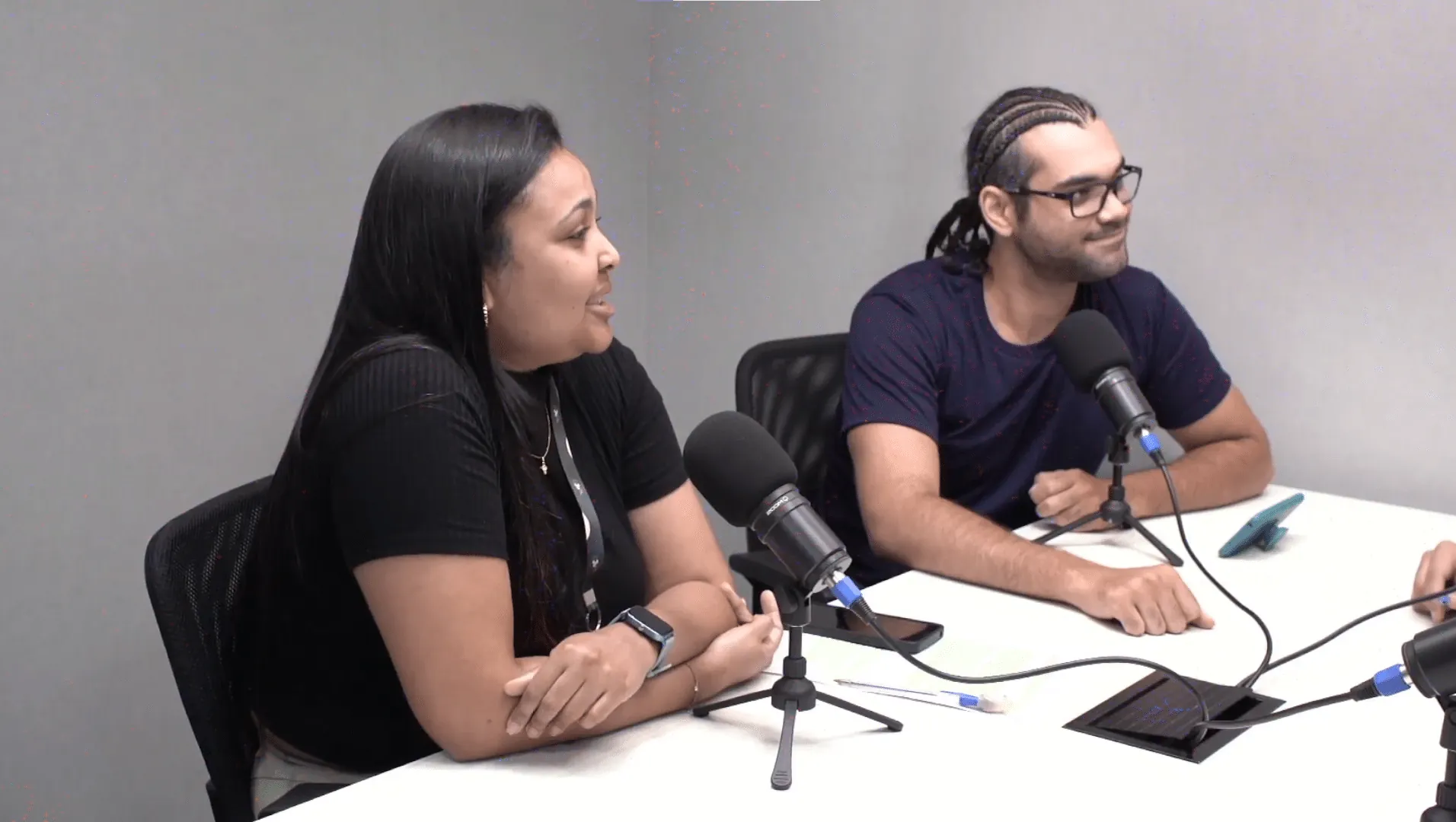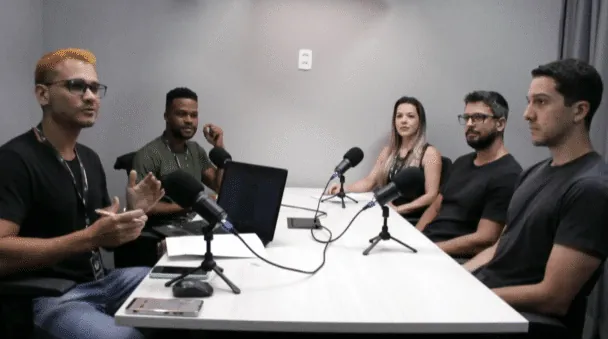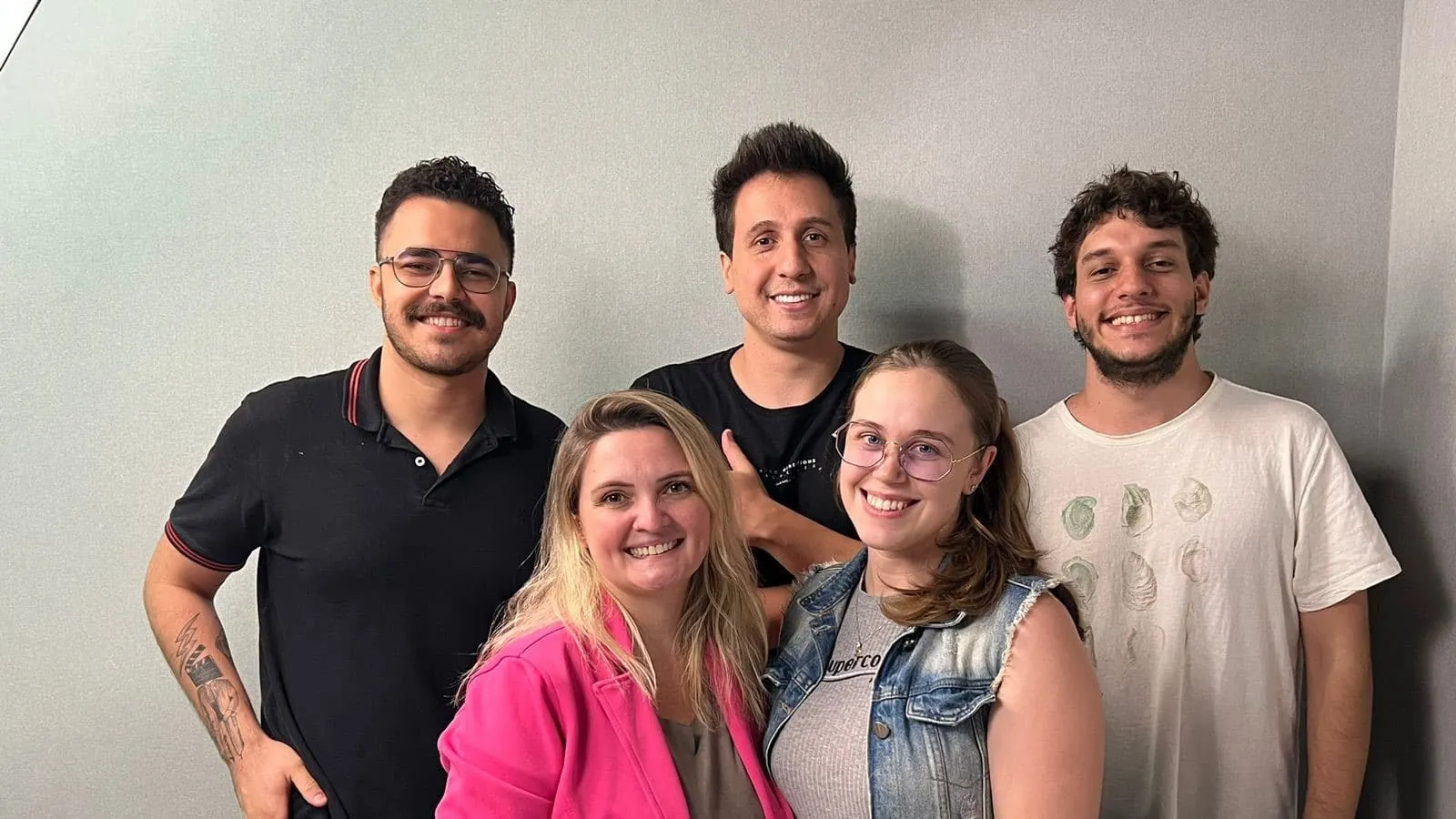
The second group to take part in the development project was named “Feito, Melhor Que Perfeito” (Done Is Better Than Perfect), a name that fits the topic of the day quite well: “Limiting Beliefs.” To discuss this topic, web designer Gabriel Saldanha, Arlon Fiora and Drielle Nicotari from the finance department, Victoria Puga, business analyst, and Luiz Phiesko, filmmaker and editor, got together.
At first, the group talks about how many limiting beliefs can develop from childhood, from what other people lead us to believe because of their own worldviews. And throughout the podcast, they gave several examples that can help listeners relate and better understand the topic.
Since the project is about personal development, especially in the context of the corporate working world, it's fair to say the conversation turned to self-limiting beliefs, that is, beliefs that show up as obstacles in activities and daily life, limiting the many professional potentials a person can develop.
To offer a more concrete idea, one of the examples proposed was summed up in the phrase “studying is for the rich, the poor have to work,” which Vitória remembered and every participant in the group recognized as something they had heard before at some point in their lives.
Just thinking about phrases and ideas like this, you can get a sense of how limiting beliefs can become entrenched in common sense and in people's minds from childhood.
How to overcome limiting beliefs?
Being aware of this topic is therefore very important for anyone seeking personal and professional development. And that awareness can be the first step toward changing the blocks caused by limiting beliefs. In this way, the opportunity to open up this conversation among employees has good potential to spark important changes in the Nepuga team.
And talking is precisely one of the paths proposed during the podcast for overcoming them. As Gabriel recalls: “I read somewhere that we are the generation that talks about things. Nowadays, you hear much more about feelings, mental health, how to deal with mental health issues.” After all, opening up conversations has the potential to question what is established in common sense.
Speaking of mental health, another of the team's conclusions is the importance of psychotherapy for investigating one's own limiting beliefs, which are often hard to notice and work to overcome. That is why the help of a professional is very welcome.
Prepare and face the challenges that come up
When asked about limiting beliefs they had managed to overcome, all participants remembered something they went through at work. What the personal examples have in common is professional achievements initially loaded with apprehension and fear of not feeling capable.
Coincidentally or not, the way to overcome the situations they remembered was to prepare, face their own fears, and be pleasantly surprised to find it wasn't as hard as it seemed. They discovered it was possible, and even circumstances and events that are difficult at first become easier to handle as we gain experience.
No matter how prepared you are for a situation, perfection is impossible to achieve, which is also why the group's name, “Feito, Melhor que Perfeito,” fits the topic so well, as a way of encouraging us to move forward with an activity and try, even when we don't feel prepared enough.
“Limiting beliefs are often fears, so challenge your fears, set goals, confront the belief with reality. Let's take the risk,” proposes Arlon.
The podcast experience as an opportunity to overcome challenges
The experience of developing and presenting the podcast was itself an opportunity to take a risk and try something different from the usual, an opportunity to challenge limiting beliefs.
To close, we share a bit of Drielle's point of view on taking part in this project. A member of Nepuga for 7 years, she shares her experience and what it was like to overcome what initially seemed quite challenging:
“On the day I got nervous, I confess, but I surprised myself. HR's idea of proposing this activity was really great. I think many people thought they couldn't do it, but everyone did very well and expressed themselves, interacting with other groups. It was a success.”
OrganizationalLaís Bianquini
NEPUGA content team — Núcleo de Especializações Ana Carolina Puga.