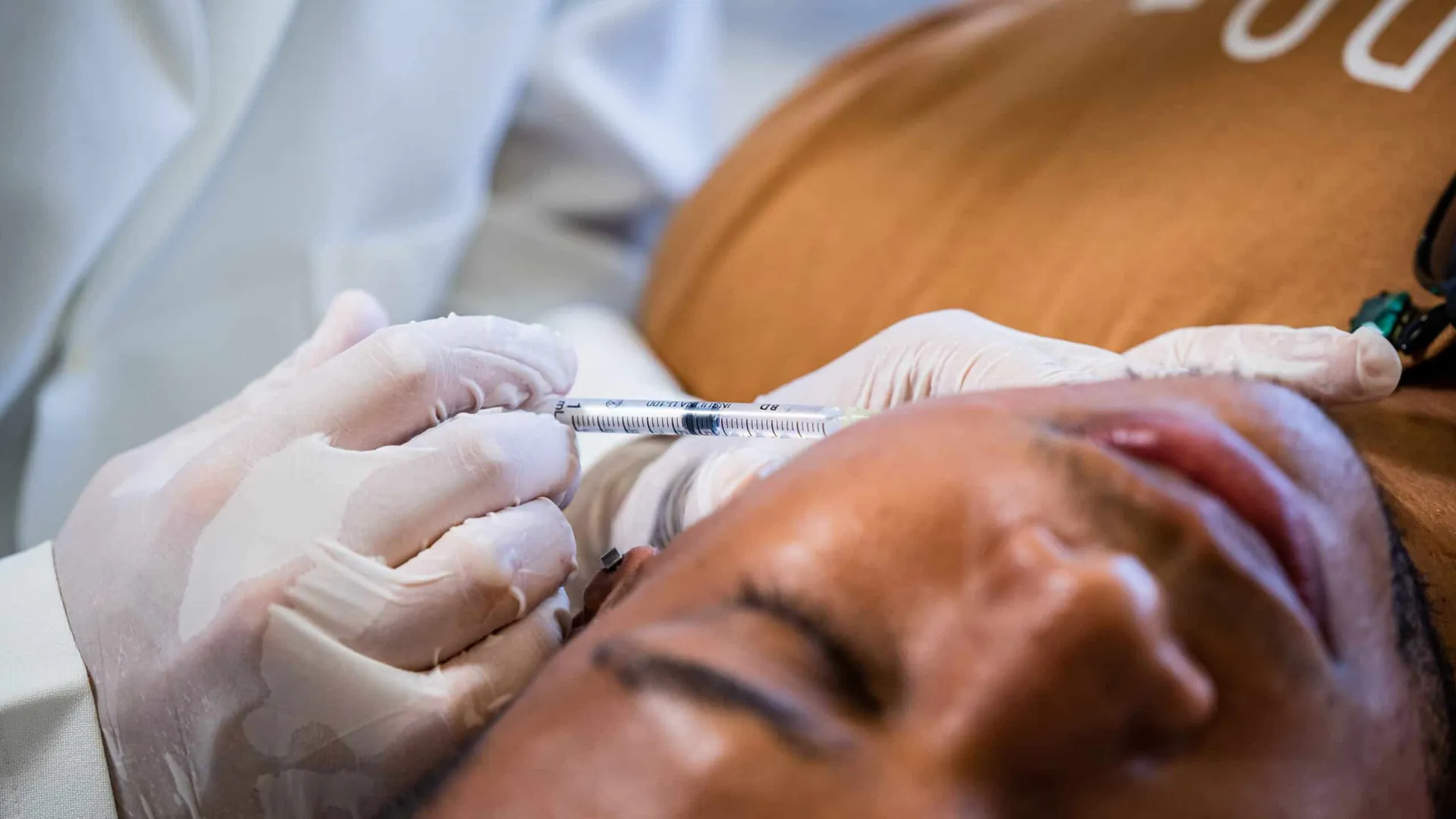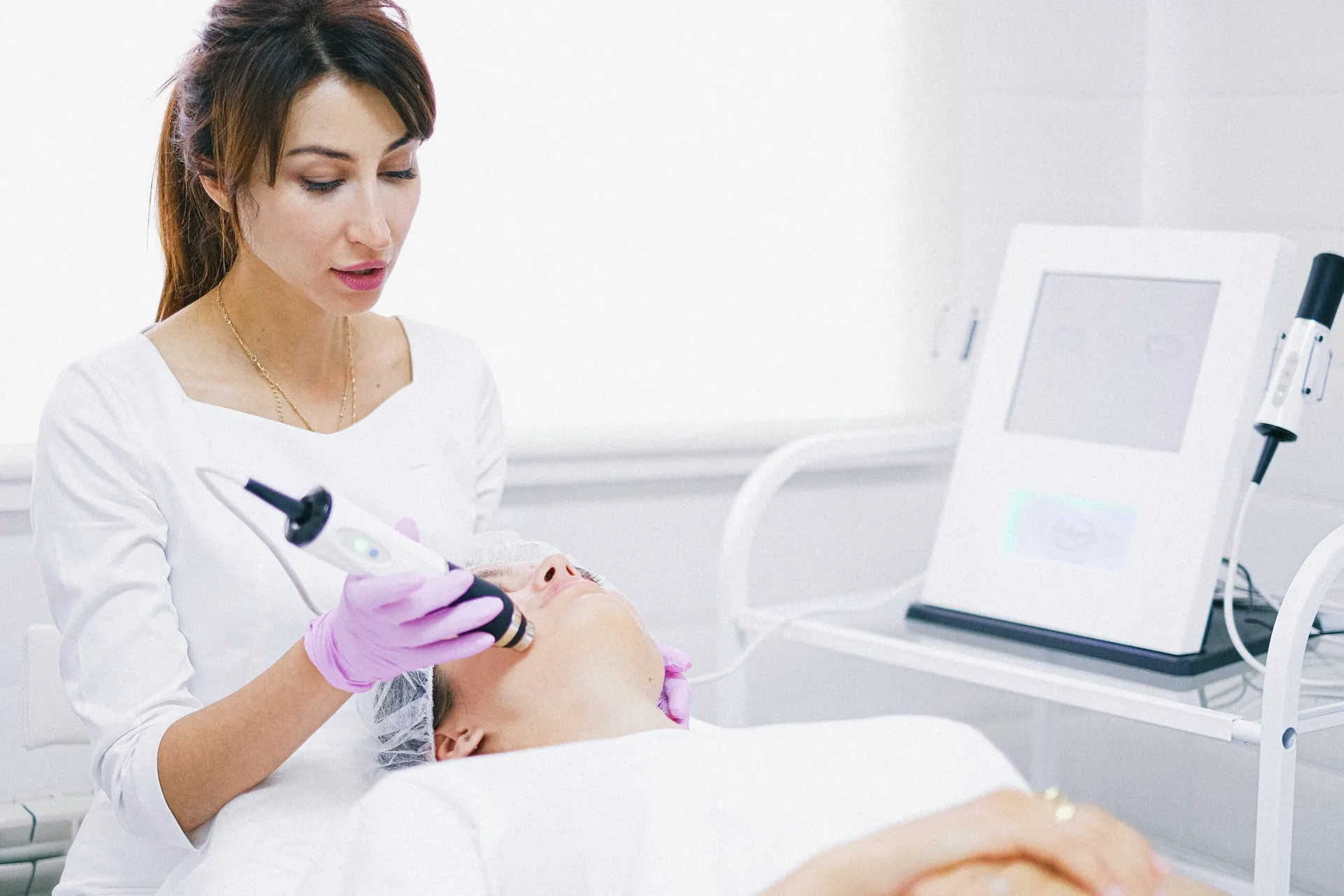
For patients seeking safety when getting a botulinum toxin procedure, a common question is: which professionals can administer Botox? And the topic is important to discuss because a MYTH has been created that only doctors have this right.
In fact, today we know that other professionals can also provide the service. And more than that: they have the expertise and training to administer toxins and acids safely.
This helps explain why it is increasingly common to find health professionals such as biologists, biomedical professionals, nurses, dentists, pharmacists and physiotherapists authorized to work with aesthetic procedures at clinics across the country.
In this article, you'll understand the topic better. If you're a patient, reading it is essential to get rid of the MYTH that only doctors can administer Botox. If you're a health professional, it's essential reading to start thinking about this ever-growing field.
And at the end of the text there's a bonus: can an esthetician administer Botox?
In this article, you'll read about:
- Botox administration in Brazil
- Which professionals can administer Botox
- Botox is a non-invasive aesthetic procedure
- Non-invasive aesthetic procedures
Botox Administration in Brazil
In surveys by Euromonitor International, Brazil is always among the top 5 consumer markets for Beauty and Personal Care in the world.
A great example comes from botulinum toxin applications, which used to be elitist and today are much more accessible to all audiences.
Botulinum toxin, commercially known as Botox, is a substance that has several effects on the skin and can be used together with other aesthetic treatments.
For Botox administration to be safe, you need a qualified health professional, that is, one with proven skills to perform the procedure.
The importance of this can be seen in several ways, such as the fact that the substance causes muscle relaxation, a process that blocks the transmission of stimuli. In this way, it acts as a muscle blocker, which requires knowledge on the part of the professional.
By choosing a qualified health professional, patients can receive doses of the substance safely, with a greater chance of achieving the best results.
Which Professionals Can Administer Botox
Aesthetic procedures can be divided into two large groups.
I – Injectables: minimally invasive procedures performed with needles that go past the epidermal barrier
II – Non-injectables: procedures that are not invasive, in which products are applied to the skin tissue
Doctors (such as dermatologists) are regulated to work in injectable aesthetics. Likewise, other health professionals also have the right to work with Botox, such as:
- Biologists
- Biomedical professionals
- Nurses
- Dentists
- Pharmacists
- Physiotherapists
What matters is to consider that each professional council (Conselho de Classe) has rules for its professionals, which must be followed and respected. For example, dentist-surgeons can only work with aesthetic procedures on the face down to the neck.
Take the example of aesthetic nurses. They have COFEN (Brazil's Federal Nursing Council) Resolutions 529/2016 and 626/2020, which authorize the work and state that it is possible to “perform the other Aesthetic Nursing activities not related to the practice of medical acts”.
Another example that answers the question of which professionals can administer Botox, and that we can mention here, is that of biomedical professionals. Their professional council states that “a biomedical professional with a postgraduate degree in aesthetics can administer Botox or botulinum toxin under Resolution 241/2014”.
In the case of doctors, there are indeed some aesthetic procedures that only they can perform, as provided in article 4 of Law 12,842/13.
Botox Is a Non-Invasive Aesthetic Procedure
To understand the theoretical side of the subject a bit more, let's consider the Laws and Resolutions mentioned above. The Medical Practice Law says that performing invasive procedures will be the exclusive practice of medicine. And Botox administration is not invasive.
The same law explains what invasive procedures are: “the invasion of the body's natural orifices, reaching internal organs”.
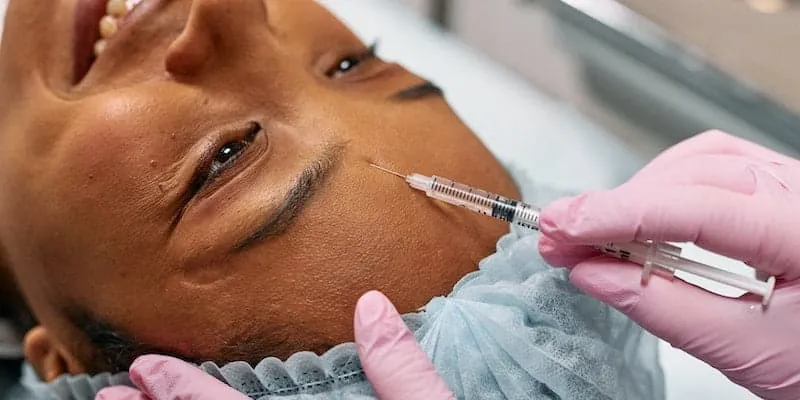
So, consider that the needles used in these procedures are hypodermic, that is, made to reach only the superficial levels of the skin (epidermis, dermis, hypodermis, small veins and muscles). Therefore, they cannot reach the body's internal organs. See the image:
The image helps us understand which professionals can administer Botox, debunking the idea that this service can only be performed by dermatologist doctors.
Administering Botulinum Toxin
To complement the previous topic, consider how Botox is administered. The substance comes as a powder inside vials. So, at first, the professional must dilute it in saline solution.
Then, the product is injected into the area to be treated, with a distance of 1.5 cm from one point to the next. Here it's worth paying attention: there are several methods that can be considered for administration. The procedure is quick and painless.
Most commonly, results appear between 2 and 5 days after administration, but this may extend up to 2 weeks. From then on, they remain stable for an average period of 4 to 6 months.
Non-Invasive Aesthetic Procedures
Before finishing this read on which professionals can administer Botox, it's good to understand that in addition to botulinum toxin administration, there are other procedures that are not invasive and can be performed by these professionals, such as hyaluronic acid filling.
And there's more: chemical peel, hydrolipoclasia, carboxytherapy, support threads, mesotherapy with needles, laser hair removal, acupuncture and others.
Note that each technique has its own particularities, which requires knowledge of the practice. That's why the councils require these health professionals to take postgraduate courses at authorized educational institutions in order to work in aesthetics.
Can an Esthetician Administer Botox?
To close out the read, a question that also generates comments and discussion across the Beauty and Health market: can an esthetician administer botulinum toxin? No. And Anvisa itself (Brazil's National Health Surveillance Agency) says this is not recommended!
The reason is simple: this professional doesn't have the technical training for such an activity. So what they can do are aesthetic procedures such as drainage, superficial peels, carboxytherapy, stretch mark treatment, massages and others.
As for invasive or minimally invasive aesthetic procedures, there is no recommendation for this professional. The same goes for surgeries or prescribing medications.
Also read – The 10 Best Aesthetic Procedures for Men to Offer at Your Clinic
Blog|News|Aesthetic HealthIrving Malaguti
NEPUGA content team — Núcleo de Especializações Ana Carolina Puga.